How to Test the Signal Attenuation of a Custom Ultrasound Coaxial Cable? | High-Quality Ultrasound Coaxial Cable | ultrasound coaxial cable Manufacturer & Factory-FRS

How to Test the Signal Attenuation of a Custom Ultrasound Coaxial Cable?

Testing the signal attenuation of a custom ultrasound coaxial cable is a critical process for ensuring diagnostic accuracy, system performance,… - Professional Ultrasound Coaxial Cable Solutions

Information

Learn more about, latest news, frequently asked questions

Testing the signal attenuation of a custom ultrasound coaxial cable is a critical process for ensuring diagnostic accuracy, system performance, and patient safety in medical imaging. Signal attenuation refers to the loss of signal strength as it travels through the cable. Excessive attenuation can degrade image quality, leading to unclear scans and potential misdiagnosis. This guide delves into the methodologies, industry standards, and practical considerations for accurately measuring this key parameter, providing valuable insights for engineers, procurement specialists, and quality assurance teams seeking reliable Ultrasound Coaxial Cable​ solutions.

Understanding Signal Attenuation in Ultrasound Cables

In an ultrasound system, the coaxial cable transmits high-frequency electrical pulses from the transducer to the processing unit and back. Any significant loss in these signals directly impacts the sensitivity and resolution of the image. Attenuation is influenced by the cable’s intrinsic properties: the quality of the dielectric material, the conductivity of the center conductor and shield, the precision of the impedance matching, and the physical construction. For a custom Ultrasound Coaxial Cable, factors like length, flexibility requirements, and intended connector types must be specifically accounted for in the attenuation profile.

Core Testing Methodologies and Equipment

Accurate testing requires specialized equipment and a controlled environment.

  1. Vector Network Analyzer (VNA):​ This is the industry-standard instrument for precise attenuation (insertion loss) measurement. A VNA sends a swept frequency signal through the cable assembly and measures the power of the signal at the output port.
    • Procedure:​ The cable is connected between the VNA’s Port 1 (source) and Port 2 (receiver). The S21 parameter (forward transmission coefficient) is measured across the relevant frequency range (e.g., 1 MHz to over 50 MHz for typical ultrasound applications). The resulting graph shows attenuation in decibels (dB) versus frequency.
    • Data Insight:​ A high-performance Ultrasound Coaxial Cable Manufacturer​ like FRS will provide detailed attenuation charts, often showing losses as low as 0.5 dB/m at 30 MHz, a benchmark for premium cables.
  2. Time-Domain Reflectometry (TDR):​ While primarily used for impedance measurement and fault location, TDR can help identify points of unexpected loss or discontinuity within the cable that contribute to overall attenuation.
  3. Comparative Testing:​ This practical method involves comparing the signal output of the custom cable against a reference cable of known, low attenuation using a signal generator and an oscilloscope or power meter.

Industry Standards, Certifications, and Market Imperatives

Adherence to recognized standards is non-negotiable in medical device components.

  • Regulatory Compliance:​ Cables must be designed and tested to comply with IEC 60601-1 (medical electrical equipment safety) and often ISO 13485 quality management systems. Materials should meet USP Class VI and ISO 10993 biocompatibility standards for patient safety.
  • Performance Standards:​ While specific attenuation limits can be custom, designs often reference general coaxial cable standards from ASTM or MIL-SPEC for rigorous mechanical and environmental testing.
  • Market Analysis:​ The drive towards higher-frequency transducers (for better resolution) and portable ultrasound devices places dual demands on cables: lower attenuation at higher frequencies and superior durability in smaller form factors. This is where the expertise of a specialized Ultrasound Coaxial Cable Manufacturer​ becomes crucial.

Application Scenarios and Performance Requirements

Testing protocols must mirror real-world use:

  • Cart-Based High-End Systems:​ Used for detailed cardiology or abdominal imaging. Cables are longer and may service 256+ channels. Attenuation testing must be exhaustive across the entire band, ensuring minimal cross-talk and signal loss that could obscure subtle anatomical details.
  • Portable/Handheld Devices:​ Demanding extreme flexibility and repeated flex-cycle durability. Attenuation testing here is coupled with rigorous mechanical stress tests (e.g., 50,000+ flex cycles) to ensure performance does not degrade over the product’s lifespan—a key FRS cable​ selling point.
  • Intraoperative and ICE (Intracardiac Echocardiography) Probes:​ These cables are ultra-thin and operate in sterile fields. Attenuation testing is critical on miniature designs where maintaining signal integrity in a tiny cross-section is a significant engineering challenge.

Product Pain Points vs. Engineered Solutions

  • Pain Point 1: Image Ghosting & Noise.​ Caused by high attenuation, impedance mismatches, and poor shielding.
    • FRS Solution:​ Utilization of advanced low-loss dielectric materials (e.g., optimized fluoropolymers) and high-purity, high-strand-count shielding (95%+ coverage). Our manufacturing process ensures consistent impedance (50/75 Ω) along the entire cable length, minimizing reflections.
  • Pain Point 2: Premature Cable Failure.​ Frequent bending and twisting in clinical use lead to broken conductors, increasing attenuation and causing system failure.
    • FRS Solution:​ Proprietary cable construction with multi-layer strain relief and advanced jacketing compounds. We subject our custom ultrasound coaxial cables​ to simulated lifetime flex testing, guaranteeing they meet or exceed the OEM’s durability requirements before shipment.
  • Pain Point 3: Inconsistent Performance.​ Variability in attenuation between production batches leads to system calibration issues and quality control headaches.
    • FRS Solution:​ Automated, data-driven production and 100% electrical testing of every cable. Each FRS cable​ ships with its test report, providing traceable, guaranteed performance data for our clients’ quality records.

In conclusion, effectively testing signal attenuation is a multifaceted process that defines the functional reliability of an ultrasound system. It moves beyond a simple pass/fail check to become a comprehensive validation of materials, design, and manufacturing excellence. Partnering with an experienced Ultrasound Coaxial Cable Manufacturer​ that masters these testing paradigms—like FRS, which integrates deep engineering expertise with stringent quality control—is essential for medical device OEMs aiming to develop superior, reliable imaging technology. Choosing the right cable partner ensures your system delivers the diagnostic clarity that clinicians and patients depend on.

Hot Selling Products

Discover our most popular furniture pieces that are loved by customers worldwide.

High-Precision Ultrasound Coaxial Cable for Medical Imaging – Low Noise, Flexible Design, 42AWG

High-Precision Ultrasound Coaxial Cable for Medical Imaging – Low Noise, Flexible Design, 42AWG

Ultra-Flexible 42AWG Medical-Grade Coaxial Cables for High-Precision Ultrasound Imaging Designed for demanding medical imaging applications, our Ultra-Flexible 42AWG Coaxial Cables deliver exceptional signal integrity, noise reduction,.
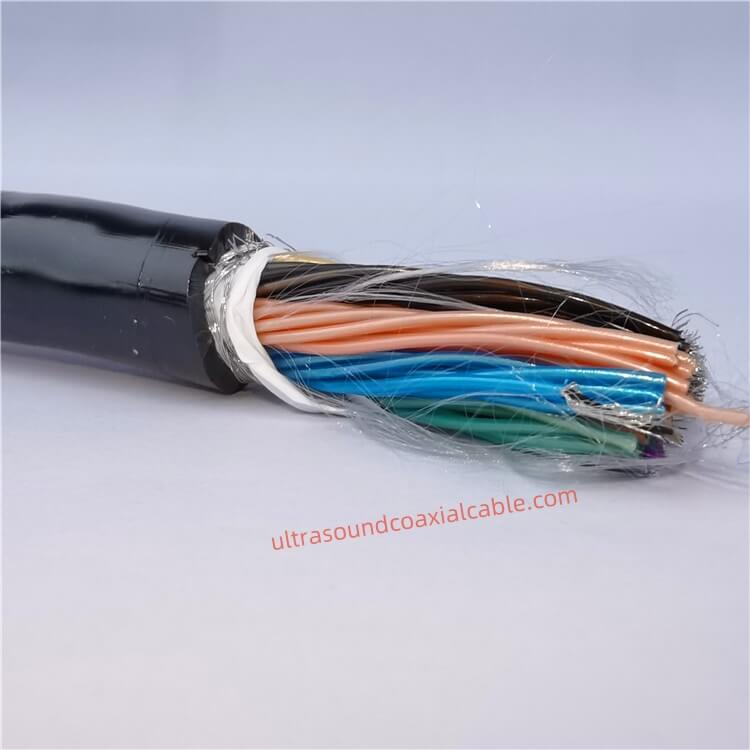
Customizable Ultrasound Coaxial Cable Assembly – 42AWG to 30AWG, 6.6mm OD, 18GHz Bandwidth

Customizable Ultrasound Coaxial Cable Assembly – 42AWG to 30AWG, 6.6mm OD, 18GHz Bandwidth

High-Performance Ultrasound Coaxial Cable Assembly: 42AWG to 30AWG, 6.6mm OD, 18GHz Bandwidth Engineered for precision in medical imaging and industrial applications, this customizable coaxial cable assembly delivers exceptional signal.
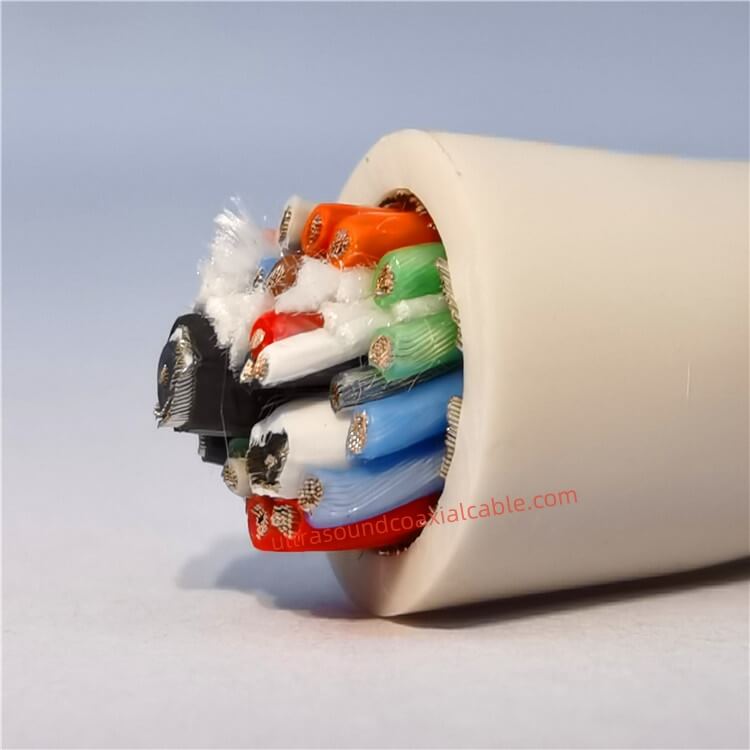
138-Core Medical Ultrasound Probe Coaxial Cable with 0.2mm Diameter – Biocompatible & FDA-Certified

138-Core Medical Ultrasound Probe Coaxial Cable with 0.2mm Diameter – Biocompatible & FDA-Certified

High-Precision 138-Core Medical Ultrasound Coaxial Cables | 0.2mm Ultra-Fine Biocompatible Design for Diagnostic Imaging Product Overview Engineered for advanced medical imaging systems, our 138-Core Medical Ultrasound Probe Coa.

Ultra-Flexible Coaxial Cable for Ultrasound Transducers – 44AWG, 0.15dB/m Attenuation at 1GHz

Ultra-Flexible Coaxial Cable for Ultrasound Transducers – 44AWG, 0.15dB/m Attenuation at 1GHz

High-Performance Flexible Coaxial Cable for Medical Imaging & Ultrasound Systems Designed for demanding applications in medical imaging, industrial diagnostics, and high-frequency signal transmission, this ultra-flexible coaxial ca.

Contact Us

Feel free to reach out to us for any inquiries or orders.

Call Us

Have a question? Give us a call!

                   +8618818785005(Whatsapp)

Email Us

Send us an email and we'll get back to you soon.

sales@custom-cable-assemblies.com
       
Home Products Contact