The global ultrasound coaxial cable market is on a trajectory to reach a staggering $90 billion by 2032, a testament to the critical role these components play in modern diagnostic imaging and industrial inspection. This explosive growth is not merely a function of increased demand but is fundamentally driven by the relentless push for miniaturization. As medical devices shrink to become more portable and industrial probes become more intricate, the Ultrasound Coaxial Cable must evolve to deliver uncompromising signal integrity in increasingly constrained spaces. This article delves into the market dynamics, technical challenges, and the advanced manufacturing capabilities required to succeed in this high-stakes sector.
The Engine of Growth: Miniaturization and High-Density Imaging
The projected market value of $90.05 billion by 2032, growing at a CAGR of 8.11%, is underpinned by two key technological shifts: the proliferation of portable/handheld ultrasound systems and the demand for higher-resolution imaging .
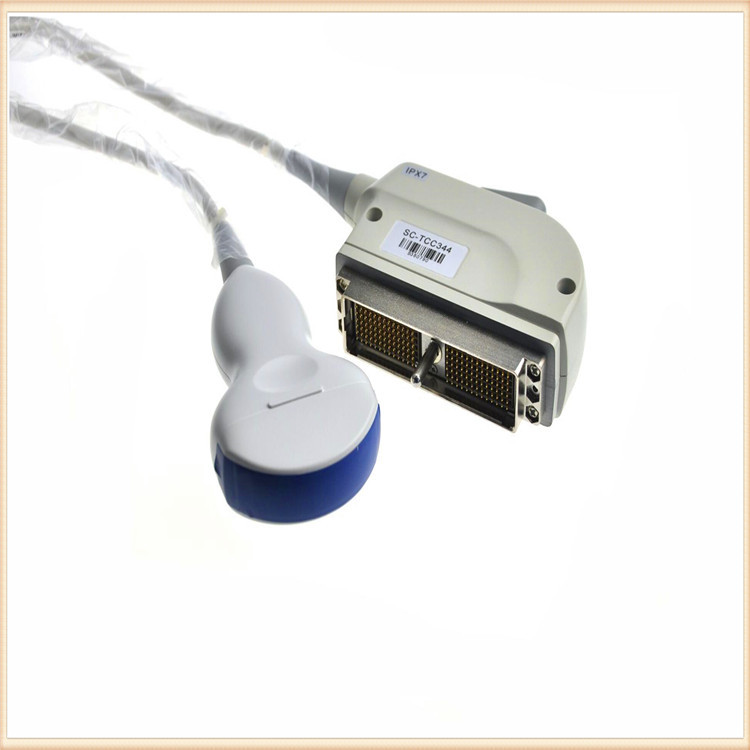
- Portable Revolution: The market for portable ultrasound devices is experiencing a 12% annual growth rate. This trend demands cables that are not only lightweight and flexible but also robust enough to withstand the rigors of mobile use. The traditional bulky cables are being replaced by micro-coaxial designs with conductors as fine as 42-46 AWG, enabling ergonomic handling without sacrificing performance .
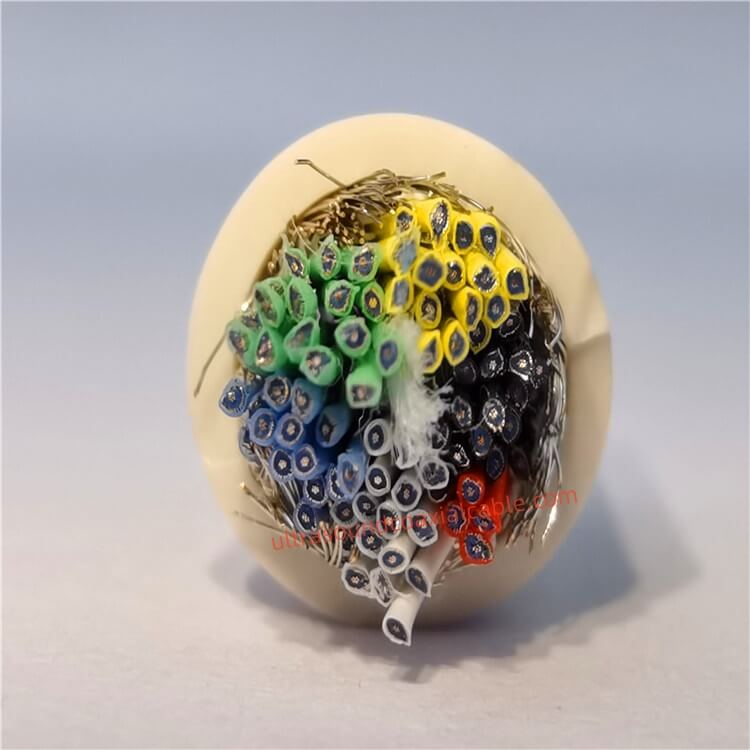
- High Channel Counts: Advanced ultrasound systems are moving from 64 or 128 channels to 198-core or even higher configurations. This increase in channel density is essential for achieving superior image resolution. It places immense pressure on Ultrasound Coaxial Cable Manufacturers to produce cables with precise impedance control (typically 50Ω or 75Ω) and minimal crosstalk between adjacent conductors .
Navigating the Complex Landscape: Standards, Materials, and Applications
Selecting the right Ultrasound Coaxial Cable is a multi-faceted decision that balances performance, compliance, and environmental resilience.
1. Rigorous Industry Standards and Certifications
Compliance is non-negotiable, especially in medical and defense applications. Key standards include:
- Medical (IEC 60601-1, ISO 13485, ISO 10993-5): Ensures electrical safety, quality management, and biocompatibility for patient-contact materials.
- Environmental (RoHS, REACH): Restricts the use of hazardous substances.
- Aerospace/Defense (MIL-STD-202): Mandates durability and signal precision for mission-critical systems .
2. Material Science: The Backbone of Performance
The choice of materials directly impacts attenuation, flexibility, and sterilization compatibility.
- Conductors: Silver-plated copper is often preferred for its superior high-frequency response and corrosion resistance, crucial for Doppler measurements in cardiology.
- Dielectrics: Fluoropolymers like PTFE and ePTFE are favored for their low loss tangent, high-temperature resistance, and excellent flexibility. Innovations in dielectric formulations have led to cables that are 20% more flexible than previous generations, addressing ergonomic needs in prolonged examinations .
- Jackets: Materials range from medical-grade PVC and polyurethane for chemical resistance to specialized coatings for EtO (Ethylene Oxide) sterilization compatibility .
3. Diverse Application Scenarios
- Medical Imaging: From cardiology’s phased array probes to obstetrics’ high-resolution scans, cables must support high-frequency signals and frequent sterilization cycles.
- Industrial NDT (Non-Destructive Testing): Used in weld inspection and pipeline flaw detection, these cables require ruggedized designs to withstand harsh industrial environments while maintaining signal integrity.
- Military & Defense: Sonar systems and underwater communications demand phase-stable performance and resistance to extreme conditions .
Addressing Critical Pain Points: From Signal Degradation to Mechanical Failure
Even with advanced technology, Ultrasound Coaxial Cables face significant operational challenges that can compromise system performance.
Pain Point 1: Signal Degradation and Image Artifacts
- The Problem: Improper impedance matching, inadequate shielding, or poor connector quality can lead to signal loss, reflections (high VSWR), and electromagnetic interference (EMI). This manifests as “snow” or artifacts in the ultrasound image, reducing diagnostic accuracy.
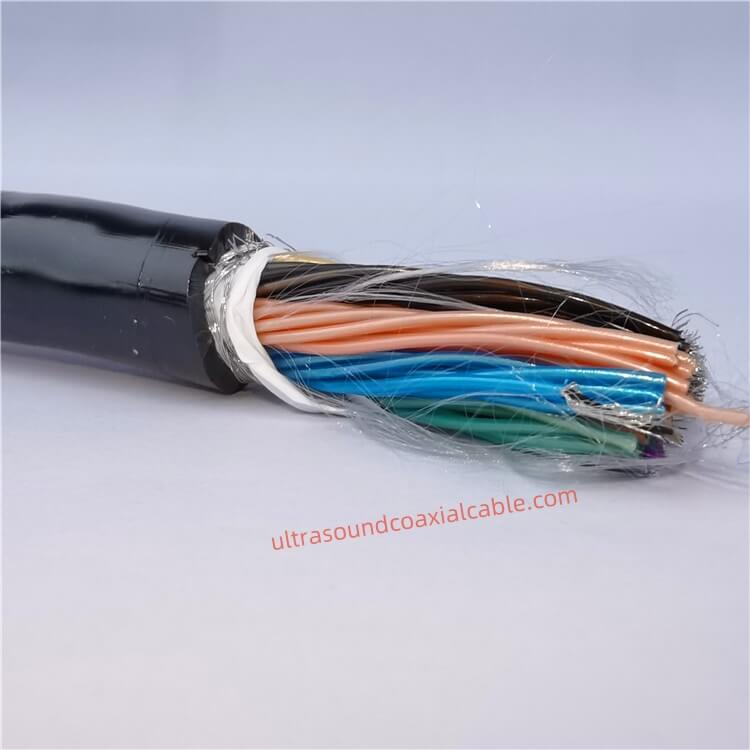
- The FRS Solution: Our engineering team focuses on precise impedance control (±0.05Ω tuning capability) and multi-layer shielding configurations (foil + braid) that provide >90 dB of EMI protection. By ensuring consistent performance across all channels, we eliminate crosstalk and maintain pristine signal fidelity .
Pain Point 2: Mechanical Failure in High-Flex Applications
- The Problem: Portable devices and procedures requiring extensive probe manipulation subject cables to constant bending and twisting. Standard cables can suffer from conductor breakage or insulation fatigue, leading to premature failure and costly downtime.
- The FRS Solution: Leveraging proprietary annealing processes and advanced insulation materials, our Ultrasound Coaxial Cables are engineered for high flex life. We design for specific bend radii and test for durability exceeding 300,000+ bend cycles, ensuring reliability in the most demanding clinical or industrial settings .
Pain Point 3: Sterilization and Biocompatibility Challenges
- The Problem: Medical cables must withstand repeated sterilization cycles (e.g., autoclave, EtO gas) without degrading their electrical or mechanical properties. They must also be non-toxic and non-irritating to patient tissues.
- The Solution: FRS utilizes medical-grade materials that are pre-certified for biocompatibility (ISO 10993-5) and are formulated to resist the harsh chemicals and high temperatures associated with sterilization processes .
The FRS Advantage: Precision Manufacturing for a Miniaturized World
As a leading Ultrasound Coaxial Cable Manufacturer, FRS distinguishes itself through a commitment to technological innovation and manufacturing excellence. Our capabilities are specifically tailored to meet the demands of the miniaturization trend.
- Micro-Coaxial Expertise: We specialize in the production of ultra-fine coaxial cables with diameters as small as 0.2mm. Our proprietary extrusion capabilities allow us to manufacture cables with 40-50 AWG conductors, which are essential for minimally invasive procedures and compact portable ultrasound devices .
- Customization and DFMA: We adopt Design for Manufacturing & Assembly (DFMA) practices, enabling us to offer full-parameter customization. Whether you need specific impedance matching, unique connector types (BNC, Microdot, SMA), or hybrid designs combining coaxial, power, and signal lines, our engineering team collaborates with clients to optimize the design for performance and manufacturability .
- Vertical Integration and Quality Control: Operating from a 100,000-class dust-free workshop with ISO 13485 certification, FRS maintains strict control over the entire production process. This vertical integration allows for rapid prototyping, consistent quality, and the ability to meet the tight tolerances required by modern ultrasound OEMs .
Conclusion: Partnering for the Future of Imaging
The journey to a $90 billion market is paved with technical challenges that require more than just standard off-the-shelf components. It demands a strategic partnership with a manufacturer that understands the nuances of high-frequency signal transmission, mechanical durability, and regulatory compliance. As the industry continues to shrink in size and grow in complexity, the expertise of a specialized Ultrasound Coaxial Cable Manufacturer like FRS becomes indispensable for OEMs looking to capitalize on this massive market opportunity.