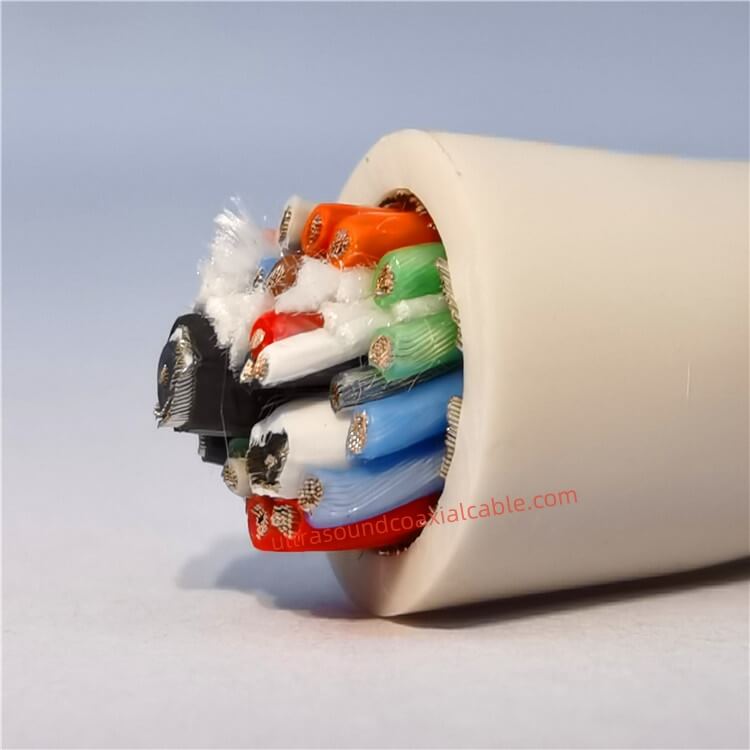
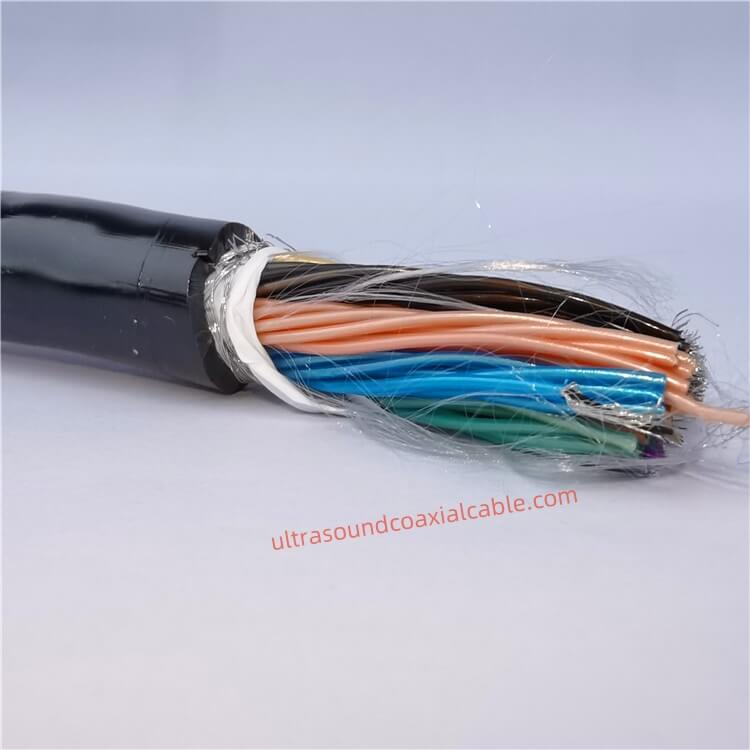
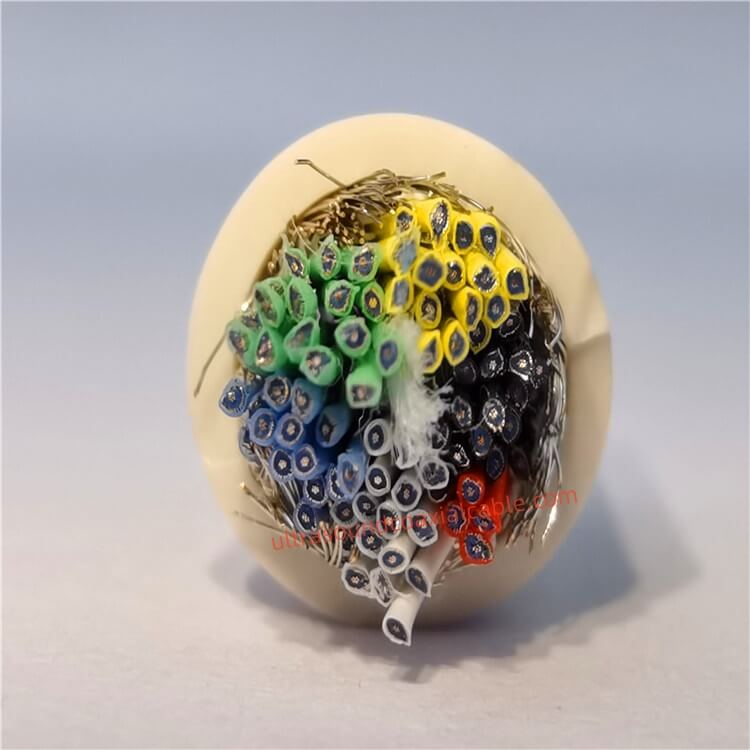
Medical grade ultrasound coaxial cables are specialized transmission cables engineered to deliver high-frequency signals with exceptional precision and reliability in diagnostic imaging systems. These cables serve as the critical link between ultrasound transducers and processing units, transmitting crystal-clear signals that enable accurate tissue visualization and life-saving diagnoses. Unlike standard coaxial cables, medical-grade variants must meet stringent electrical, mechanical, and regulatory requirements to ensure patient safety and diagnostic accuracy in clinical environments.
Technical Performance Specifications
Electrical Characteristics
Medical grade ultrasound coaxial cables are designed to maintain signal integrity across a broad frequency spectrum. Key electrical specifications include:
- Impedance Matching: 50Ω ±1Ω impedance matching from 20MHz to 6GHz ensures minimal signal reflection and maximum power transfer between the transducer and processing unit. This precise impedance control is critical for maintaining image resolution and reducing artifacts.
- Insertion Loss: <0.3dB/m at 5MHz, with some advanced designs achieving as low as 0.15dB/m at 1GHz. This low attenuation preserves signal strength over cable length, enabling longer probe cables without compromising image quality.
- Voltage Standing Wave Ratio (VSWR): ≤1.15:1 up to 3GHz, indicating excellent impedance matching and minimal signal reflection. This parameter is crucial for high-frequency imaging applications where signal integrity directly impacts diagnostic accuracy.
- Phase Stability: ±0.5° over 10,000 flex cycles, ensuring consistent signal timing even after repeated bending and movement during clinical procedures. This stability is particularly important for phased array transducers used in cardiac imaging.
Mechanical and Environmental Performance
The physical durability of medical grade ultrasound coaxial cables is equally critical to their performance:
- Outer Diameter: Typically 8mm or less, with advanced designs featuring ultra-fine 0.2mm diameters for minimally invasive applications. Smaller diameters enable greater flexibility and reduced patient discomfort during procedures.
- Bend Radius: ≤25mm dynamic and ≤15mm static bend radius, allowing for tight maneuvering in confined anatomical spaces without compromising signal integrity.
- Operating Temperature: -40°C to +105°C range, with some designs extending to +125°C for sterilization compatibility. This wide temperature tolerance ensures reliable performance during autoclave sterilization and in various clinical environments.
- Tensile Strength: 3kg minimum tensile strength for portable systems, providing durability during field use and repeated handling.
Shielding and EMI Protection
Electromagnetic interference (EMI) protection is paramount in medical environments where multiple electronic devices operate simultaneously:
- Triple-Layer Shielding: Braid+foil+dielectric composite shielding providing up to 120dB EMI attenuation. This multi-layer approach effectively blocks external interference while minimizing signal leakage.
- Braid Coverage: 95% or higher braid coverage in advanced designs, ensuring comprehensive protection against electromagnetic noise in MRI suites and other high-interference environments.
- Capacitance: As low as 50pF/m, reducing signal loss and enabling accurate capture of subtle tissue variations in ultrasound diagnostics.
Industry Standards and Certifications
Medical grade ultrasound coaxial cables must comply with rigorous international standards to ensure patient safety and device reliability:
- IEC 60601-2-37: Medical electrical equipment standard specifically addressing the safety and essential performance of ultrasonic medical diagnostic and monitoring equipment.
- ISO 13485: Quality management system for medical devices, ensuring consistent design, development, production, and service delivery.
- FDA 21 CFR Part 11: Electronic records and electronic signatures requirements for medical device manufacturers.
- RoHS 3.0 & REACH: Compliance with hazardous substance restrictions, ensuring environmental safety and material compatibility.
- ISO 10993-5: Biocompatibility testing for materials that may contact human tissue, ensuring patient safety during procedures.
- FDA 510(k): Premarket notification for medical devices, demonstrating substantial equivalence to legally marketed devices.
Market Analysis and Industry Applications
The global ultrasound coaxial cable market is experiencing robust growth, driven by increasing demand for advanced diagnostic imaging and industrial non-destructive testing. The market grew from USD 48.24 billion in 2024 to USD 52.16 billion in 2025, with an expected CAGR of 8.11% projected to reach USD 90.05 billion by 2032.
Key Application Segments
- Medical Ultrasound Probes: High-resolution imaging for abdominal, OB-GYN, musculoskeletal, and cardiovascular diagnostics. This segment accounted for a significant portion of 2024 revenue and continues to grow with the adoption of advanced imaging technologies.
- Endoscopic Systems: Transmitting crystal-clear video signals in minimally invasive surgeries, particularly in gastrointestinal diagnostics where flexible miniature coaxial cables are essential.
- Industrial Non-Destructive Testing (NDT): Aerospace, automotive, and manufacturing sectors utilizing ultrasonic inspection for quality control and structural integrity assessment.
- Military & Defense: High-reliability communications and sensing applications requiring ruggedized cable designs capable of withstanding extreme environmental conditions.
Regional Market Dynamics
The Asia-Pacific region, led by China, Japan, and South Korea, is experiencing the fastest growth in ultrasound coaxial cable adoption, driven by expanding healthcare infrastructure and increasing investment in medical technology. North America and Europe remain mature markets with steady growth, focusing on technology upgrades and replacement cycles.
Product Design and Material Considerations
Conductor Materials
- High-Purity Copper: Standard conductor material offering excellent conductivity and cost-effectiveness for general applications.
- Silver-Plated Copper: Enhanced conductivity and corrosion resistance, particularly beneficial for high-frequency applications where skin effect becomes significant.
- Tinned Copper: Oxidation resistance for improved long-term reliability, especially in environments with temperature cycling and humidity.
Dielectric Materials
- PTFE (Polytetrafluoroethylene): Low dielectric constant (2.1 @ 1GHz) and excellent high-frequency performance, making it ideal for medical imaging applications.
- Fluoropolymer Foam: Enables ultra-thin cable designs with diameters as small as 8mm for 128-channel probes, facilitating minimally invasive procedures.
Outer Jacket Materials
- Medical-Grade Silicone: Biocompatible, flexible, and resistant to repeated sterilization cycles, making it suitable for direct patient contact applications.
- Polyimide: High-temperature resistance and chemical stability, ideal for applications requiring autoclave sterilization or exposure to harsh chemicals.
- UV-Resistant Compounds: For outdoor applications, providing protection against sunlight degradation and environmental exposure.
Common Product Pain Points and Solutions
Signal Degradation Over Time
Problem: Traditional cables experience increased insertion loss and phase instability after repeated flexing and sterilization cycles, leading to degraded image quality and premature replacement.
Solution: Advanced designs incorporating reinforced connector interfaces and optimized dielectric materials maintain performance through 10,000+ bending cycles without degradation.
EMI Interference in Clinical Environments
Problem: Multiple electronic devices in operating rooms and imaging suites create electromagnetic noise that can interfere with ultrasound signals, causing image artifacts and diagnostic uncertainty.
Solution: Triple-layer shielding with 95%+ braid coverage and foil shielding provides up to 120dB EMI attenuation, effectively isolating the signal from external interference.
Sterilization Compatibility
Problem: Standard cable materials may degrade or become brittle after repeated autoclave, ethylene oxide (EtO), or chemical sterilization cycles, compromising patient safety and requiring frequent replacement.
Solution: Medical-grade materials compliant with ISO 10993-5 and designed for repeated sterilization without performance degradation, reducing replacement costs and improving reliability.
Miniaturization Challenges
Problem: As medical procedures become less invasive, there’s increasing demand for smaller diameter cables that can navigate tight anatomical spaces without sacrificing signal integrity.
Solution: Ultra-fine 0.2mm diameter micro-coaxial constructions with 138 cores enable high-channel-count probes for advanced imaging while maintaining flexibility and maneuverability.
FRS Ultrasound Coaxial Cable Technology
FRS Ultrasonic Solutions has established itself as a leading manufacturer of customized ultrasound coaxial cables, combining over 20 years of manufacturing experience with state-of-the-art production facilities. The company’s commitment to quality is demonstrated through ISO9001, ISO13485, IATF 16949, and ISO 14001 certifications, ensuring consistent product performance and regulatory compliance.
Technical Capabilities
- Custom Design: FRS engineers collaborate with OEMs to develop cables with specific impedance requirements (50/75 Ω), voltage ratings (30-1,000V), and termination types (SMP, SMB, LC) tailored to unique application needs.
- Scalable Production: ISO-certified facilities in China and the U.S. enable bulk production capacity of up to 1 million meters per month without compromising quality, supporting both prototyping and mass production requirements.
- Advanced Shielding: Silver-plated copper conductors and multi-layer shielding technologies minimize signal loss while providing exceptional EMI protection in challenging electromagnetic environments.
- Global Logistics: Strategic warehouses in Europe and Asia ensure rapid, cost-effective delivery to hospitals and distributors worldwide, minimizing lead times and supply chain disruptions.
Application Success Stories
- Cardiac Imaging: A leading endoscope manufacturer reduced ECG interference by 32 dB using FRS low-loss cables, significantly improving diagnostic accuracy in cardiac units and reducing false positive readings.
- Hospital Operations: A hospital chain eliminated 85% of cable replacements in operating rooms by switching to FRS autoclave-resistant designs, saving approximately $98,000 annually in replacement costs and reducing procedure downtime.
- Industrial NDT: Aerospace manufacturers have adopted FRS ruggedized coaxial cables for ultrasonic inspection of critical components, achieving higher inspection accuracy and reducing false call rates in quality control processes.
Future Trends and Technological Advancements
The ultrasound coaxial cable market is evolving to meet the demands of next-generation imaging technologies and emerging applications:
- Flexible Miniature Cables: Development of ultra-flexible, miniature coaxial cables for endoscopic ultrasound applications in gastrointestinal diagnostics, enabling less invasive procedures with improved patient comfort.
- High-Frequency Low-Loss Designs: Integration of advanced dielectric materials and conductor technologies to support higher frequency operation with lower signal loss, enabling improved image resolution in portable diagnostic devices.
- Digital Signal Processing Integration: Miniaturization and integration of digital signal processing components directly into cable assemblies, reducing system complexity and improving signal-to-noise ratio.
- Standardized Connector Interfaces: Industry-wide standardization of connector interfaces to streamline compatibility across different ultrasound transducers and imaging platforms, reducing inventory complexity and improving interoperability.
- Smart Cable Technologies: Development of cables with embedded sensors for real-time monitoring of cable health, temperature, and usage patterns, enabling predictive maintenance and reducing unexpected failures.
Selection Criteria for Medical Grade Ultrasound Coaxial Cables
When selecting medical grade ultrasound coaxial cables, healthcare providers and medical device manufacturers should consider several critical factors:
- Frequency Requirements: Match cable bandwidth to the operating frequency of the ultrasound system, ensuring sufficient margin for harmonic imaging and advanced signal processing techniques.
- Sterilization Compatibility: Verify that cable materials and construction are compatible with the sterilization methods used in the clinical environment (autoclave, EtO, chemical sterilization).
- Regulatory Compliance: Ensure cables meet all applicable medical device regulations and standards for the target markets (FDA, CE Mark, IEC standards).
- Mechanical Durability: Consider the expected usage patterns and select cables with appropriate bend radius, flex life, and tensile strength for the application.
- EMI Environment: Assess the electromagnetic environment and select cables with appropriate shielding levels to prevent interference from other medical equipment.
- Manufacturer Support: Choose manufacturers with proven track records, technical support capabilities, and responsive customer service to address issues quickly and minimize downtime.
Medical grade ultrasound coaxial cables represent a critical component in modern diagnostic imaging systems, where performance specifications directly impact diagnostic accuracy and patient outcomes. As technology continues to advance, these cables will play an increasingly important role in enabling new imaging modalities, improving patient care, and expanding the capabilities of medical professionals worldwide.