Ultrasound coaxial cables serve as critical links in medical, industrial, and testing applications where signal integrity directly impacts diagnostic accuracy… - Professional Ultrasound Coaxial Cable Solutions
Learn more about, latest news, frequently asked questions
Ultrasound coaxial cables serve as critical links in medical, industrial, and testing applications where signal integrity directly impacts diagnostic accuracy and measurement precision. When interference occurs, it can manifest as image artifacts in medical imaging, measurement errors in industrial testing, or data corruption in scientific applications. Understanding the root causes of this interference is essential for selecting the right cable solution and implementing effective mitigation strategies.
Electromagnetic interference tops the list of culprits disrupting ultrasound coaxial cable performance. EMI occurs when external electromagnetic fields induce unwanted currents in your cable system. In industrial settings, common EMI sources include power lines, motors, transformers, and welding equipment. Even in medical environments, devices like MRI machines, electrosurgical units, and other medical equipment can generate significant interference .
The susceptibility of your ultrasound coaxial cable to EMI is strongly related to the composition and configuration of the cable’s shielding rather than broad cable type designations like RG-59 or RG-6. Foil shielding provides excellent coverage against high-frequency interference, while braided shields are more effective at absorbing low-frequency interference .
Physical damage to your coaxial cable can create pathways for interference intrusion. When the cable insulation degrades due to age, flexing, or environmental exposure, the shield becomes compromised. Even a single thread of the braid or filament of foil touching the center conductor can cause significant signal loss by creating a short circuit .
Ultrasound coaxial cables used in industrial robotics face particular challenges, as they must endure constant motion, extreme temperatures, and potential exposure to contaminants like coolants or dust. This continuous stress can lead to microscopic cracks in the insulation or shield, allowing interference to penetrate what should be a protected signal path .
Improperly installed connectors represent a frequent but often overlooked source of interference problems. If the connector is not correctly attached to the shield, it compromises the path to ground for interfering signals. Loose or poor-quality connectors can lead to signal degradation and intermittent connections that manifest as interference .
Grounding issues pose another significant challenge. Improper shielding or grounding can create ground loops, where currents flow between different grounding points, generating noise and interference that affects signal quality. Floating grounds, where equipment isn’t properly grounded or there are differences in ground potential between multiple devices, can also cause signal distortion .
When the termination impedance of a cable doesn’t match the characteristic impedance of the transmission line, it causes signal reflections. These reflections lead to standing waves that introduce additional noise into the cable, degrading signal quality, especially in high-speed digital communications .
For ultrasound applications typically using 50-ohm coaxial cables, any impedance discontinuity can cause portions of your signal to reflect back toward the source. This is particularly problematic in pulsed ultrasound systems, where reflected signals can create ghost echoes or reduce temporal resolution .
Long cable runs inherently increase susceptibility to interference. As cable length increases, so does the electrical transit time through the cable. With very long cables (typically over 20 meters), pickup of environmental RF noise becomes more problematic, especially in electrically noisy environments with proximity to motors or welders .
Environmental factors like temperature extremes, moisture, and corrosive chemicals can also compromise cable performance. Moisture and oxygen can lead to connector corrosion, increasing resistance and creating points of signal leakage. Long-term exposure to harsh conditions can cause insulation material to age, reducing electrical performance and increasing interference susceptibility .
In medical ultrasound imaging, interference directly impacts diagnostic confidence. The global ultrasound coaxial cable market, projected to reach approximately $850 million by 2033, reflects the growing importance of interference-free signal transmission in healthcare .
Medical environments present unique challenges with multiple high-frequency devices operating simultaneously. Cables must maintain signal integrity while withstanding repeated flexing and sterilization cycles. FRS addresses these challenges through medical-grade coaxial cables with impedance stability (50Ω ± 2Ω) and minimal signal loss (<0.15 dB/m at 1 GHz), crucial for high-resolution diagnostic imaging .
Industrial ultrasonic testing applications often involve electrically noisy environments like manufacturing floors with heavy machinery. These applications demand cables that maintain performance despite electromagnetic interference from equipment like variable frequency drives and welding systems .
The growing emphasis on predictive maintenance drives demand for reliable ultrasound coaxial cables in permanent monitoring systems. These applications require cables resistant to oils, chemicals, and temperature extremes while maintaining signal integrity over extended periods. FRS’s DuraCoat series, for instance, features polyurethane jackets that withstand continuous exposure to industrial lubricants while maintaining flexibility across a wide temperature range (-40°C to 105°C) .
Advanced driver-assistance systems (ADAS) utilize ultrasonic sensors with specialized coaxial cables that require enhanced EMI shielding. With the ADAS market expected to reach $67 billion by 2027, each vehicle typically incorporates 8-12 ultrasonic sensors, creating substantial demand for interference-resistant coaxial cables .
Automotive environments present particularly challenging conditions with temperature variations, vibration, and electromagnetic noise from vehicle electrical systems. FRS develops specialized coaxial solutions with robust shielding configurations specifically designed for these demanding applications .
The most effective approach to preventing interference starts with selecting appropriately designed coaxial cables. Not all coaxial cables offer equal protection against interference. “Quad-shield” cable, using two low-coverage aluminum braid shields and two layers of foil, is often recommended for situations involving troublesome interference .
For critical applications, FRS ultrasound coaxial cables incorporate dual-layer shielding (spiral and braid) providing up to 90% coverage, with EMI attenuation exceeding 90 dB at frequencies above 100 MHz. This multi-layer approach ensures comprehensive protection across the frequency spectrum .
How you install and manage your coaxial cables significantly impacts their susceptibility to interference. Implement proper routing separation by maintaining minimum distances of 12-18 inches from power cables and motor leads to minimize electromagnetic interference. Use strain relief within 6 inches of connection points to prevent mechanical stress on terminations .
Grounding practices profoundly affect interference rejection. Employ single-point grounding schemes to avoid ground loops that can introduce low-frequency noise. Ensure consistent grounding of all equipment to avoid forming ground loops, and consider using isolation transformers or optocouplers to break existing ground loops .
For long cable runs, signal conditioning techniques can combat interference. Incorporating inline amplifiers for runs exceeding 100 feet helps maintain signal integrity. Placing a low-noise amplifier (LNA) close to the signal source can significantly improve signal-to-noise ratio, especially for faint signals .
FRS’s technical approach includes patented shielding technologies that optimize signal-to-noise ratio, combined with advanced fluoropolymer insulators that maintain stable capacitance across varying environmental conditions. This technical innovation ensures consistent performance even in challenging applications .
Choosing cables that comply with international standards provides assurance of interference resistance. Key standards for ultrasound coaxial cables include:
FRS integrates compliance considerations from the initial design phase through production, with cleanroom manufacturing environments and automated testing of each cable for electrical parameters. This commitment to standards ensures consistent performance and reliability .
FRS leverages over 20 years of expertise in crafting ultrasound coaxial cables that meet the evolving needs of interference-prone environments. Our products are tested for over 10,000 flex cycles and validated in real-world scenarios .
What sets FRS ultrasound coaxial cables apart is our precision engineering focused on interference prevention:
The ultrasound coaxial cable market continues to grow, reaching USD 52.16 billion in 2025, with expected growth to USD 76.18 billion by 2030 . This growth underscores the increasing importance of reliable, interference-resistant cabling solutions across medical, industrial, and defense applications.
By understanding the root causes of interference in your ultrasound coaxial cables and implementing these strategic solutions, you can significantly improve signal integrity, ensuring accurate data transmission and measurement precision in your critical applications.
Discover our most popular furniture pieces that are loved by customers worldwide.
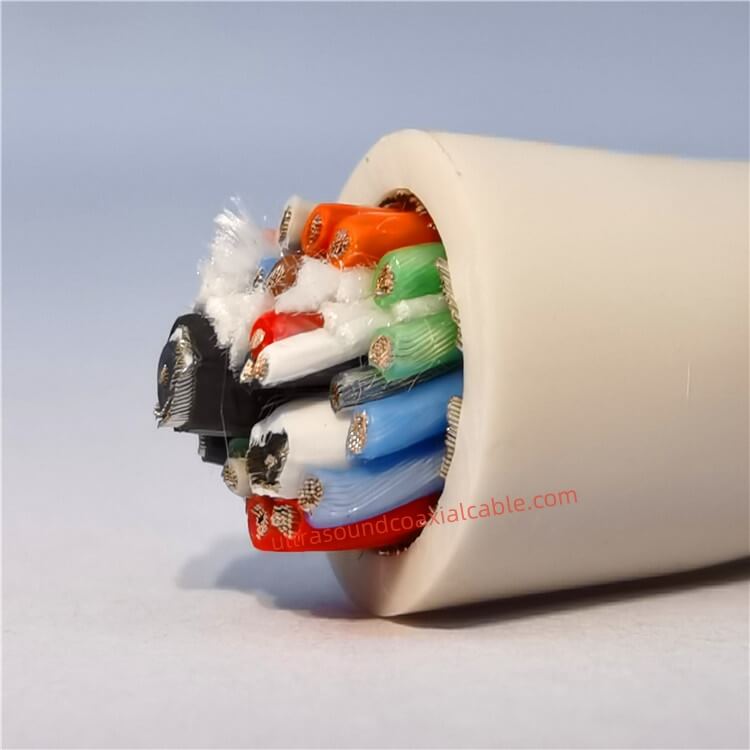
High-Precision 138-Core Medical Ultrasound Coaxial Cables | 0.2mm Ultra-Fine Biocompatible Design for Diagnostic Imaging Product Overview Engineered for advanced medical imaging systems, our 138-Core Medical Ultrasound Probe Coa.
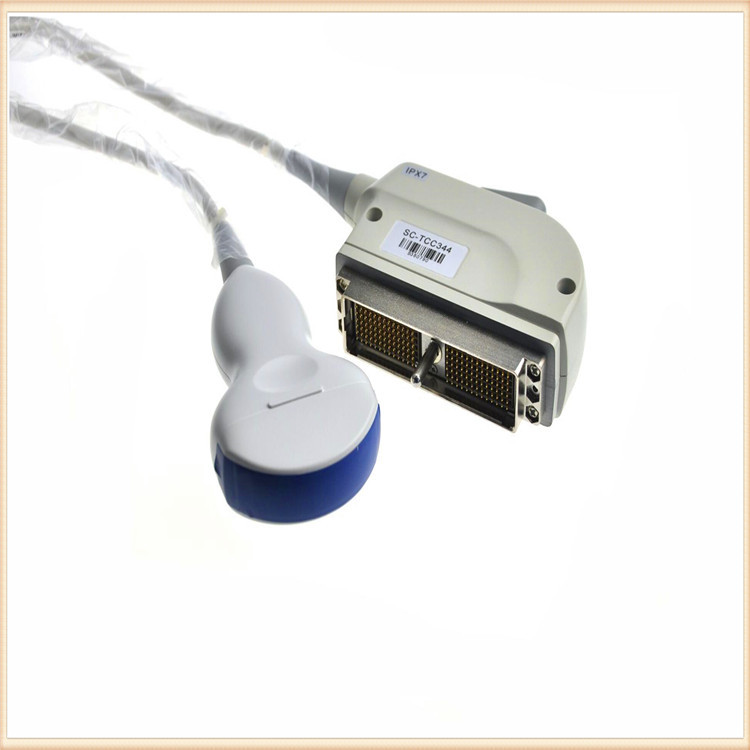
High-Performance Military Ultrasound Coaxial Cables: Built for Extreme Conditions Designed to meet the demanding requirements of military, aerospace, and medical applications, our Military-Grade Ultrasound Coaxial Cables deliver except.

High-Performance Flexible Coaxial Cable for Medical Imaging & Ultrasound Systems Designed for demanding applications in medical imaging, industrial diagnostics, and high-frequency signal transmission, this ultra-flexible coaxial ca.
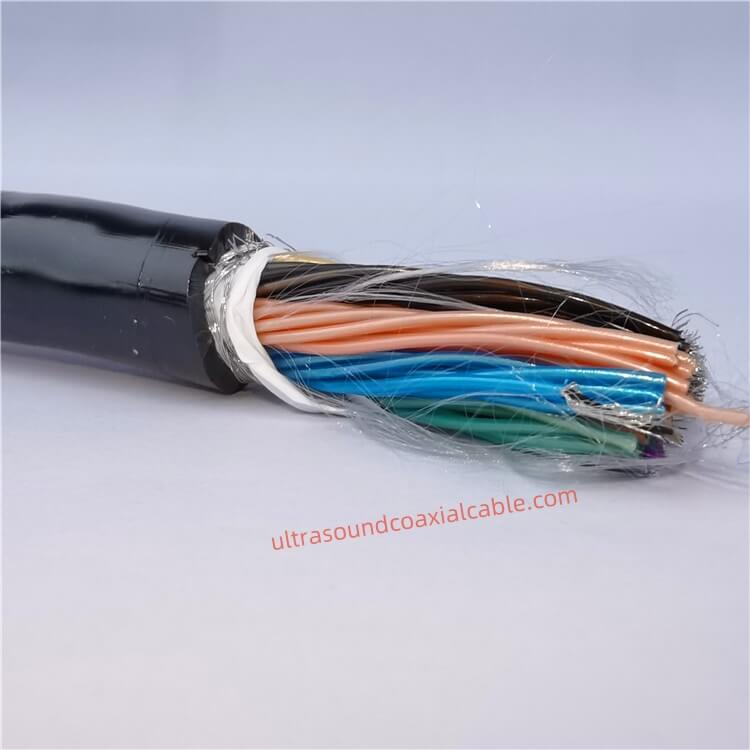
High-Performance Ultrasound Coaxial Cable Assembly: 42AWG to 30AWG, 6.6mm OD, 18GHz Bandwidth Engineered for precision in medical imaging and industrial applications, this customizable coaxial cable assembly delivers exceptional signal.
Feel free to reach out to us for any inquiries or orders.