How to Distinguish Medical-Grade vs. Industrial-Grade Ultrasound Coaxial Cables for Bulk Purchase? | High-Quality Ultrasound Coaxial Cable | ultrasound coaxial cable Manufacturer & Factory-FRS

How to Distinguish Medical-Grade vs. Industrial-Grade Ultrasound Coaxial Cables for Bulk Purchase?

When procuring ultrasound coaxial cables in bulk, the distinction between medical-grade and industrial-grade is not merely a matter of cost—it… - Professional Ultrasound Coaxial Cable Solutions

Information

Learn more about, latest news, frequently asked questions

When procuring ultrasound coaxial cables in bulk, the distinction between medical-grade and industrial-grade is not merely a matter of cost—it is a critical decision that impacts patient safety, diagnostic accuracy, and equipment longevity. Choosing the wrong grade can lead to regulatory non-compliance, signal degradation, and premature cable failure. This guide provides a comprehensive framework for procurement managers and OEMs to make an informed choice, focusing on the technical specifications, regulatory requirements, and application-specific needs that define these two distinct product categories.

1. Core Distinction: Biocompatibility vs. Environmental Durability

The fundamental difference lies in the intended environment and risk profile. Medical-grade cables are designed for patient contact​ and must prevent biological harm, while industrial-grade cables are engineered for harsh physical environments​ and must withstand mechanical stress.

  • Medical-Grade (Patient Safety Focus):​ These cables are classified as medical devices or components thereof. They must be biocompatible​ (ISO 10993), meaning the materials cannot leach harmful substances or cause allergic reactions. They are built to withstand repeated sterilization cycles​ (e.g., autoclaving at 135°C, chemical disinfection) without degrading the jacket or internal components. The primary goal is to ensure signal integrity for diagnostic accuracy while protecting the patient from electrical shock or chemical exposure.
  • Industrial-Grade (Mechanical Endurance Focus):​ These cables are built for ruggedness. They prioritize resistance to abrasion, extreme temperatures (-60°C to +200°C), oil, chemicals, and UV radiation. While signal integrity is important, the focus is on maintaining performance under physical duress, such as being dragged across concrete floors in a factory or exposed to outdoor elements in pipeline inspection.

2. Technical Specifications Deep Dive

A side-by-side comparison of key performance metrics reveals the engineering priorities of each grade.

ParameterMedical-Grade Ultrasound Coaxial CableIndustrial-Grade Ultrasound Coaxial Cable
Attenuation (Signal Loss)Ultra-Low (≤0.1 dB/m @ 10 MHz). Critical for high-resolution imaging (e.g., 4D fetal, cardiac Doppler). Even minor loss can obscure diagnostic details.Low to Moderate. Tolerates slightly higher loss as industrial NDT often uses lower frequencies or compensates with signal processing.
Shielding EffectivenessMulti-Layer (Triple/Quad Shield). Must achieve near-100% coverage to block EMI from MRI machines, electrosurgical units, and other hospital equipment.Robust Single/Double Layer. Focuses on preventing interference from industrial motors, welding equipment, and high-voltage lines.
Flexibility & Bend RadiusHigh Flexibility (42-44 AWG). Designed for frequent movement and tight bends during patient examinations. Must have a high cycle life (>50,000 bends).Variable (Rigid to Semi-Flex). Often uses thicker conductors (e.g., 26AWG) for lower loss. May be semi-rigid for fixed installations or flexible for portable NDT kits.
Jacket MaterialMedical-Grade Silicone, PUR, or PVC. Non-toxic, non-allergenic, and resistant to alcohol, isopropyl, and autoclave sterilization.Polyurethane (PUR), TPE, or specialized compounds. Resistant to abrasion, oil, chemicals, and extreme temperatures.
Impedance StabilityTight Tolerance (50Ω ±1Ω). Essential for precise impedance matching with transducers to prevent signal reflections and image artifacts.Standard Tolerance (50Ω ±2-3Ω). Adequate for most industrial sensing and flaw detection applications.

3. Regulatory Compliance & Certifications (The Non-Negotiable Filter)

For bulk purchasing, verifying certifications is the most efficient way to filter suppliers. Medical-grade cables require a much more stringent regulatory framework.

  • Medical-Grade Must-Haves:
    • ISO 13485:2016:​ The quality management system standard specific to medical devices. This ensures traceability from raw material to finished product, which is crucial for recalls.
    • IEC 60601-1:​ The international standard for electrical safety of medical equipment. It defines requirements for leakage current, insulation, and protection against electric shock (MOPP/MOOP).
    • ISO 10993 (Biocompatibility):​ Certifies that materials are safe for human contact.
    • FDA Registration / CE Marking (MDR):​ Required for sale in the US and EU markets.
  • Industrial-Grade Must-Haves:
    • ISO 9001:​ The baseline quality management standard.
    • UL/CSA:​ For electrical safety in North America.
    • MIL-SPEC (e.g., MIL-DTL-5015):​ Often required for defense or aerospace applications, specifying durability under extreme conditions.
    • RoHS/REACH:​ Restriction of hazardous substances, though industrial grades may have more leniency compared to medical.

4. Application Scenarios & Market Analysis

Understanding where each cable type is deployed helps contextualize the purchase decision.

  • Medical Imaging (65% of Market Demand):​ This is the domain of medical-grade cables.
    • Cardiovascular Ultrasound:​ Requires ultra-low attenuation cables for clear blood flow visualization and Doppler imaging.
    • Obstetrics & Gynecology:​ Demands highly flexible, fine-gauge cables (42-44 AWG) for maneuverability during examinations.
    • Portable/Handheld Devices:​ Needs lightweight, durable cables that can withstand frequent coiling and uncoiling without signal degradation. The market for portable ultrasound is growing at ~12% annually, driving demand for advanced flexible coaxial solutions.
  • Industrial Non-Destructive Testing (NDT) & Sensing (25% of Market):​ This is the primary domain of industrial-grade cables.
    • Oil & Gas Pipeline Inspection:​ Requires cables rated for high temperatures (up to 150°C) and harsh chemical exposure.
    • Aerospace Component Testing:​ Demands cables with high compression strength and vibration tolerance.
    • Automotive ADAS (Advanced Driver-Assistance Systems):​ Ultrasonic parking sensors require cables with enhanced EMI shielding to function reliably near the engine and electronic control units. The ADAS market is projected to reach $67 billion by 2027, creating significant demand for industrial-grade ultrasonic cables.

5. Product Selection: Addressing Common Pain Points

When evaluating suppliers for your bulk order, look for solutions that address these specific challenges.

Medical-Grade Pain Points & Solutions:

  • Pain Point: Signal Loss in Long Cable Runs.​ In large hospital suites, long cables can attenuate signals, reducing image clarity.
    • Solution:​ Specify cables with low-loss dielectric materials​ like gas-injected foam polyethylene or PTFE. For example, FRS’s medical-grade cables achieve <0.15 dB/m attenuation at 1GHz, ensuring signal integrity over extended distances.
  • Pain Point: Cable Stiffness Limiting Probe Maneuverability.​ Stiff cables cause operator fatigue and can impede access during complex examinations.
    • Solution:​ Opt for helically wound or multi-core designs​ that offer high flexibility without sacrificing structural integrity. Look for specifications indicating >50,000 bend cycles.
  • Pain Point: Connector Failure During Sterilization.​ Repeated autoclaving can corrode connectors, leading to intermittent connectivity.
    • Solution:​ Ensure connectors are IP67-rated​ and use gold-plated contacts​ resistant to oxidation and chemical exposure.

Industrial-Grade Pain Points & Solutions:

  • Pain Point: Abrasion and Crush Damage.​ Cables dragged across rough surfaces or run over by vehicles are a common failure point.
    • Solution:​ Select cables with abrasion-resistant jackets​ (e.g., high-density PUR) and, if necessary, armored shielding​ for extreme environments.
  • Pain Point: Temperature Extremes.​ Outdoor inspections or high-temperature industrial settings can melt standard cable jackets.
    • Solution:​ Verify the operating temperature range. Industrial-grade cables from manufacturers like FRS are often rated for -60°C to +200°C, suitable for arctic conditions or high-heat industrial processes.

6. Strategic Sourcing for Bulk Purchase

For procurement managers, the total cost of ownership (TCO) extends beyond the per-meter price.

  1. Audit Manufacturing Scale:​ For bulk orders, ensure the supplier has the production capacity to meet your volume without compromising lead times. A manufacturer with a large-scale facility (e.g., 10,000+ m² workshop) can provide consistency across batches.
  2. Demand Customization Capability:​ OEM projects often require specific impedance tuning, custom connector configurations, or unique jacket colors. Partner with a manufacturer that offers R&D support and rapid prototyping to avoid design bottlenecks.
  3. Insist on 100% Testing:​ Medical and high-end industrial applications cannot tolerate failure. Ensure the supplier performs 100% electrical testing (continuity, impedance, shielding) on every cable batch before shipment.
  4. Evaluate the Complete Assembly:​ Consider sourcing cable assemblies​ (cable + connector) rather than raw cable. This reduces quality variance on your production line and creates a single point of responsibility for the entire interconnect solution.

Conclusion:

Distinguishing between medical and industrial ultrasound coaxial cables requires a meticulous review of specifications, certifications, and application requirements. Medical-grade prioritizes biocompatibility and signal fidelity for patient safety, while industrial-grade emphasizes mechanical ruggedness for harsh environments. For bulk purchasers, partnering with a certified manufacturer like FRS, which holds ISO 13485 and IATF 16949 certifications, ensures access to both medical-grade precision and industrial-grade durability, backed by the scalability needed for large-volume OEM projects.

Hot Selling Products

Discover our most popular furniture pieces that are loved by customers worldwide.
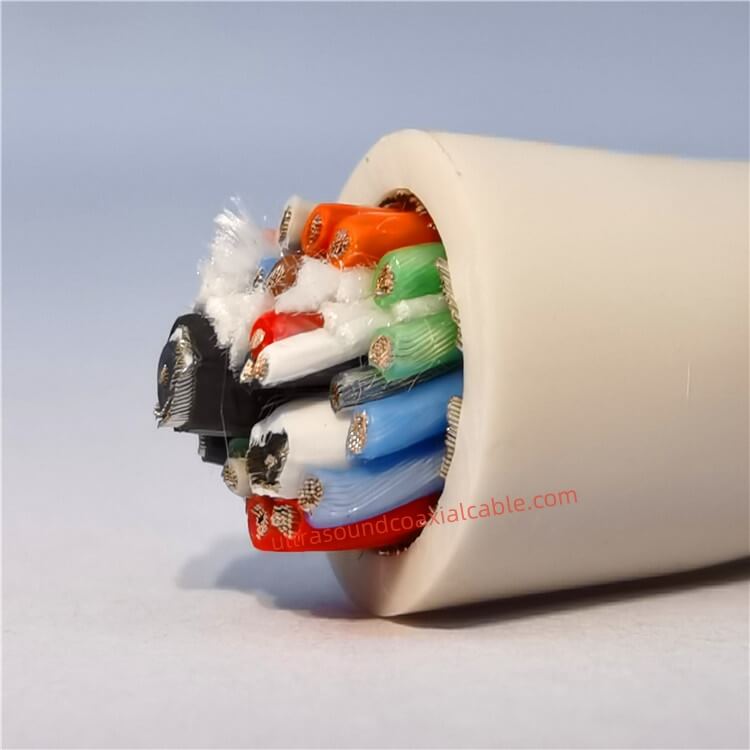
138-Core Medical Ultrasound Probe Coaxial Cable with 0.2mm Diameter – Biocompatible & FDA-Certified

138-Core Medical Ultrasound Probe Coaxial Cable with 0.2mm Diameter – Biocompatible & FDA-Certified

High-Precision 138-Core Medical Ultrasound Coaxial Cables | 0.2mm Ultra-Fine Biocompatible Design for Diagnostic Imaging Product Overview Engineered for advanced medical imaging systems, our 138-Core Medical Ultrasound Probe Coa.

Ultra-Flexible Coaxial Cable for Ultrasound Transducers – 44AWG, 0.15dB/m Attenuation at 1GHz

Ultra-Flexible Coaxial Cable for Ultrasound Transducers – 44AWG, 0.15dB/m Attenuation at 1GHz

High-Performance Flexible Coaxial Cable for Medical Imaging & Ultrasound Systems Designed for demanding applications in medical imaging, industrial diagnostics, and high-frequency signal transmission, this ultra-flexible coaxial ca.
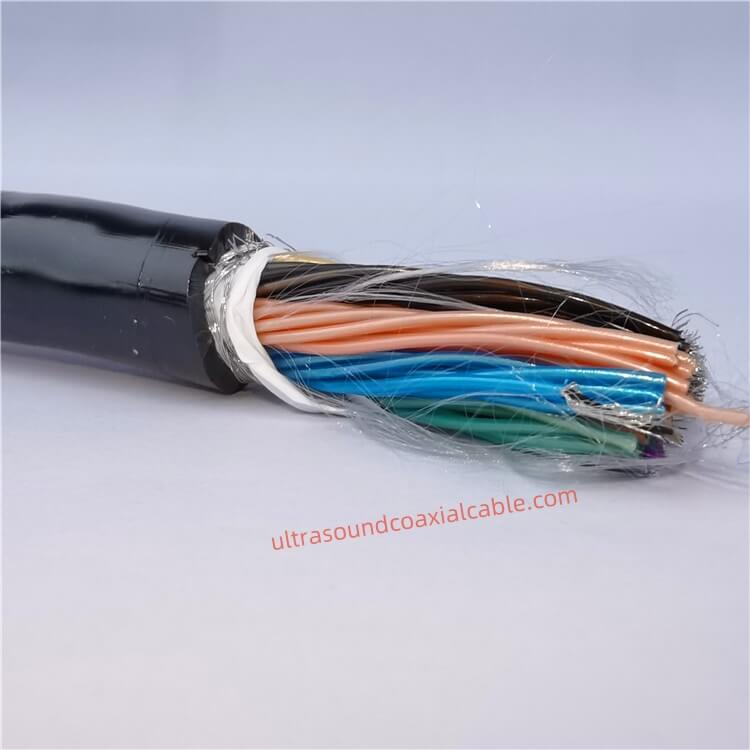
Customizable Ultrasound Coaxial Cable Assembly – 42AWG to 30AWG, 6.6mm OD, 18GHz Bandwidth

Customizable Ultrasound Coaxial Cable Assembly – 42AWG to 30AWG, 6.6mm OD, 18GHz Bandwidth

High-Performance Ultrasound Coaxial Cable Assembly: 42AWG to 30AWG, 6.6mm OD, 18GHz Bandwidth Engineered for precision in medical imaging and industrial applications, this customizable coaxial cable assembly delivers exceptional signal.

High-Precision Ultrasound Coaxial Cable for Medical Imaging – Low Noise, Flexible Design, 42AWG

High-Precision Ultrasound Coaxial Cable for Medical Imaging – Low Noise, Flexible Design, 42AWG

Ultra-Flexible 42AWG Medical-Grade Coaxial Cables for High-Precision Ultrasound Imaging Designed for demanding medical imaging applications, our Ultra-Flexible 42AWG Coaxial Cables deliver exceptional signal integrity, noise reduction,.

Contact Us

Feel free to reach out to us for any inquiries or orders.

Call Us

Have a question? Give us a call!

                   +8618818785005(Whatsapp)

Email Us

Send us an email and we'll get back to you soon.

sales@custom-cable-assemblies.com
       
Home Products Contact