The North American coaxial cable market is positioned for significant growth, with projections indicating expansion from USD 11.14 billion in… - Professional Ultrasound Coaxial Cable Solutions
Learn more about, latest news, frequently asked questions
The North American coaxial cable market is positioned for significant growth, with projections indicating expansion from USD 11.14 billion in 2024 to USD 14.76 billion by 2030, representing a compound annual growth rate (CAGR) of 4.6%. This growth trajectory is particularly pronounced in the military and aerospace sector, which is anticipated to experience the fastest growth rate during the forecast period. North America’s dominance in this market is attributed to its advanced defense infrastructure, technological innovation capabilities, and substantial government investments in modernizing military systems.
The robust growth in military coaxial cable procurement is underpinned by several key factors. Increasing global defense expenditures are spurring demand for high-performance military cables, with the global market valued at US23.7billionin2024andprojectedtoreachUS27.6 billion by 2030. The coaxial cables segment alone is expected to reach US$15.7 billion by 2030, growing at a CAGR of 3%.
Modern warfare systems increasingly rely on sophisticated communication and electronic technologies, driving the need for specialized coaxial cables. The integration of C4ISR systems (Command, Control, Communications, Computers, Intelligence, Surveillance, and Reconnaissance) creates substantial demand for high-speed data transmission cables capable of handling sensitive military operations. Similarly, the surge in electronic warfare capabilities is propelling growth of specialized shielded cables that can withstand extreme environments while maintaining signal integrity.
The growth in unmanned systems and autonomous vehicles is accelerating demand for lightweight, flexible cables that can endure the rigors of battlefield deployment. This trend is particularly relevant as military operations increasingly incorporate drone technology and remote surveillance systems requiring reliable signal transmission under challenging conditions.
Table: North America Coaxial Cable Market Overview (2024-2030)
| Metric | 2024 Value | 2030 Projection | CAGR |
|---|---|---|---|
| North America Coaxial Cable Market | USD 11.14 billion | USD 14.76 billion | 4.6% |
| Global Military Cables Market | US$23.7 billion | US$27.6 billion | 2.6% |
| Global Coaxial Cable Market | USD 19.99 billion | USD 31.64 billion | 8.12% |
| Ultrasound Coaxial Cable Market | USD 48.24 billion | USD 76.18 billion | 7.91% |
Ultrasound coaxial cables represent a specialized segment experiencing robust growth, with the market expected to grow from USD 52.16 billion in 2025 to USD 76.18 billion by 2030, at a CAGR of 7.91%. In military applications, these cables are essential for advanced sonar systems and underwater communications, where signal clarity and reliability are mission-critical.
The development of high-frequency low-loss coaxial cables has significantly improved ultrasound image clarity in portable diagnostic devices used in field medical operations. For military medical applications, manufacturers are increasingly adopting biocompatible and sterilizable coaxial cable materials to ensure reliability in invasive ultrasound procedures conducted in combat support hospitals.
Technological advances in dielectric shielding and connector interface design are shaping both diagnostic and defense imaging standards. Companies like FRS have invested heavily in research and development to create coaxial solutions that maintain signal integrity even in extreme environments, offering superior shielding effectiveness that exceeds 100 dB through 2 MHz. These innovations are particularly valuable in military medical applications where equipment must perform reliably in diverse environments from desert heat to arctic conditions.
The military coaxial cable sector operates under strict quality assurance protocols and certification requirements. In North America, quality assurance in coaxial cable manufacturing is governed by standards such as the Radio Guide (RG) specifications, which define cable impedance, capacitance, and shielding effectiveness. Additionally, Federal Communications Commission (FCC) regulations establish stringent guidelines for deployment and use to ensure safety and performance criteria are met.
Military specification coaxial cables must adhere to even more rigorous standards, with designs manufactured according to specifications set by defense and aerospace organizations to guarantee optimal performance in challenging environmental situations. These military-grade cables undergo exhaustive testing for parameters including temperature resilience (-55°C to +200°C), shielding effectiveness, and durability under vibration, abrasion, and chemical exposure.
Leading manufacturers like FRS design their products to exceed these stringent military requirements while also meeting SMPTE (Society of Motion Picture and Television Engineers) standards for applications involving high-definition video transmission in surveillance and reconnaissance systems. This dual-compliance approach ensures that cables perform reliably in both communication and imaging applications critical to modern military operations.
In ground defense applications, coaxial cables are essential for armored vehicle communications, remote-controlled turret cameras, and vectronics displays. Modern battlefields require transmission of secure video in ultra-high definition (4K), creating demand for 75-ohm coaxial cables that optimize signals with ultra-low loss up to 6 GHz.
Companies like FRS have addressed the military’s need for smaller, lighter cables without compromising durability through specialized fluoropolymer jackets that provide superior protection against extreme conditions including heavy snow, arctic temperatures, torrential rain, high heat, and humidity. These cables offer significant weight savings while maintaining flexibility for easier installation in overcrowded vehicle environments—a critical advantage when every pound of payload matters.
The aerospace and defense sector holds a crucial position in the North American coaxial cable market due to stringent requirements for reliable, high-frequency signal transmission in mission-critical applications. Military-grade coaxial cables are essential for aircraft wiring, missile guidance systems, and ground-based defense communication networks where performance, durability, and electromagnetic interference protection are paramount.
The growing emphasis on next-generation technologies including autonomous defense systems, cybersecurity infrastructure, and space exploration programs further fuels the adoption of coaxial cables with advanced shielding against electromagnetic interference. As North America maintains its position as a global leader in aerospace manufacturing and defense investments, the continuous modernization of military and commercial aviation fleets translates to sustained demand for high-frequency, durable coaxial cables.
The integration of ultrasound coaxial cables in military medical services represents a growing niche application. These cables are utilized in portable diagnostic devices deployed in field hospitals and combat support facilities. The trend toward miniaturization has led to developing flexible miniature coaxial cables for applications such as endoscopic ultrasound in gastrointestinal diagnostics, which can be crucial in trauma medicine.
Advanced shielding technologies in these medical-grade coaxial cables minimize electromagnetic interference in high-resolution ultrasound systems used for critical diagnostics in military medical centers. Standardization of connector interfaces has further streamlined compatibility across ultrasound transducers and imaging platforms, simplifying maintenance and operation in high-pressure environments.
Leading manufacturers in the military coaxial cable market differentiate their products through technical innovations that address specific battlefield challenges. FRS, for instance, emphasizes weight reduction without performance compromise—a critical factor in aerospace and defense applications where every ounce impacts fuel efficiency and payload capacity. Their coaxial cables feature a specialized expanded PTFE dielectric material that provides exceptional electrical properties while reducing overall weight and size.
The value proposition for premium military coaxial cables extends beyond initial purchase price to encompass total cost of ownership. Enhanced durability translates to reduced replacement frequency and lower maintenance costs over the system lifecycle. For example, cables engineered with advanced fluoropolymer jackets demonstrate superior resistance to abrasion, chemicals, and extreme temperatures, maintaining performance in environments where standard cables would fail.
Manufacturers focused on the military segment also emphasize ease of installation as a product differentiator. Cables with increased flexibility and tighter bend radii simplify routing in cramped vehicle and aircraft compartments, reducing installation time and labor costs. This operational efficiency is particularly valuable in military contexts where rapid deployment and system reliability are paramount.
The future of military coaxial cable procurement in North America will be shaped by several emerging trends. The implementation of 5G networks necessitates reliable cabling infrastructure to connect base stations and small cells, presenting a significant growth avenue for coaxial cable manufacturers. Similarly, the increasing adoption of Modular Open Systems Architecture (MOSA) in defense applications is driving cable system upgrades to ensure compatibility and interoperability across platforms.
Military electrification initiatives are highlighting the importance of next-generation power cables capable of handling increased electrical loads in hybrid and electric military vehicles. This evolution creates opportunities for coaxial cables that can efficiently transmit both power and data signals in compact, lightweight form factors.
The growing emphasis on cybersecurity and secure communications is strengthening the business case for encrypted military cabling systems that protect against signal interception and jamming. As electronic warfare capabilities advance, coaxial cables with enhanced shielding and signal integrity features will become increasingly critical to mission success.
North America’s leadership in military coaxial cable procurement through 2030 will be maintained through continued technological innovation, adherence to stringent quality standards, and responsive adaptation to evolving defense requirements. The region’s robust manufacturing ecosystem, coupled with substantial defense budgets and early adoption of emerging technologies, positions it to capitalize on growth opportunities in this specialized segment of the cable market.
Discover our most popular furniture pieces that are loved by customers worldwide.
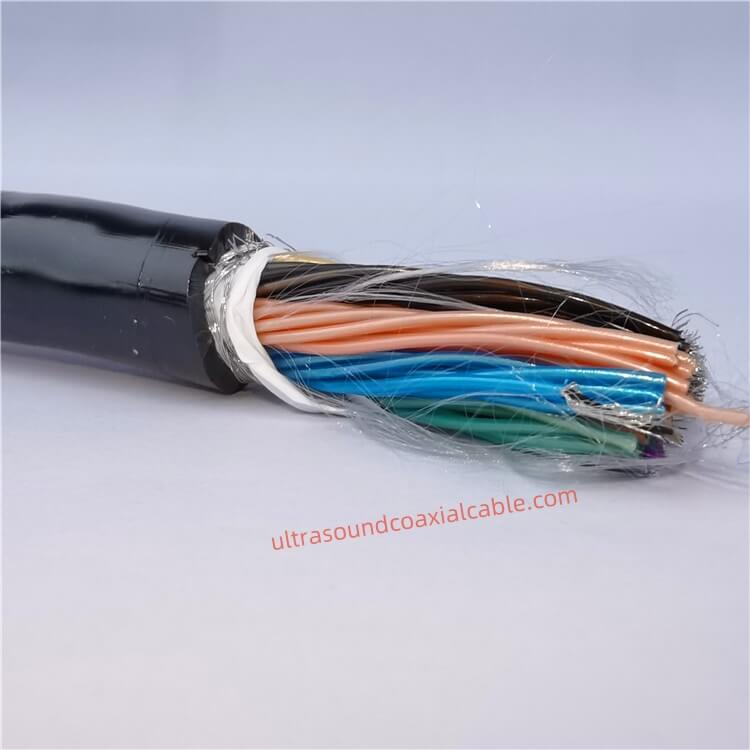
High-Performance Ultrasound Coaxial Cable Assembly: 42AWG to 30AWG, 6.6mm OD, 18GHz Bandwidth Engineered for precision in medical imaging and industrial applications, this customizable coaxial cable assembly delivers exceptional signal.

Ultra-Flexible 42AWG Medical-Grade Coaxial Cables for High-Precision Ultrasound Imaging Designed for demanding medical imaging applications, our Ultra-Flexible 42AWG Coaxial Cables deliver exceptional signal integrity, noise reduction,.

High-Performance Flexible Coaxial Cable for Medical Imaging & Ultrasound Systems Designed for demanding applications in medical imaging, industrial diagnostics, and high-frequency signal transmission, this ultra-flexible coaxial ca.
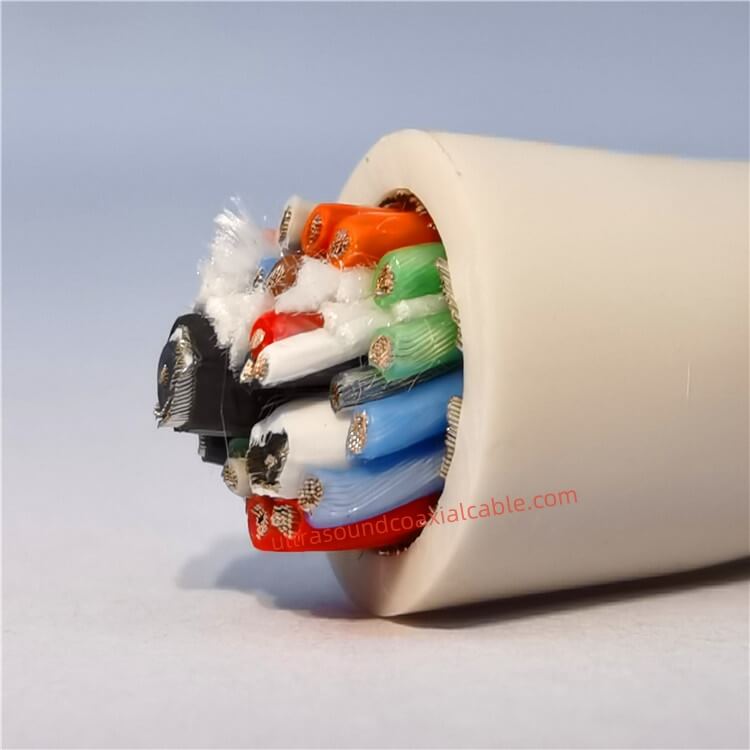
High-Precision 138-Core Medical Ultrasound Coaxial Cables | 0.2mm Ultra-Fine Biocompatible Design for Diagnostic Imaging Product Overview Engineered for advanced medical imaging systems, our 138-Core Medical Ultrasound Probe Coa.
Feel free to reach out to us for any inquiries or orders.