Ultrasound Coaxial Cables in High-Vibration Industrial Environments: A Complete Guide Ultrasound coaxial cables represent a critical yet often overlooked component… - Professional Ultrasound Coaxial Cable Solutions
Learn more about, latest news, frequently asked questions
Ultrasound coaxial cables represent a critical yet often overlooked component in industrial non-destructive testing (NDT) systems. These specialized cables are engineered to transmit high-frequency signals with precision, but their performance faces significant challenges in high-vibration industrial settings. From manufacturing plants to energy infrastructure monitoring, the reliability of these cables directly impacts inspection accuracy and operational safety. This article explores the technical specifications, industry applications, and innovative solutions that make modern ultrasound coaxial cables suitable for demanding environments where constant vibration and mechanical stress are everyday challenges.
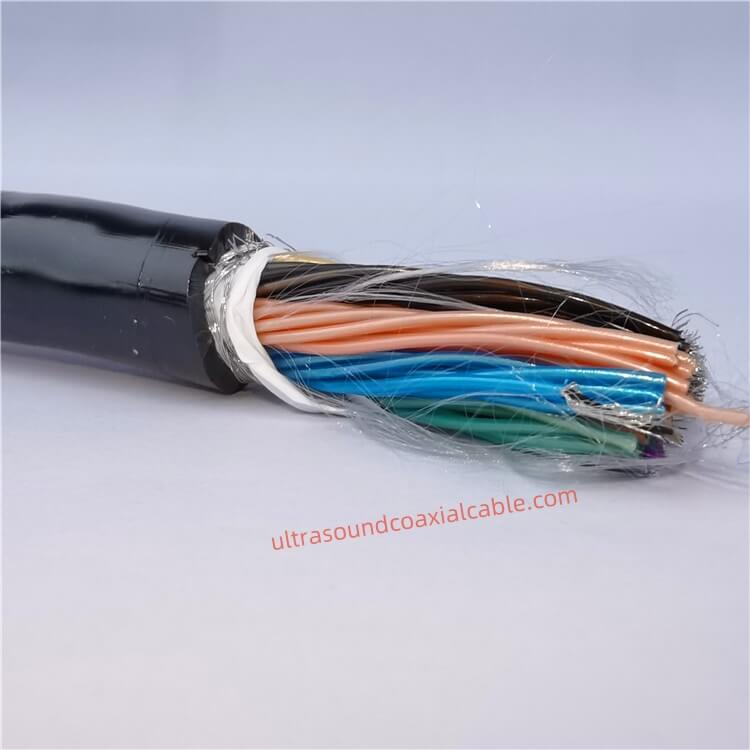
Ultrasound coaxial cables feature a specialized layered design that sets them apart from standard coaxial cables. At their core, they contain a central conductor—typically silver-plated copper—surrounded by dielectric insulation, shielding layers, and a protective outer jacket. This construction is optimized for transmitting high-frequency signals (typically 2-15 MHz) with minimal loss and interference, which is essential for both medical imaging and industrial testing applications .
What makes these cables particularly valuable for industrial applications is their precision engineering. Unlike standard coaxial cables, ultrasound variants are designed with impedance stability within ±2 ohms across operational frequencies, ensuring signal integrity critical for accurate measurements . The micro-coaxial design found in multi-channel configurations (such as 72-channel arrays) incorporates extremely fine conductors, with specifications reaching 38-44 AWG (American Wire Gauge) for minimal signal degradation .
The global market for ultrasound coaxial cables continues to expand, driven largely by industrial demand. Recent data indicates a 9% year-on-year increase in ultrasonic NDT equipment sales, directly correlating with cable demand . This growth is particularly strong in the oil and gas sector, where pipeline inspections in regions like the Permian Basin shale fields require cables rated for temperatures up to 150°C alongside vibration resistance .
Industrial environments present unique challenges for electronic components, with vibration being particularly problematic for coaxial cables. In manufacturing plants, heavy machinery generates constant low-frequency vibration, while in aerospace testing environments, components experience high-frequency oscillations. These mechanical stresses can compromise cable performance through multiple mechanisms:
Vibration-induced signal degradation occurs when constant movement damages internal components, leading to intermittent connections or complete failure. The repetitive flexing can cause microscopic fractures in conductors, compromising the electrical path. Similarly, electromagnetic interference (EMI) increases when shielding becomes compromised through physical stress, allowing external noise to distort sensitive ultrasonic measurements .
The connector integrity is especially vulnerable in high-vibration environments. Loosening of connector interfaces creates impedance mismatches that reflect signals back toward the source, significantly reducing measurement accuracy. Furthermore, abrasion and wear from contact with surfaces or other cables gradually degrades the outer protective layers, eventually exposing critical internal components to environmental hazards .
Different industrial sectors present distinct vibration profiles. For example, wind turbine monitoring cables experience continuous, variable-frequency vibration from rotational mechanics and wind forces, requiring exceptional fatigue resistance. Conversely, automotive testing environments subject cables to intense but intermittent vibration shocks, demanding robust strain relief at connection points .
Engineering cables for high-vibration environments requires addressing multiple technical parameters beyond standard performance specifications. The mechanical durability standards are particularly stringent, with specifications like ASTM F2945-20 mandating that ultrasound cables withstand at least 10,000 flex cycles without signal degradation . This represents a 40% improvement in lifespan compared to traditional coaxial configurations, achieved through hybrid designs with helical stainless steel reinforcement .
The shielding effectiveness becomes even more critical in vibratory environments where EMI protection cannot be compromised. High-performance ultrasound coaxial cables typically employ multiple shielding approaches, with dual-layer configurations (spiral and braid shields) offering 85-90% coverage minimum . Advanced designs from manufacturers like FRS incorporate quad-shielding systems that maintain integrity even under sustained vibration, with silver-plated copper braid providing superior conductivity and fatigue resistance .
Material selection plays a crucial role in vibration resistance. Industrial-grade ultrasound coaxial cables utilize specialized materials throughout their construction:
The electrical properties must remain stable despite mechanical stress. High-quality industrial ultrasound coaxial cables maintain consistent impedance (typically 50 ohms) with minimal capacitance variation (approximately 110pF/m) . This stability ensures that ultrasonic signals maintain their integrity throughout the cable’s operational lifespan, even in challenging conditions.
The application spectrum for vibration-resistant ultrasound coaxial cables spans multiple industrial sectors, each with unique requirements and operational challenges.
In the oil and gas industry, ultrasonic testing is critical for pipeline integrity monitoring, particularly in shale fields like the Permian Basin where cables must operate at temperatures up to 150°C while resisting vibration from extraction equipment and fluid dynamics . The harsh subterranean environment demands cables with chemical resistance alongside mechanical durability, with specialized fluoropolymer insulation providing protection against hydrocarbons and moisture.
The aerospace and defense sector represents another significant application area, where ultrasonic testing validates component integrity in aircraft systems and military hardware. A 2022 defense procurement analysis highlighted a 15% annual rise in ultrasonic inspection tools for military maintenance programs . Cables in these applications frequently require MIL-SPEC certifications for durability and signal precision, with triaxial designs offering extra shielding for critical communications and radar systems in naval and aerospace applications .
Renewable energy infrastructure has emerged as a growing market for specialized ultrasound coaxial cables. Wind turbine blade inspections using ultrasound technology require cables resistant to vibration and moisture, with the global wind energy capacity projected to double by 2030 . The regular maintenance protocols mandating ultrasonic checks will drive sustained demand for cables that can withstand the constant vibration and environmental exposure inherent to wind power generation.
Automotive manufacturing and testing facilities utilize ultrasonic sensors in advanced driver-assistance systems (ADAS) for parking assistance and collision avoidance. Each vehicle equipped with ADAS typically incorporates 8-12 ultrasonic sensors, directly increasing cable consumption . The global ADAS market, expected to reach $67 billion by 2027, relies on ultrasound technology for short-range object detection, with specialized coaxial cables featuring enhanced EMI shielding to maintain performance despite engine and road vibrations .
FRS has established itself as a leading manufacturer by addressing the specific challenges of high-vibration environments through innovative engineering solutions. The FRS product line incorporates several proprietary technologies that enhance performance and reliability under mechanical stress.
The FRS DuraFlex Vibration-Resistant Series exemplifies this approach with a multi-layered construction designed specifically for challenging industrial applications. At its core, a silver-plated copper alloy conductor (38-44 AWG) provides optimal signal transmission with fatigue resistance. The double-shielded design combines a spiral shield with 90% coverage and a braid shield at 85% nominal coverage, maintaining EMI protection even under continuous vibration . The advanced fluoropolymer insulation ensures stable dielectric properties across a temperature range from -40°C to 150°C, accommodating thermal cycling alongside mechanical stress.
For extreme applications, FRS offers the Industrial Pro Series with reinforced strain relief at connection points and hybrid coaxial designs featuring helical stainless steel reinforcement. This construction demonstrates a 40% improvement in lifespan compared to traditional coaxial configurations, exceeding the ASTM F2945-20 standard of 10,000 flex cycles . The polyurethane outer jacket provides exceptional abrasion resistance while maintaining flexibility in low-temperature environments where PVC becomes brittle.
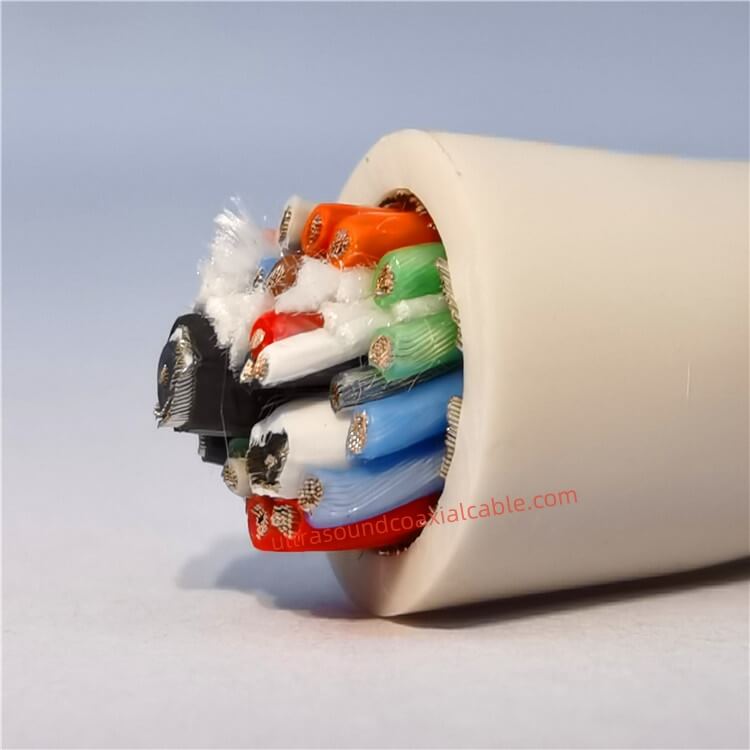
The FRS Micro-Coax Array Cables support multi-channel ultrasonic systems with up to 198 individual coaxial lines in a single assembly . These high-density configurations maintain channel separation and signal integrity despite external vibration, with impedance stability within ±2 ohms across the operating frequency range. The compact design (OD 7.6-8.3mm) facilitates routing through confined spaces in industrial machinery without compromising performance .
Ultrasound coaxial cables deployed in high-vibration industrial environments must comply with numerous international standards and certifications that validate their safety, performance, and reliability. These certifications serve as critical differentiators for quality-conscious industrial buyers.
The International Electrotechnical Commission (IEC) standards form the foundation for cable performance specifications, with IEC 60601-1 addressing electrical safety requirements for equipment used in medical and industrial settings . While originally developed for medical devices, these standards have been adapted for industrial ultrasonic equipment where operator safety remains paramount. The electromagnetic compatibility standards (IEC 60601-1-2) ensure that cables maintain performance without generating or succumbing to interference in electrically noisy industrial environments .
Industry-specific certifications further validate cable suitability for challenging applications. MIL-SPEC certifications govern defense applications where equipment must withstand extreme conditions while maintaining precision . The ASTM F2945-20 standard specifically addresses mechanical durability, mandating that cables withstand rigorous flex testing to simulate long-term use in high-vibration environments .
Environmental regulations increasingly influence cable design and manufacturing processes. The EU’s Restriction of Hazardous Substances (RoHS) directive and REACH regulations limit hazardous materials in electronic components, driving adoption of halogen-free flame retardants and biocompatible materials in cable jackets . Manufacturers with ISO 9001, ISO 13485, and ISO 14001 certifications demonstrate robust quality management systems that ensure consistent product performance .
The FDA’s Unique Device Identification (UDI) system, while primarily targeting medical devices, has influenced traceability standards for industrial cables used in critical applications . Manufacturers implementing laser-etched serial numbers and blockchain-based tracking provide assurance of supply chain integrity and material traceability—increasingly important concerns for industrial buyers in regulated sectors .
The market for industrial ultrasound coaxial cables demonstrates robust growth driven by expanding applications across multiple sectors. Current analysis indicates that over 60% of global ultrasound coaxial cable production serves medical devices, but the industrial segment represents the fastest-growing sector with a projected CAGR of 5.8% from 2023 to 2030 . This growth trajectory reflects increasing adoption of ultrasonic testing across industries prioritizing preventive maintenance and quality assurance.
Regional analysis reveals distinct growth patterns and opportunities. The Asia-Pacific region dominates market expansion, with China projecting a 12.5% CAGR through 2028 fueled by government infrastructure initiatives . The “Thousand Counties Project” upgrading 1,472 county-level hospitals with advanced imaging systems also stimulates demand for industrial inspection equipment as supporting infrastructure develops. India follows closely with ultrasound equipment sales growing 28% year-over-year in 2023 as industrial expansion drives NDT demand .
North American markets exhibit strong replacement demand cycles, with 68% of U.S. healthcare facilities planning coaxial cable upgrades in existing ultrasound systems by 2026 . While this statistic references medical applications, the trend extends to industrial settings where equipment upgrades increasingly incorporate higher-frequency transducers (15-18 MHz) for precise musculoskeletal imaging of composite materials, creating specialized cable requirements .
Emerging applications in the renewable energy sector present significant growth opportunities. With wind energy capacity projected to double by 2030, maintenance protocols mandating regular ultrasonic checks of turbine blades will drive sustained demand for vibration-resistant cables . Similarly, solar farm structural integrity assessments increasingly adopt portable ultrasonic devices, expanding cable utilization beyond traditional sectors .
The competitive landscape features established manufacturers like TE Connectivity, Hitachi Cable, and Gore & Associates controlling significant market share through patented technologies . However, specialized manufacturers like FRS have carved niches by addressing specific challenges such as high-vibration environments through focused R&D and customized solutions. With over 4,500 active patents covering coaxial cable designs for medical imaging (68% held by incumbents), innovation remains a key differentiator .
Choosing appropriate ultrasound coaxial cables for high-vibration environments requires careful consideration of multiple technical and operational factors. The selection process should align cable specifications with application requirements to ensure optimal performance and longevity.
The mechanical specifications demand primary attention in vibratory environments. The cable’s flex life rating should exceed the anticipated movement cycles, with industrial-grade cables typically rated for 10,000+ flex cycles . The minimum bending radius during operation determines routing possibilities, with more flexible designs accommodating tighter spaces but potentially requiring additional protection at stress points. The connector types must maintain contact integrity despite vibration, with threaded interfaces generally preferred over bayonet-style connections in high-vibration settings .
Electrical performance parameters must align with the ultrasonic equipment’s requirements. The characteristic impedance (typically 50 ohms for industrial applications) should match the entire signal path to prevent reflections that degrade measurement accuracy . The attenuation per meter at operational frequencies determines maximum usable cable length, with lower loss enabling longer runs between the transducer and instrumentation. The shielding effectiveness becomes critical in electrically noisy industrial environments, with dual or quad-shield designs providing superior EMI rejection .
Environmental factors significantly influence cable selection and lifespan. The temperature rating must accommodate both operational extremes and thermal cycling effects, with industrial-grade cables typically rated from -40°C to 150°C . Chemical resistance against oils, solvents, and cleaning agents ensures jacket integrity despite exposure to industrial chemicals. Abrasion resistance protects against wear from contact with surfaces or other cables, with reinforced jackets adding significant lifespan in demanding applications .
The total cost of ownership perspective justifies investment in higher-quality cables for critical applications. While premium vibration-resistant cables command higher initial prices, their extended service life and reduced failure rates typically deliver superior value through minimized downtime and maintenance expenses. This economic reality makes quality-focused manufacturers like FRS the preferred choice for industrial buyers prioritizing operational reliability over initial cost savings .
Ultrasound coaxial cables engineered for high-vibration industrial environments incorporate specialized materials, mechanical reinforcements, and electrical designs that address the unique challenges of oscillatory settings. As industrial applications of ultrasonic technology continue expanding across sectors from energy to aerospace, the demand for reliable cabling solutions will grow correspondingly. Manufacturers like FRS who prioritize vibration resistance in their designs will continue leading this specialized market segment through continued innovation and quality-focused manufacturing. The integration of advanced materials and design approaches ensures that ultrasound coaxial cables will maintain signal integrity despite the mechanical challenges inherent to industrial environments, supporting the critical inspection and monitoring processes that underpin modern industrial safety and quality standards.
Discover our most popular furniture pieces that are loved by customers worldwide.

Ultra-Flexible 42AWG Medical-Grade Coaxial Cables for High-Precision Ultrasound Imaging Designed for demanding medical imaging applications, our Ultra-Flexible 42AWG Coaxial Cables deliver exceptional signal integrity, noise reduction,.
High-Performance Ultrasound Coaxial Cable Assembly: 42AWG to 30AWG, 6.6mm OD, 18GHz Bandwidth Engineered for precision in medical imaging and industrial applications, this customizable coaxial cable assembly delivers exceptional signal.

High-Performance Flexible Coaxial Cable for Medical Imaging & Ultrasound Systems Designed for demanding applications in medical imaging, industrial diagnostics, and high-frequency signal transmission, this ultra-flexible coaxial ca.
High-Precision 138-Core Medical Ultrasound Coaxial Cables | 0.2mm Ultra-Fine Biocompatible Design for Diagnostic Imaging Product Overview Engineered for advanced medical imaging systems, our 138-Core Medical Ultrasound Probe Coa.
Feel free to reach out to us for any inquiries or orders.