An ultrasound coaxial cable is a specialized transmission line engineered to deliver high-frequency signals with exceptional precision and minimal signal… - Professional Ultrasound Coaxial Cable Solutions
Learn more about, latest news, frequently asked questions
An ultrasound coaxial cable is a specialized transmission line engineered to deliver high-frequency signals with exceptional precision and minimal signal loss. These cables serve as the critical link between ultrasound transducers and processing units, enabling real-time imaging in medical diagnostics, industrial testing, and scientific research applications. The coaxial design—featuring concentric layers of conductors and insulation—ensures signal integrity by isolating the central conductor from external electromagnetic interference (EMI), making these cables indispensable for applications demanding accuracy and reliability.
Ultrasound coaxial cables employ a sophisticated multi-layer architecture designed to maintain signal integrity across challenging environments. The core components include:
Inner Conductor: Typically constructed from high-purity copper or silver-plated copper alloy, the central conductor carries the high-frequency ultrasound signals. These conductors range from 38AWG to 46AWG (approximately 0.12mm to 0.06mm in diameter), with silver-plated variants offering superior high-frequency response for detailed Doppler measurements in cardiac imaging systems.
Dielectric Insulator: A non-conductive material such as polyethylene, PTFE (polytetrafluoroethylene), or foam PFA surrounds the inner conductor. This layer maintains consistent spacing between conductors while minimizing signal attenuation through low dielectric constant properties. Medical-grade cables often utilize fluoropolymer insulation that withstands repeated sterilization cycles.
Outer Shield: Multi-layer shielding configurations—combining foil and braided copper or aluminum—provide 90%+ coverage to block electromagnetic interference. Advanced designs incorporate triple-layer shielding (braid + foil + dielectric) to achieve 110dB interference rejection, critical for maintaining signal clarity in electromagnetically noisy hospital environments.
Protective Jacket: The outer layer, typically made from medical-grade silicone, polyurethane (PUR), or PVC, offers mechanical protection, chemical resistance, and flexibility. Medical applications require biocompatible materials that withstand autoclaving at 135°C and resist alcohol/IPA cleaning protocols.
The coaxial design creates a controlled electromagnetic field between the inner and outer conductors, allowing high-frequency signals (1MHz to 100MHz) to propagate with minimal loss. The characteristic impedance—typically 50Ω for data transmission or 75Ω for video/audio applications—is precisely matched to the source and load devices to prevent signal reflections that degrade image quality. This impedance matching ensures that ultrasound waves are transmitted with <0.5 dB/m attenuation at 50MHz, preserving signal clarity even over long cable runs.
Impedance Stability: Premium medical coaxial cables maintain consistent impedance (±2Ω) across their operating frequency range, ensuring accurate signal transmission for high-resolution imaging. This stability is particularly critical for advanced ultrasound systems utilizing 72-channel or higher configurations.
Capacitance Values: Medical ultrasound cables typically feature capacitance between 50pF and 110pF, with lower capacitance designs (50-60pF) preferred for high-frequency applications where signal preservation is paramount. The 138-core medical ultrasound probe coaxial cable from FRS, for example, achieves capacitance as low as 50 pF/m, reducing signal loss and enabling accurate capture of subtle tissue variations.
Attenuation Characteristics: High-performance cables exhibit minimal signal loss, with attenuation typically <0.5 dB/m at 50MHz. This low-loss performance is achieved through advanced dielectric materials and optimized conductor geometries, ensuring that ultrasound signals maintain their integrity from transducer to processing unit.
Flexibility and Fatigue Resistance: Medical-grade coaxial cables must withstand 300,000+ flex cycles without performance degradation. This exceptional durability is achieved through advanced materials like fluoropolymer insulation and specialized shielding designs that maintain integrity during repeated bending and twisting during clinical examinations.
Temperature Resistance: Operating temperature ranges span from -55°C to +180°C, with industrial models rated for -40°C to +125°C operation. This thermal stability ensures reliable performance in extreme environments, from surgical suites to aerospace applications.
Miniaturization: Ultra-thin designs with diameters as small as 0.2mm enable integration into minimally invasive endoscopic systems and portable ultrasound devices. These micro-coaxial cables maintain performance while offering the flexibility needed for navigating tight anatomical spaces.
Ultrasound coaxial cables are the backbone of modern diagnostic imaging systems, connecting transducers to consoles for real-time visualization in obstetrics, cardiology, oncology, and abdominal imaging. The 138-core medical ultrasound probe coaxial cable from FRS, with its 0.2mm ultra-fine biocompatible design, exemplifies the precision engineering required for diagnostic imaging applications. These cables support high-resolution imaging by transmitting high-frequency signals (up to 40 GHz) with minimal interference, enabling clinicians to detect subtle tissue variations and make accurate diagnoses.
Endoscopic and Minimally Invasive Systems: Miniaturized coaxial cables (as thin as 0.2mm) are integrated into endoscopes and catheters for guided interventions. In robotic surgery, these cables transmit ultrasound signals to navigate delicate tissues while maintaining sterility and durability through repeated sterilization cycles.
Wearable Health Monitors: Emerging wearable devices utilize coaxial cables to transmit biosensor data without compromising patient comfort. Their shielding properties ensure immunity to electromagnetic interference from external sources like MRI machines, making them ideal for continuous patient monitoring applications.
In industrial settings, ultrasound coaxial cables enable precision quality control and materials science applications:
Crack Detection: Aerospace and automotive manufacturers use high-frequency coaxial cables (10–20 MHz) to detect microscopic flaws in metals or composites. For example, turbine blades undergo continuous testing using cables rated for -55°C to +180°C operation, ensuring component integrity in critical applications.
Thickness Measurement: Pipelines and storage tanks in oil and gas industries utilize coaxial cables to monitor corrosion-induced thickness loss. Cables with <0.5 dB/m attenuation ensure accuracy over long distances, providing reliable data for predictive maintenance programs.
Material Analysis: Research labs employ coaxial cables in ultrasonic spectroscopy to study elasticity and density of novel materials like graphene-reinforced polymers, advancing materials science through precise acoustic characterization.
The rollout of 5G networks and satellite communications has driven demand for coaxial cables capable of handling ultra-high frequencies:
5G Base Stations: Millimeter-wave (24–40 GHz) coaxial cables ensure low-loss signal transmission between antennas and baseband units. Their shielding properties minimize interference in densely populated urban areas, supporting the high-bandwidth requirements of next-generation networks.
Fiber-Optic Backhaul: Coaxial cables bridge gaps between fiber nodes and user equipment, maintaining signal integrity in environments with high EMI, such as power substations. This hybrid approach combines the benefits of fiber optics with the flexibility of coaxial transmission.
Satellite Communication: Low-noise coaxial cables are used in ground stations to receive high-frequency signals from satellites, critical for weather forecasting and global internet services. These cables must maintain signal coherence in deep-sea environments while resisting corrosion from saltwater exposure.
Military systems prioritize reliability under extreme conditions, making coaxial cables essential for:
Radar Systems: High-frequency coaxial cables (up to 60 GHz) transmit signals in phased-array radars used for missile guidance and surveillance. Shielding effectiveness exceeding 60 dB counters jamming attempts, ensuring mission-critical communications.
Underwater Communication: Sonar systems in submarines rely on waterproof, pressure-resistant coaxial cables to operate at depths exceeding 300 meters. These cables must withstand extreme pressure while maintaining signal integrity for underwater navigation and surveillance.
Drone Navigation: Lightweight cables power real-time imaging and LiDAR systems in autonomous drones for reconnaissance missions. The combination of low weight and high reliability makes these cables ideal for unmanned aerial vehicle applications.
The global ultrasound coaxial cable market is experiencing robust growth, driven by technological advancements and expanding applications across multiple industries. According to market research, the industry is projected to grow at a Compound Annual Growth Rate (CAGR) of approximately 5-7% over the next five to seven years, reaching an estimated 800 million to 1.1 billion US dollars by the end of the forecast period.
Regional Market Insights: The Asia-Pacific region shows particularly strong growth (12.5% CAGR), driven by healthcare infrastructure expansion and increasing adoption of advanced diagnostic technologies. North America leads in industrial automation and military-grade coaxial cable adoption, while Europe focuses on renewable energy and smart grid infrastructure applications.
Market Segmentation: The market is segmented by application (medical imaging, industrial testing, telecommunications), cable type (high-frequency, low-frequency, specialized), and end-user (hospitals, clinics, research institutions, industrial facilities). Medical imaging remains the largest application segment, accounting for significant revenue share due to the critical role of ultrasound in diagnostic procedures.
Increasing Adoption of Medical Ultrasound: The growing demand for advanced diagnostic imaging in healthcare, driven by an aging global population and the need for minimally invasive procedures, is a primary driver. The rise of portable and handheld ultrasound devices further fuels demand for smaller, more flexible, and durable cables.
Technological Innovations: Continuous improvements in cable materials, manufacturing processes, and connector technologies are enabling higher performance, miniaturization, and greater reliability. The integration of artificial intelligence (AI) and machine learning in ultrasound analysis indirectly drives demand for higher quality, more reliable data streams, which directly translates to better coaxial cable performance.
Focus on Higher Resolution and Bandwidth: The need for sharper imaging and more detailed analysis in both medical and industrial applications necessitates cables capable of transmitting high-frequency signals with minimal loss. This trend is driving the development of cables with higher bandwidth capabilities and improved signal integrity.
Medical coaxial cables must adhere to stringent regulatory standards to ensure patient and operator safety. Key certifications include:
ISO 13485: Quality management systems for medical devices, ensuring that manufacturers maintain consistent quality throughout the production process. FRS ultrasound coaxial cables are fully compliant with ISO 13485 standards, with comprehensive documentation including material declarations and test reports that simplify regulatory submissions for medical device manufacturers.
IEC 60601-1: Electrical safety standards for medical equipment, ensuring that cables meet rigorous safety requirements for use in clinical environments. This standard covers aspects such as insulation resistance, dielectric strength, and leakage current limits.
ISO 10993-5: Biocompatibility testing for patient-contact materials, ensuring that cable materials do not cause adverse reactions when in contact with human tissue. Medical-grade cables use non-toxic materials like medical-grade polyurethane or ETFE insulation to meet these requirements.
RoHS and REACH Compliance: Restrictions on hazardous substances and chemical regulations ensure that cables do not contain harmful materials. FRS cables maintain full compliance with these standards, using environmentally friendly materials that meet global regulatory requirements.
FDA 510(k) Clearance: Medical coaxial cables intended for use in the United States must receive FDA 510(k) clearance, demonstrating substantial equivalence to legally marketed predicate devices. FRS medical coaxial cables are fully compliant with FDA requirements, including documentation for design controls and risk management per ISO 14971.
CE Marking: The CE mark indicates conformity with European health, safety, and environmental protection standards. Cables bearing the CE mark can be legally marketed in the European Economic Area, facilitating global distribution for medical device manufacturers.
MIL-STD-202: Military standards for electronic and electrical component parts, ensuring reliability under extreme conditions. Industrial-grade coaxial cables from FRS comply with MIL-STD-202 for applications requiring rugged durability in harsh environments.
Signal Integrity Preservation: FRS ultrasound coaxial cables achieve <0.5 dB/m attenuation at 1 GHz, ensuring minimal signal loss even at high frequencies. This performance is critical for applications requiring precise signal transmission, such as medical imaging and industrial testing.
Enhanced Shielding Effectiveness: Multi-layer shielding configurations provide 90%+ coverage, blocking EMI/RFI interference in electromagnetically noisy environments. This shielding effectiveness exceeds 60 dB for military applications, ensuring reliable operation in challenging conditions.
Flexibility and Durability: Medical-grade cables withstand 300,000+ flex cycles without performance degradation, significantly extending service life compared to generic alternatives. This durability reduces replacement frequency and lowers total cost of ownership for healthcare facilities.
Tailored Solutions: FRS offers customizable configurations with multiple connector options (BNC, SMA, LEMO), custom lengths (0.5m–30m), and specialized impedance ratings to meet specific application requirements. This flexibility ensures seamless integration with existing equipment and optimized performance for unique use cases.
Material Selection: Customers can choose from various insulation materials (PTFE, PFA, silicone) and conductor options (copper, silver-plated copper, aluminum) based on environmental conditions, sterilization requirements, and performance specifications. This material flexibility enables solutions for diverse applications, from medical imaging to industrial automation.
Rapid Prototyping: FRS provides quick turnaround for custom designs, with engineering support for prototyping, performance validation, and troubleshooting. This capability accelerates product development cycles for medical device manufacturers and industrial equipment providers.
Long-Term Value: While custom cables may have a higher upfront cost, their longevity and performance justify the investment. By addressing specific use cases—such as high-frequency imaging or extreme temperatures—they reduce the risk of failure and costly repairs, delivering superior total cost of ownership.
Reduced Downtime: Robust construction extends lifespan by 3x compared to generic cables, minimizing equipment downtime and maintenance costs. This reliability is particularly valuable in critical applications where downtime can have significant operational or clinical consequences.
Volume Pricing: FRS offers competitive pricing for bulk orders and volume purchases, making high-performance coaxial cables accessible for large-scale deployments in healthcare facilities and industrial operations.
Problem: Signal loss and degradation over long cable runs can compromise imaging quality and diagnostic accuracy. This is particularly problematic in high-frequency applications where even minor attenuation can significantly impact performance.
Solution: FRS coaxial cables utilize low-capacitance micro-coaxial structures and advanced dielectric materials to minimize signal loss. The 138-core medical ultrasound probe coaxial cable, for example, achieves capacitance as low as 50 pF/m, preserving signal integrity even in demanding applications.
Problem: EMI from surrounding equipment can introduce noise into ultrasound signals, reducing image clarity and diagnostic confidence. This is especially challenging in hospital environments with multiple electronic devices operating simultaneously.
Solution: Multi-layer shielding configurations—combining braided copper, foil, and dielectric insulation—provide 90%+ coverage to block EMI/RFI interference. FRS cables achieve shielding effectiveness exceeding 60 dB for military applications, ensuring clean signal transmission in electromagnetically noisy environments.
Problem: Repeated bending and flexing during clinical use can lead to cable failure, resulting in costly repairs and equipment downtime. Medical ultrasound probes undergo thousands of flex cycles during their operational life, making mechanical durability a critical consideration.
Solution: FRS cables are engineered with fatigue-resistant materials and reinforced connector interfaces that withstand 10,000+ bending cycles without cracking. This durability extends service life and reduces replacement frequency, lowering total cost of ownership for healthcare facilities.
Problem: Medical cables must withstand repeated sterilization cycles (autoclaving, ethylene oxide treatment, chemical disinfection) without performance degradation. Standard cables may deteriorate under these conditions, compromising safety and reliability.
Solution: FRS medical-grade cables feature materials compliant with ISO 13485 and FDA 21 CFR Part 11, including medical-grade silicone and polyimide insulation. These materials resist autoclaving at 135°C and chemical sterilization processes without performance degradation, ensuring long-term reliability in clinical environments.
Ultra-High Frequency Capabilities: The development of cables optimized for transmitting signals in the hundreds of megahertz and gigahertz range is enabling advanced imaging applications. These high-frequency cables support higher resolution imaging and more detailed analysis in both medical and industrial settings.
Miniaturization and Flexibility: The trend toward smaller, more ergonomic ultrasound probes and portable devices is driving demand for ultra-thin, highly flexible cables. FRS is at the forefront of this innovation, offering cables with diameters as small as 0.2mm for minimally invasive procedures and compact medical devices.
Smart Cable Technology: The integration of embedded sensors for real-time monitoring of signal integrity, temperature, or strain is enhancing diagnostic accuracy and equipment longevity. These smart cables provide valuable data for predictive maintenance and performance optimization.
Sustainable Materials: Increasing interest in eco-friendly and recyclable materials for cable construction is aligning with broader industry sustainability initiatives. FRS is exploring biodegradable dielectrics and sustainable insulation materials to meet evolving environmental standards.
High-Temperature Resistance: Advancements in fluoropolymer insulation and composite materials are enabling cables to operate at extreme temperatures (-65°C to +200°C) for aerospace, industrial, and medical applications requiring thermal stability.
Biocompatible Solutions: The development of new biocompatible materials that meet stringent medical standards while offering improved performance characteristics is expanding the capabilities of medical coaxial cables for advanced diagnostic applications.
Emerging Applications: The growing adoption of ultrasound technology in veterinary medicine, emergency response, and point-of-care diagnostics is creating new market opportunities for specialized coaxial cables. These applications require rugged, portable solutions that can withstand challenging environmental conditions.
Global Healthcare Expansion: The expansion of healthcare infrastructure in emerging economies is driving demand for diagnostic ultrasound equipment and associated cables. FRS is well-positioned to serve these markets with cost-effective, high-performance solutions that meet local regulatory requirements.
Industrial Automation: The increasing integration of ultrasound technology into industrial automation and quality control systems is creating demand for robust, reliable coaxial cables that can withstand harsh manufacturing environments. FRS industrial-grade cables are designed to meet these demanding requirements.
Ultrasound coaxial cables are critical components that enable precise signal transmission in medical imaging, industrial testing, and telecommunications applications. Their sophisticated multi-layer construction—featuring high-purity conductors, advanced dielectric insulation, and multi-layer shielding—ensures signal integrity, minimizes interference, and withstands demanding environmental conditions. As technology continues to advance, these cables will play an increasingly important role in enabling breakthroughs in diagnostic imaging, industrial automation, and next-generation communications systems. FRS stands at the forefront of this innovation, delivering high-performance coaxial solutions that meet the evolving needs of diverse industries worldwide.
Discover our most popular furniture pieces that are loved by customers worldwide.
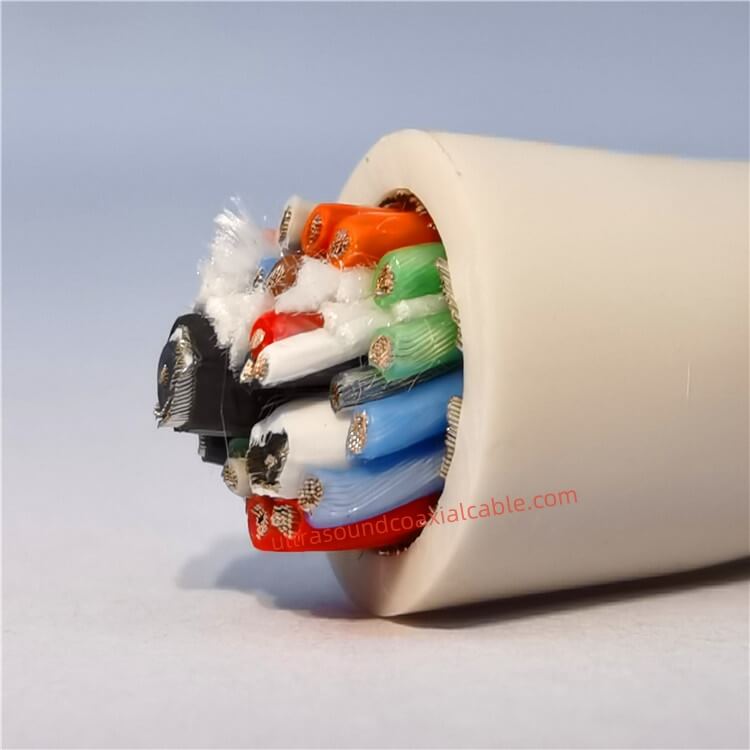
High-Precision 138-Core Medical Ultrasound Coaxial Cables | 0.2mm Ultra-Fine Biocompatible Design for Diagnostic Imaging Product Overview Engineered for advanced medical imaging systems, our 138-Core Medical Ultrasound Probe Coa.
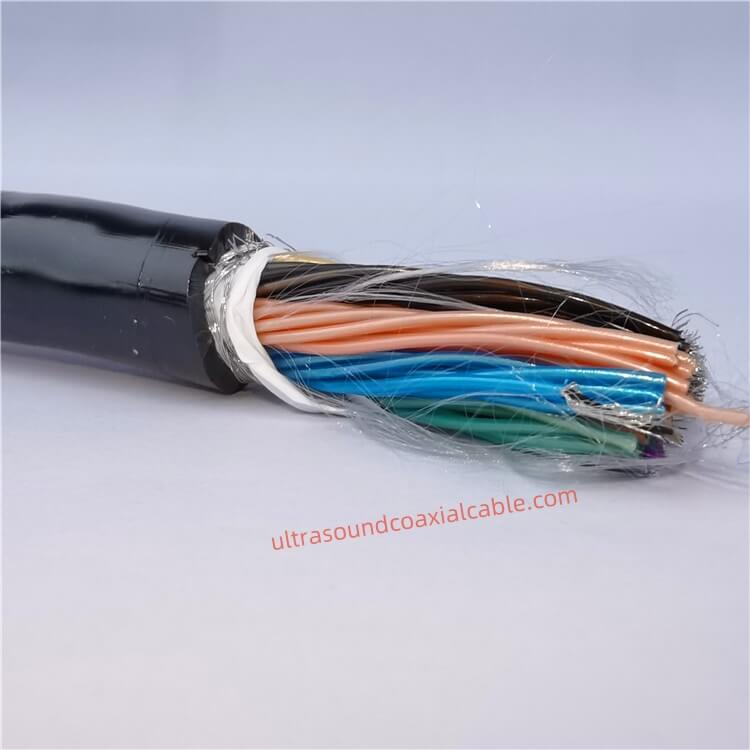
High-Performance Ultrasound Coaxial Cable Assembly: 42AWG to 30AWG, 6.6mm OD, 18GHz Bandwidth Engineered for precision in medical imaging and industrial applications, this customizable coaxial cable assembly delivers exceptional signal.

Ultra-Flexible 42AWG Medical-Grade Coaxial Cables for High-Precision Ultrasound Imaging Designed for demanding medical imaging applications, our Ultra-Flexible 42AWG Coaxial Cables deliver exceptional signal integrity, noise reduction,.

High-Performance Flexible Coaxial Cable for Medical Imaging & Ultrasound Systems Designed for demanding applications in medical imaging, industrial diagnostics, and high-frequency signal transmission, this ultra-flexible coaxial ca.
Feel free to reach out to us for any inquiries or orders.