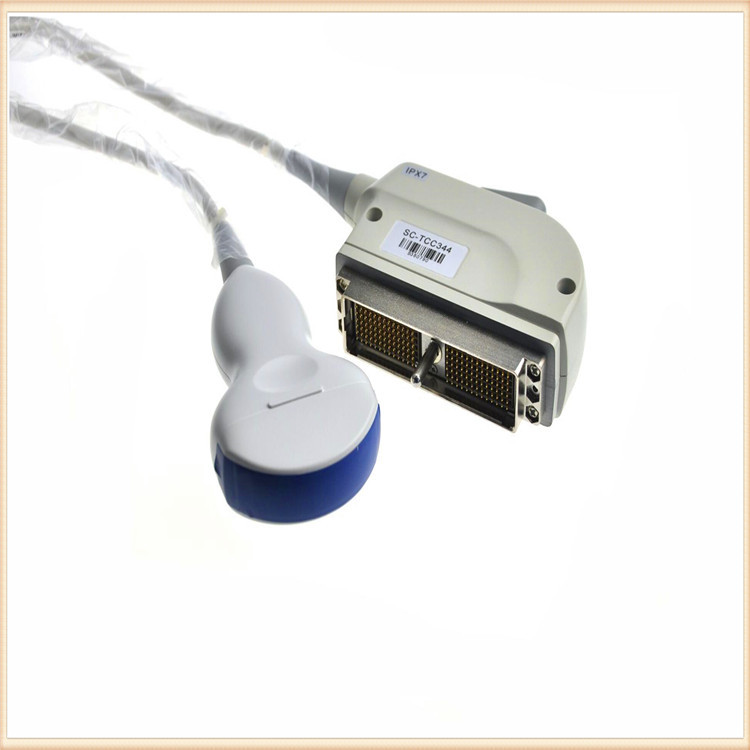
How to match an ultrasound coaxial cable with my transducer?
Matching Your Ultrasound Coaxial Cable to the Perfect Transducer: A Step-by-Step Guide When working with ultrasound systems, the connection between… - Professional Ultrasound Coaxial Cable Solutions
Information
Learn more about, latest news, frequently asked questions
Matching Your Ultrasound Coaxial Cable to the Perfect Transducer: A Step-by-Step Guide
When working with ultrasound systems, the connection between your transducer and the coaxial cable is critical. A mismatched or poorly installed cable can lead to signal loss, image distortion, or even equipment failure. Whether you’re repairing an existing setup or upgrading your equipment, understanding how to pair the right coaxial cable with your transducer ensures optimal performance. In this guide, we’ll break down everything you need to know—from key technical considerations to practical installation tips—and highlight why brands like FRS stand out in delivering reliable solutions.
Why Coaxial Cable Compatibility Matters in Ultrasound Systems
Ultrasound transducers generate high-frequency signals that require precise transmission to produce accurate images. The coaxial cable acts as the bridge between the transducer and the imaging system, and even minor mismatches can compromise results. Here’s what to prioritize:
Frequency Range Compatibility Ultrasound transducers operate at specific frequency ranges, typically between 2 MHz and 20 MHz. Your coaxial cable must support these frequencies without introducing significant signal attenuation. For example:
Low-frequency transducers (2–5 MHz) often use thicker cables (e.g., RG-6) to handle lower impedance.
High-frequency transducers (10–20 MHz) require precision cables like RG-11 or foam dielectric cables to minimize signal loss .
Impedance Matching Most ultrasound systems use 50-ohm or 75-ohm impedance cables. Mismatched impedance causes signal reflections, leading to image artifacts. Check your transducer’s specifications and pair it with a cable of the same impedance. For instance:
50-ohm cables (e.g., RG-58) are common in industrial or portable ultrasound devices.
75-ohm cables (e.g., RG-6) are often used in medical imaging for their balanced performance .
Shielding and Noise Resistance Ultrasound signals are sensitive to electromagnetic interference (EMI). Look for cables with dual-shielded or quad-shielded designs, which block external noise. Foil-and-braid shielding (like FRS’s Micro Coaxial Cables) offers superior protection for high-frequency applications .
Connector Type The connector ensures a secure, signal-tight connection. Common types include:
BNC connectors: Adjustable for quick setup, ideal for portable devices.
F-type connectors: Standard in medical imaging for durability.
SMP/SMPM connectors: High-frequency options for advanced systems .
5 Steps to Match Your Ultrasound Coaxial Cable
Step 1: Verify Transducer Specifications
Start by identifying your transducer’s key parameters:
Frequency range (e.g., 5–15 MHz).
Impedance (50Ω or 75Ω).
Connector type (e.g., SMA for industrial probes). Consult the manufacturer’s manual or use a multimeter to test existing cables if unsure.
Step 2: Choose the Right Cable Type
Based on your findings:
For general-purpose imaging: RG-6 (75Ω) offers flexibility and low loss up to 3 GHz.
For high-frequency probes: RG-11 (75Ω) or foam dielectric cables (e.g., FRS’s 50-15000mm Micro Coaxial) provide extended bandwidth .
For rugged environments: Semirigid cables with polyethylene foam dielectric resist bending and moisture .
Step 3: Inspect Connectors and Terminations
A poorly terminated connector can degrade signal quality. Ensure:
Connectors are crimped tightly using a coaxial crimper.
No exposed inner conductors or frayed shielding.
Compatibility with your transducer’s port (e.g., avoid mismatched threads on SMA connectors) .
Step 4: Test Signal Integrity
After installation:
Use a coaxial cable tester to check continuity and resistance.
Monitor signal strength with an oscilloscope.
Adjust the cable length if signal loss exceeds 3 dB (indicating excessive attenuation) .
Step 5: Maintain and Replace Proactively
Avoid bending cables beyond their minimum bend radius.
Store cables away from heat sources or sharp edges.
Replace cables older than 3–5 years, as insulation degrades over time .
Common Problems and Solutions
Issue
Likely Cause
Fix
Signal dropout
Loose connector or damaged shield
Re-crimp connector; replace shielded section
Image ghosting
Impedance mismatch
Use matched 50Ω/75Ω cables
High-frequency noise
Poor shielding
Install quad-shielded cables
Why FRS Stands Out in Ultrasound Coaxial Solutions
When it comes to reliability, FRS has engineered coaxial cables tailored for the demanding needs of ultrasound systems. Here’s what sets them apart:
Precision Engineering FRS cables use foam polyethylene dielectric to minimize signal loss and ensure consistent performance across frequencies. Their Micro Coaxial Cables (e.g., FRS-7-7) are ideal for high-resolution imaging, supporting bandwidths up to 6 GHz .
Customizable Solutions Need a specific length or connector type? FRS offers custom cables with 30–15000mm options and connectors like JST, I-PEX, and HRS. Their team handles everything from design to testing, ensuring compatibility with your equipment .
Rugged Durability FRS cables are built to withstand harsh environments. Features like UV-resistant jackets and gas-injected foam insulation protect against moisture and mechanical stress, critical for portable or outdoor ultrasound setups .
Compliance and Safety All FRS products meet RoHS and REACH standards, ensuring they’re free from hazardous substances. Their cables undergo 100% electrical testing before shipment, giving you peace of mind .
Final Tips for Seamless Integration
Label cables: Track which cables are paired with which transducers to avoid mix-ups.
Invest in quality: Cheap cables save money upfront but cost more in repairs and downtime.
Consult experts: If troubleshooting persists, partner with brands like FRS for technical support.
By following these steps and choosing a trusted brand like FRS, you’ll ensure your ultrasound system delivers crisp, accurate images every time. Whether you’re maintaining existing equipment or upgrading for future needs, the right coaxial cable makes all the difference.
High-Precision 138-Core Medical Ultrasound Coaxial Cables | 0.2mm Ultra-Fine Biocompatible Design for Diagnostic Imaging
Product Overview
Engineered for advanced medical imaging systems, our 138-Core Medical Ultrasound Probe Coa.
High-Performance Military Ultrasound Coaxial Cables: Built for Extreme Conditions
Designed to meet the demanding requirements of military, aerospace, and medical applications, our Military-Grade Ultrasound Coaxial Cables deliver except.
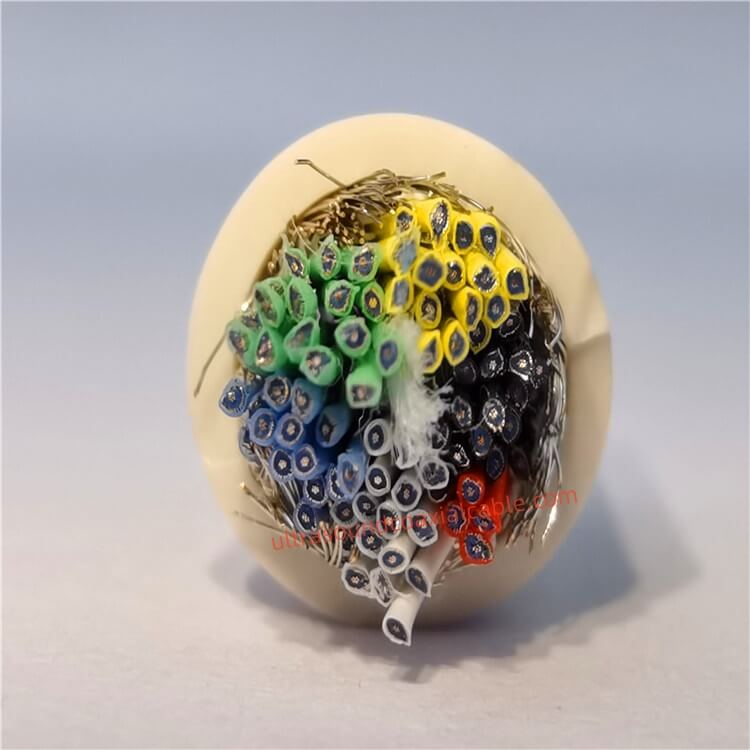
High-Performance Flexible Coaxial Cable for Medical Imaging & Ultrasound Systems
Designed for demanding applications in medical imaging, industrial diagnostics, and high-frequency signal transmission, this ultra-flexible coaxial ca.
Ultra-Flexible 42AWG Medical-Grade Coaxial Cables for High-Precision Ultrasound Imaging
Designed for demanding medical imaging applications, our Ultra-Flexible 42AWG Coaxial Cables deliver exceptional signal integrity, noise reduction,.
High-Performance Ultrasound Coaxial Cable Assembly: 42AWG to 30AWG, 6.6mm OD, 18GHz Bandwidth
Engineered for precision in medical imaging and industrial applications, this customizable coaxial cable assembly delivers exceptional signal.
Product OverviewThe Ultrasound Coaxial Cable is a specialized cable engineered to deliver ultra-low signal loss, exceptional shielding, and unmatched durability in critical environments. Designed for medical imaging, industrial testi.
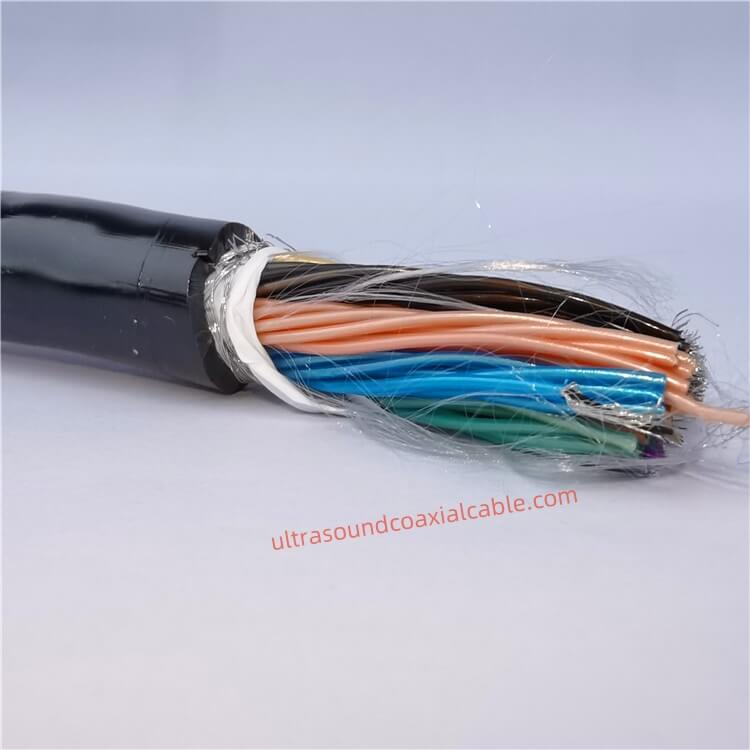
Need a custom ultrasound cable? We are a trusted OEM partner for medical device companies. Customize impedance (50Ω/75Ω), shielding, connectors (LEMO, BNC), and jacket materials.
P – Addressing Your Critical Supply Chain Pain Poi.
In the high-stakes world of medical diagnostics, the integrity of the signal is everything. The recent introduction of a new generation of Halogen-Free Ultrasound Coaxial Cables marks a significant leap forward in patient safety and diag.
In high-stakes environments where failure is not an option, military-grade ultrasound coaxial cables represent the pinnacle of signal transmission technology. These specialized cables are engineered to deliver uncompromising performance u.
The global Ultrasound Coaxial Cable market is on a definitive growth trajectory, projected to achieve a valuation of $850 million by 2031. This expansion is not merely a function of increased medical device production but is fundamentall.
How High-Vibration Ultrasound Coaxial Cables Ensure Precision in Automotive Testing
In the fast-evolving automotive industry, precision and reliability are paramount. Automotive testing—whether for crash simulations, vibration analysi.
Advancing Medical Imaging: High-Frequency Ultrasound Coaxial Cables Beyond 200MHz
In the fast-evolving fields of medical diagnostics and industrial testing, achieving precise, high-frequency signal transmission is critical. Modern adva.
Power plants represent one of the most challenging environments for electrical infrastructure, particularly for coaxial cables that transmit essential data and video signals for monitoring, control, and communication systems. These facili.
The Critical Role of Coaxial Cables
Precision Engineering & Material Innovation
Modern ultrasound coaxial cables feature multi-layer shielding architecture, with color-coded wires for simplified installation. Key manufacturing.
The ultrasound coaxial cable market is experiencing unprecedented growth, projected to reach $90.05 billion by 2032 with a robust CAGR of 8.11%. This expansion is driven by increasing demand for next-generation diagnostic imaging, milita.
The medical imaging industry is undergoing a transformative shift, driven by groundbreaking advancements in ultrasound coaxial cable technology. This specialized cable technology serves as the critical lifeline between ultrasound transduc.
Maximizing Signal Integrity in Long-Distance Ultrasound Coaxial Cable Installations: A Practical Guide
In medical imaging, industrial testing, and research applications where ultrasound technology is critical, the reliability of data .
Australia’s ambitious transition to renewable energy is placing unprecedented demands on the infrastructure that powers this transformation. As wind energy emerges as a cornerstone of Australia’s clean energy future, the criti.
Abstract: Redefining Signal Integrity in the Lumen
The evolution of Endoscopic Ultrasound (EUS) is intrinsically linked to the performance of its most critical component: the Ultrasound Coaxial Cable. As medical device OEMs push for hi.
High-Performance Coaxial Cables for Ultrasound Imaging: Key Features and Applications
In modern medical imaging and industrial diagnostics, ultrasound coaxial cables play a pivotal role in delivering precise, high-frequency signal tran.
Introduction to Ultrasound Coaxial Cable Requirements
The ultrasound coaxial cable serves as the critical signal transmission pathway between the transducer and imaging system. Custom designs must address three core challenges: mai.
High-Performance Ultrasound Coaxial Cables: The Backbone of Precision Medical Imaging and Industrial Diagnostics
In the realm of modern technology—whether advancing medical diagnostics, optimizing industrial inspections, or pushing th.
In today’s interconnected world, coaxial cables and specialized ultrasound coaxial cables serve as critical infrastructure components across telecommunications, medical imaging, industrial automation, and broadcast media. The grad.
In an increasingly interconnected world, the safety and reliability of our electrical infrastructure have never been more critical. While coaxial cables serve as the backbone of modern communication and power transmission systems, their p.
High-Performance Semi-Rigid Coaxial Cables for Advanced Medical Imaging and 5G Connectivity
In modern medical imaging and next-generation 5G networks, signal integrity and reliability are paramount. Our JSR141 Semi-Rigid Coaxial Cables.
Discover how ultrasound coaxial cables are shaping the $11.14 billion North American coaxial cable market. Learn about 5G’s role in advancing medical imaging and industrial applications.
Introduction
The North American co.
High-Performance Military Ultrasound Coaxial Cables: Built for Extreme Conditions
Designed to meet the demanding requirements of military, aerospace, and medical applications, our Military-Grade Ultrasound Coaxial Cables deliver except.
Product OverviewThe Ultrasound Coaxial Cable is a specialized cable engineered to deliver ultra-low signal loss, exceptional shielding, and unmatched durability in critical environments. Designed for medical imaging, industrial testi.
High-Performance Ultrasound Coaxial Cable Assembly: 42AWG to 30AWG, 6.6mm OD, 18GHz Bandwidth
Engineered for precision in medical imaging and industrial applications, this customizable coaxial cable assembly delivers exceptional signal.
High-Performance Flexible Coaxial Cable for Medical Imaging & Ultrasound Systems
Designed for demanding applications in medical imaging, industrial diagnostics, and high-frequency signal transmission, this ultra-flexible coaxial ca.
Contact Us
Feel free to reach out to us for any inquiries or orders.