Introduction In medical imaging, industrial non-destructive testing (NDT), and defense applications, ultrasound coaxial cables serve as critical lifelines for signal… - Professional Ultrasound Coaxial Cable Solutions
Learn more about, latest news, frequently asked questions
In medical imaging, industrial non-destructive testing (NDT), and defense applications, ultrasound coaxial cables serve as critical lifelines for signal transmission. These specialized cables carry high-frequency electrical signals between ultrasonic transducers and imaging systems, directly impacting the quality and reliability of the resulting data. When signal quality degrades in these cables, it can lead to misdiagnosis in medical settings, inaccurate measurements in industrial applications, and system failures in critical defense operations. Understanding the root causes of signal degradation and implementing effective solutions is essential for maintaining optimal system performance across various sectors .
The global ultrasound coaxial cable market is projected to grow from USD 52.16 billion in 2025 to USD 90.05 billion by 2032, reflecting increasing reliance on high-quality coaxial components across industries. This growth is driven by advancing diagnostic imaging requirements, military communications modernization, and increasingly demanding industrial NDT standards .
Several interrelated factors contribute to poor signal quality in ultrasound coaxial cables:
Cable Length and Signal Attenuation: Unlike standard coaxial cables, ultrasound coaxial cables transmit high-frequency signals (typically 500 KHz to 20 MHz for conventional applications, and up to 50 MHz or beyond for high-frequency systems). As cable length increases, electrical resistance causes progressive signal loss. In ultrasonic testing, cables longer than approximately 2 meters can begin to affect measurements, with significant degradation occurring beyond 20 meters (65 feet). This attenuation manifests as reduced echo amplitude, limiting detection capability for small flaws or anatomical details .
Cable Reflections and Impedance Mismatch: In any ultrasonic system, an excitation pulse travels from the instrument’s pulser to the transducer through the coaxial cable. When this pulse reaches the transducer, some electrical energy reflects toward the pulser due to impedance mismatches. With short cables, these reflections arrive quickly after the initial pulse and have minimal impact. However, in longer cables, the reflected pulse can redrive the transducer, creating secondary excitation pulses that degrade near-surface resolution and create duplicate backwall echoes. This effect becomes particularly problematic when the electrical transit time through the cable approaches the resonant period of the transducer .
Electromagnetic Interference (EMI): Ultrasound systems often operate in electrically noisy environments near motors, welders, or other medical equipment. Long cables act as antennas, capturing environmental RF noise that can mask echoes of interest. While double-shielded coaxial cables provide some protection, high-gain settings in combination with long cables in noisy environments remain particularly vulnerable to interference .
Connector and Termination Issues: Poor termination, loose connections, or corroded connectors represent frequent failure points in ultrasound coaxial systems. Even minor compromises in connector integrity can significantly impact signal quality, particularly in high-frequency applications where precision is paramount. FRS coaxial solutions address these concerns with gold-plated contacts and precision machining to maintain stable impedance characteristics .
The physical consequences of signal degradation directly impact ultrasound system performance:
Select Appropriate Cable Length: Always use the shortest cable possible for your application. If long cables are unavoidable, consider system redesigns such as integrating preamplifiers directly into transducer handles or using portable instruments that can be positioned closer to the test area. Research demonstrates that a hybrid array approach with integrated electronics can improve overall signal-to-noise ratio by up to 20.6 dB compared to conventional systems with long cable runs to remote consoles .
Implement Proper Impedance Matching: To minimize reflections that degrade signal quality, ensure proper impedance matching throughout the system. While adding a 50-ohm terminator at the transducer end of the cable can reduce reflections, this approach must be carefully implemented as transducers exhibit complex impedance profiles that vary with frequency. FRS impedance-matched coaxial systems incorporate proprietary matching networks optimized for specific transducer families, minimizing reflections by maintaining consistent impedance across operational bandwidths .
Utilize High-Quality Shielding: Standard coaxial cables provide basic shielding, but demanding medical and industrial environments often require enhanced protection. Double-shielded coaxial cables with combination braid and foil shields offer superior rejection of electromagnetic interference. For extreme environments, FRS medical-grade cables feature quad-shielding configurations that provide >100 dB EMI rejection, effectively eliminating noise contamination even in high-interference clinical settings near MRI systems or electrosurgical units .
Integrate Preamplifiers: For long cable runs, incorporating a preamplifier at the transducer end of the cable can significantly improve signal integrity. This approach amplifies the signal before attenuation occurs in the main cable run, effectively overcoming transmission losses. Advanced implementations integrate preamplifiers directly into transducer handles, as demonstrated in research systems where this configuration improved received SNR by 7.8 dB .
Implement Negative-Group-Delay Circuits: Emerging technologies show promise for counteracting cable-induced signal degradation. Negative-group-delay circuits, when properly matched to transducer characteristics, can compensate for phase distortions and improve signal quality metrics. Research documents demonstrate that these circuits can improve bandwidth from 51.98% to 81.12% while reducing pulse width from 0.74 μs to 0.36 μs in high-frequency ultrasound applications .
Apply Advanced Signal Compensation Algorithms: For applications involving known cable characteristics, digital signal processing can reconstruct original signals from degraded received signals. Modified non-negative Tikhonov regularization methods within Bayesian inference frameworks have demonstrated robust compensation for cable-induced distortions, particularly for pulsed signals. These algorithms effectively address the ill-conditioned matrix problems inherent in inverse analysis, enabling accurate signal reconstruction even after significant cable degradation .
Utilize High-Efficiency Amplifiers: In wireless ultrasound systems or portable applications, amplifier efficiency directly impacts cable signal quality. Class F amplifiers achieve high efficiency (up to 88.9% power-added efficiency) while maintaining low total harmonic distortion (as low as 4.5%). These characteristics enable cleaner signal transmission through cables by providing optimal driving signals with minimal harmonic content that could interact with cable properties .
Regular Inspection Regimen: Implement systematic visual inspections of ultrasound coaxial cables, checking for physical damage including cuts, frays, kinks, or connector deformation. Particular attention should be paid to areas near connectors and stress relief points, where fatigue failures typically initiate. FRS Armored coaxial options incorporate reinforced strain relief and abrasion-resistant jackets that reduce failure rates by up to 70% in high-use medical environments .
Bend Radius Management: Excessive bending represents a common but preventable cause of signal degradation in coaxial cables. Maintain bend radii of at least five times the cable diameter to prevent shield deformation and center conductor displacement that alter impedance characteristics. Permanent setup cables should be installed with smooth curves rather than sharp bends, particularly when routing through equipment cabinets or transducer management systems .
Connection Integrity Verification: Regularly verify connector seating and locking mechanism engagement. For critical applications, implement periodic contact resistance measurements to identify developing corrosion or wear before they impact signal quality. FRS Quick-Check connectors with built-in contact integrity indicators enable rapid verification without disassembly, reducing maintenance downtime in clinical and industrial settings .
When signal quality issues arise, systematic troubleshooting isolates the root cause:
Signal Path Analysis: Begin by measuring signal characteristics at multiple points in the system to isolate the degradation source. Compare signals with reference cables of known quality, and check for improvements with minimal cable lengths. Modern ultrasound systems often incorporate built-in diagnostic functions that quantify cable performance metrics, enabling early detection of developing issues before they impact clinical or testing results .
Environmental Interference Assessment: Use spectrum analyzers or the ultrasound system’s own monitoring capabilities to identify environmental noise sources. Document signal quality variations relative to equipment operation in the facility to identify interference patterns. Relocating cables away from power sources or implementing additional shielding can resolve these issues without cable replacement .
Impedance Verification: Measure impedance characteristics across the operational frequency range using vector network analyzers. Significant deviations from specified values (typically 50 ohms for ultrasound systems) indicate cable damage, connector issues, or compatibility problems. FRS precision coaxial assemblies undergo 100% impedance testing with certification traceable to national standards, ensuring consistent performance in critical applications .
The evolving ultrasound coaxial cable market continues to introduce innovations addressing signal quality challenges:
Composite Conductor Materials: Advanced conductor designs combining silver-plated copper with composite core materials provide optimal balance between conductivity, flexibility, and strength. These materials address the conflicting demands of frequent manipulation in clinical environments while maintaining stable electrical characteristics over extended service lifetimes .
Enhanced Dielectric Systems: Low-density PTFE and foam polyethylene dielectrics reduce signal velocity degradation while maintaining physical robustness. These advanced materials minimize attenuation without compromising cable flexibility, particularly important for handheld probes requiring frequent manipulation during examinations or inspections .
Integrated Digital Interfaces: Emerging digital coaxial solutions incorporate signal conditioning electronics directly within connectors, compensating for cable-induced degradation in real-time. These intelligent cable systems automatically adjust for length-specific attenuation and phase characteristics, maintaining consistent signal quality regardless of cable length. FRS SmartLink coaxial interfaces exemplify this approach, embedding micro-compensation circuits that reduce attenuation variations by up to 85% across operational temperature and frequency ranges .
The expanding ultrasound coaxial cable market reflects increasing recognition of cables as critical system components rather than simple accessories. With proper selection, installation, and maintenance practices, modern coaxial solutions can maintain signal integrity even in demanding medical, industrial, and defense applications where reliability directly impacts outcomes .
Discover our most popular furniture pieces that are loved by customers worldwide.

Ultra-Flexible 42AWG Medical-Grade Coaxial Cables for High-Precision Ultrasound Imaging Designed for demanding medical imaging applications, our Ultra-Flexible 42AWG Coaxial Cables deliver exceptional signal integrity, noise reduction,.
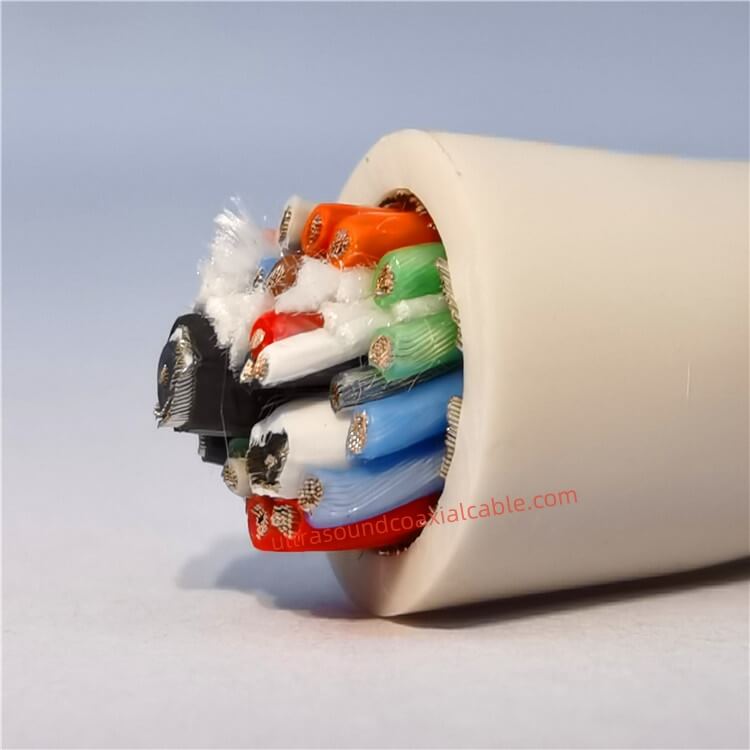
High-Precision 138-Core Medical Ultrasound Coaxial Cables | 0.2mm Ultra-Fine Biocompatible Design for Diagnostic Imaging Product Overview Engineered for advanced medical imaging systems, our 138-Core Medical Ultrasound Probe Coa.
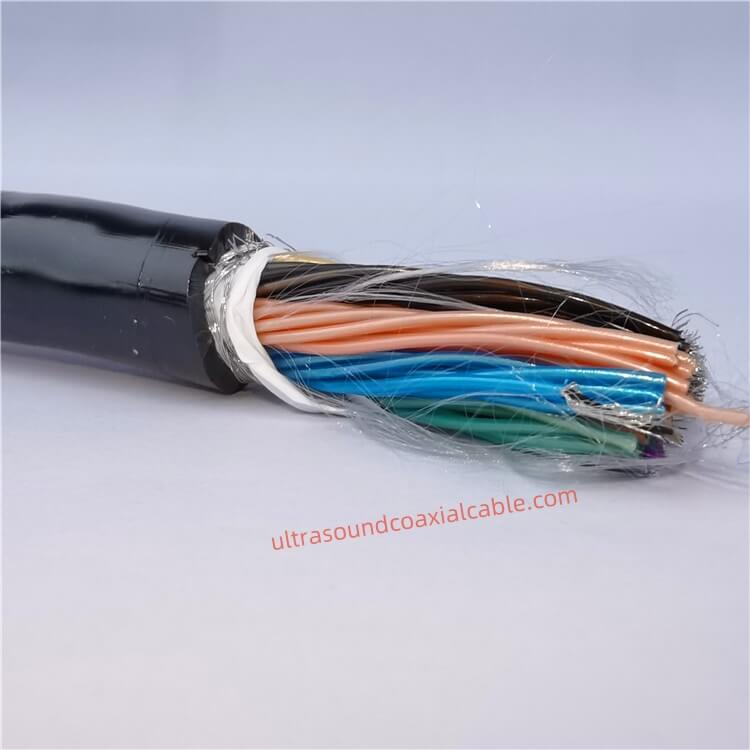
High-Performance Ultrasound Coaxial Cable Assembly: 42AWG to 30AWG, 6.6mm OD, 18GHz Bandwidth Engineered for precision in medical imaging and industrial applications, this customizable coaxial cable assembly delivers exceptional signal.
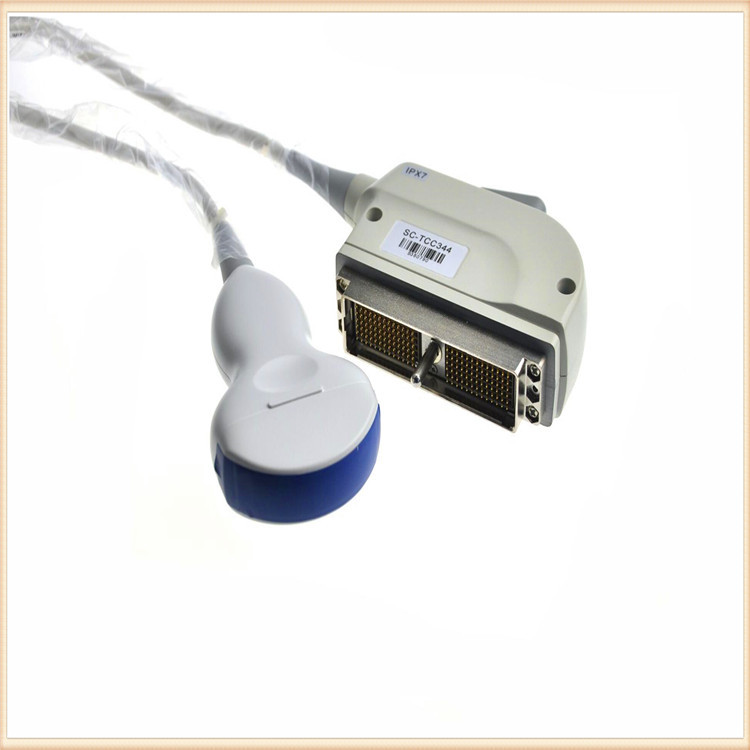
High-Performance Military Ultrasound Coaxial Cables: Built for Extreme Conditions Designed to meet the demanding requirements of military, aerospace, and medical applications, our Military-Grade Ultrasound Coaxial Cables deliver except.
Feel free to reach out to us for any inquiries or orders.