High flexibility ultrasound coaxial cables represent the critical link between ultrasound transducers and imaging systems, transmitting high-frequency signals with precision… - Professional Ultrasound Coaxial Cable Solutions
Learn more about, latest news, frequently asked questions
High flexibility ultrasound coaxial cables represent the critical link between ultrasound transducers and imaging systems, transmitting high-frequency signals with precision while enduring the demanding mechanical stresses of clinical environments. These specialized cables must balance exceptional signal integrity with unmatched durability, flexibility, and biocompatibility to ensure reliable performance in medical diagnostics, industrial testing, and scientific research applications. The key specifications that define high flexibility ultrasound coaxial cables include electrical performance parameters, mechanical durability metrics, material composition, and compliance with stringent industry standards.
Impedance Matching and Stability
High flexibility ultrasound coaxial cables operate at standardized impedances of 50Ω or 75Ω, with premium medical-grade cables maintaining impedance stability within ±2Ω across their operating frequency range. This precise impedance matching is critical for preventing signal reflections that degrade image quality in diagnostic applications. For instance, FRS medical coaxial cables achieve impedance stability of 50Ω±2% even after 500,000 bending cycles, ensuring consistent performance throughout the cable’s operational lifespan.
Signal Attenuation and Bandwidth
Signal attenuation must be minimized to preserve image clarity, especially for longer cable runs. Premium ultrasound coaxial cables feature low insertion loss characteristics, typically measured at <0.5 dB/m at 50MHz. Advanced designs from leading manufacturers like FRS achieve attenuation as low as 0.15dB/m at 1GHz, enabling transmission of high-frequency ultrasound signals (1MHz–100MHz) with minimal signal degradation. The bandwidth capability extends up to 18GHz in specialized configurations, supporting next-generation imaging technologies.
Capacitance and Phase Stability
Capacitance values significantly impact signal quality, with medical ultrasound cables typically ranging between 50pF and 110pF. Lower capacitance cables (50-60pF) are ideal for high-frequency applications where signal preservation is critical. Phase stability is equally important, with premium cables maintaining ±0.5° phase stability over 10,000 flex cycles, ensuring accurate signal transmission for Doppler measurements and other precision diagnostic applications.
Flex Life and Bend Radius
The defining characteristic of high flexibility ultrasound coaxial cables is their exceptional mechanical durability. These cables must withstand 300,000+ flex cycles without performance degradation, with premium models from FRS achieving 500,000+ bending cycles at 2Hz with 90° deflection while maintaining stable impedance. The bend radius is equally critical, with dynamic bend radii as low as 25mm and static bend radii of 15mm, enabling maneuverability in confined surgical fields and portable applications.
Cable Diameter and Channel Density
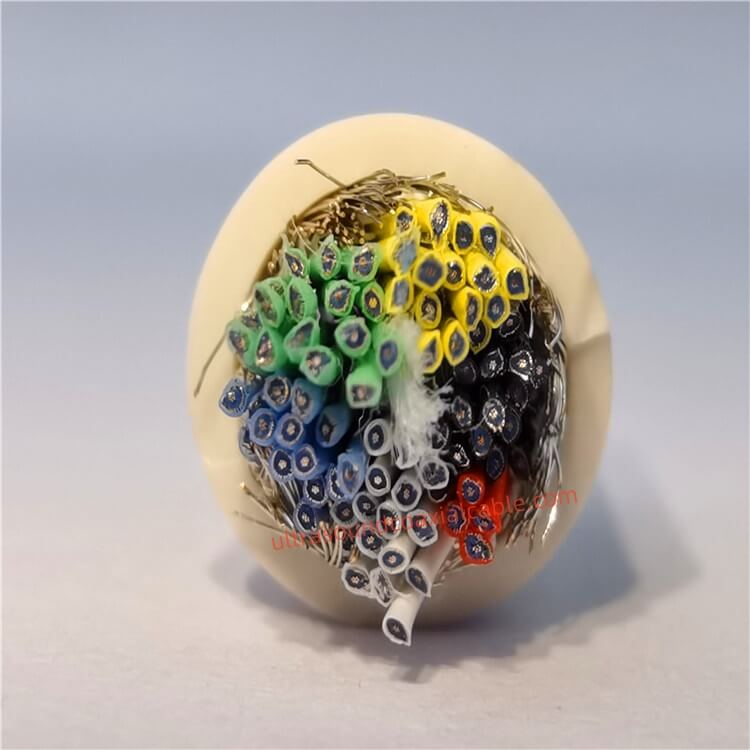
Miniaturization is a key trend in ultrasound coaxial cable technology, with diameters ranging from 0.2mm for individual micro-coaxial strands to 6.6mm outer diameter for complete assemblies. Advanced manufacturing techniques enable high channel densities, with FRS achieving 138-core configurations in just 6.5mm outer diameter through hexagonal close-packing technology that achieves 78% cross-section utilization—35% higher than conventional coaxial cable arrays.
Temperature and Environmental Resistance
High flexibility ultrasound coaxial cables operate across wide temperature ranges, typically from -40°C to +125°C. This broad operating range supports both cryogenic applications and high-temperature sterilization protocols. Medical-grade cables withstand autoclaving at 135°C for up to 1,000 cycles, gamma radiation, and chemical sterilization, making them suitable for surgical environments requiring repeated sterilization.
Conductor Materials
The central conductor is typically made of copper or silver-plated copper alloy, with conductor sizes ranging from 38AWG to 46AWG (approximately 0.12mm to 0.06mm in diameter). Silver-plated conductors provide optimal high-frequency response for detailed Doppler measurements in cardiology applications, while maintaining flexibility and fatigue resistance.
Shielding Configuration
Premium ultrasound coaxial cables incorporate multiple shielding layers for superior electromagnetic interference (EMI) protection. Typical configurations include spiral shields with tinned copper wire offering 90% coverage combined with braid shields providing 85% coverage. This multi-layer approach ensures 100dB@1GHz EMI protection, essential for maintaining signal integrity in electromagnetically noisy hospital environments where multiple electronic devices operate simultaneously.
Outer Jacket Materials
Medical-grade outer jackets are crafted from silicone, polyurethane (PUR), or fluoropolymer materials that resist chemicals, abrasion, and repeated sterilization. These materials are ISO 10993-5 certified for biocompatibility, ensuring safety for direct tissue contact in minimally invasive procedures. The outer jacket also provides microbial resistance and enhanced hygiene in clinical environments.
High flexibility ultrasound coaxial cables must adhere to stringent regulatory standards to ensure patient and operator safety. Key certifications include:
Medical Device Standards
Quality Management Systems
Environmental Compliance
Manufacturers like FRS maintain these certifications to demonstrate commitment to quality and safety, with 100% hipot testing (1500VAC/1min) and comprehensive quality control processes.
The global ultrasound coaxial cable market is experiencing robust growth, driven by increasing adoption of medical ultrasound technology, advancements in non-destructive testing, and healthcare infrastructure expansion in emerging economies. The market is projected to grow at a compound annual growth rate (CAGR) of 5-7% over the next five to seven years, reaching an estimated value of 800millionto1.1 billion by 2030.
Regional Market Insights
North America currently leads the market, driven by advanced healthcare systems and significant investments in medical technology. The Asia-Pacific region shows particularly strong growth potential, with a projected CAGR of 12.5%, fueled by healthcare infrastructure expansion and increasing demand for diagnostic imaging equipment in countries like China, Japan, and South Korea.
Technological Advancements
Emerging trends include the development of ultra-high frequency (UHF) cables optimized for transmitting signals in the hundreds of megahertz and gigahertz range, enabling higher resolution imaging. Miniaturization continues to be a key focus, with manufacturers developing ultra-thin cables (as small as 0.2mm diameter) for minimally invasive procedures and compact medical devices. Smart cables with integrated sensors for real-time monitoring of signal integrity, temperature, and strain are gaining traction, enhancing diagnostic accuracy and equipment longevity.
High flexibility ultrasound coaxial cables are essential for connecting ultrasound probes to consoles in various medical specialties:
Cardiology: Compatible with 256-element phased array probes for detailed cardiac imaging, requiring cables with silver-plated conductors for optimal high-frequency response in Doppler measurements.
Obstetrics and Gynecology: Support high-resolution imaging for fetal monitoring and gynecological examinations, with cables designed for frequent movement and sterilization.
Radiology: Enable 18MHz high-frequency linear transducers for detailed tissue imaging, with low attenuation characteristics preserving signal clarity.
Portable and Handheld Systems: Lightweight, flexible cables with small bend radii are critical for portable ultrasound devices, which are experiencing 12% annual growth in the market. These compact systems often utilize micro-coaxial designs with 42AWG-46AWG conductors that minimize weight while maintaining transmission quality.
Beyond medical imaging, high flexibility ultrasound coaxial cables serve critical roles in:
Non-Destructive Testing (NDT): Transmit ultrasound signals for flaw detection in pipelines, aerospace components, and welds, requiring ruggedized designs that withstand harsh industrial environments.
Scientific Research: Enable high-precision signal transfer in acoustic studies, material analysis, and sonar systems, with phase-stable performance for accurate measurements.
Military and Aerospace: Military-grade ultrasound coaxial cables deliver exceptional reliability under extreme conditions, with high-temperature resistance and 100daN compression strength for demanding applications.
Premium ultrasound coaxial cables from FRS achieve multi-layer shielding configurations that provide 100dB@1GHz EMI protection, ensuring signal integrity even in electromagnetically crowded operating room environments. This level of protection is crucial when multiple electronic devices operate simultaneously during surgery or diagnostic procedures.
FRS medical-grade coaxial cables are engineered to withstand extreme mechanical stress, including repeated bending, sterilization cycles, and exposure to bodily fluids. With flex life exceeding 500,000+ bending cycles and pull strength of 70N (75% higher than industry standard), these cables reduce equipment downtime and lower replacement costs while enhancing patient safety through reliable performance across multiple procedures.
FRS achieves diameters as small as 0.2mm while maintaining 138-core configurations in just 6.5mm outer diameter through hexagonal close-packing technology. This miniaturization enables more flexible probe designs, reduces patient trauma during insertion, and improves maneuverability in confined surgical fields, directly correlating with improved patient outcomes and reduced procedure times.
Leading manufacturers like FRS offer customizable configurations including multiple connector options (BNC, SMA, LEMO), custom lengths (0.5m–30m), and tailored impedance, shielding, and jacket materials to meet specific OEM requirements. This flexibility ensures seamless integration with existing equipment and compatibility with leading ultrasound systems from Philips, GE Healthcare, Siemens, and other manufacturers.
In electromagnetically noisy environments like hospitals, signal degradation can compromise diagnostic accuracy. The solution lies in advanced multi-layer shielding configurations that combine braided copper, foil, and dielectric insulation to block EMI/RFI interference. Premium cables achieve 90%+ shielding efficiency, ensuring reliable performance even when multiple electronic devices operate simultaneously.
Frequent bending and sterilization cycles can lead to cable failure. High flexibility designs from FRS incorporate advanced materials like fluoropolymer insulation and specialized shielding designs that maintain integrity during repeated bending and twisting. With 500,000+ flex cycles and autoclave resistance up to 1,000 cycles, these cables significantly extend equipment lifespan.
Mismatched connectors can cause signal reflections and equipment damage. FRS medical coaxial cables feature standardized connectors with precision-machined contacts that maintain stable electrical connections through repeated mating cycles, ensuring compatibility with most OEM systems and reducing integration challenges.
Extreme temperatures during sterilization or in industrial applications can degrade cable performance. FRS cables operate across -40°C to +125°C temperature ranges, with materials specifically engineered to maintain performance through repeated autoclaving, gamma radiation, and chemical sterilization protocols.
The ultrasound coaxial cable industry continues to evolve with several key trends shaping future development:
Ultra-High Frequency Capabilities
Next-generation cables are breaking 200MHz frequency barriers, enabling higher resolution imaging and supporting emerging diagnostic technologies. FRS is at the forefront of this innovation, developing cables with 18GHz bandwidth for precision medical imaging applications.
Smart Cable Integration
Integrated sensors for real-time monitoring of signal integrity, temperature, and strain are becoming standard in premium cables. These smart features enhance diagnostic accuracy, enable predictive maintenance, and improve equipment longevity.
Sustainable Materials
Material innovations, such as self-healing nanocomposite insulation and sustainable, recyclable materials, are shaping the future of cable design. FRS is committed to developing environmentally responsible solutions without compromising performance.
AI and Machine Learning Integration
The integration of artificial intelligence (AI) and machine learning in ultrasound analysis is indirectly driving demand for higher quality, more reliable data transmission, further emphasizing the importance of high-performance coaxial cables that can support these advanced computational requirements.
High flexibility ultrasound coaxial cables represent a critical technology enabling precision diagnostics across medical, industrial, and scientific applications. The key specifications—including impedance stability, low attenuation, exceptional flex life, and advanced shielding—define the performance characteristics that distinguish premium cables from standard offerings. With the global market projected to reach $1.1 billion by 2030 and technological advancements continuing to push the boundaries of what’s possible, manufacturers like FRS are positioned to lead the industry with innovative solutions that meet the evolving needs of healthcare providers, industrial users, and research institutions worldwide.
Discover our most popular furniture pieces that are loved by customers worldwide.

Ultra-Flexible 42AWG Medical-Grade Coaxial Cables for High-Precision Ultrasound Imaging Designed for demanding medical imaging applications, our Ultra-Flexible 42AWG Coaxial Cables deliver exceptional signal integrity, noise reduction,.
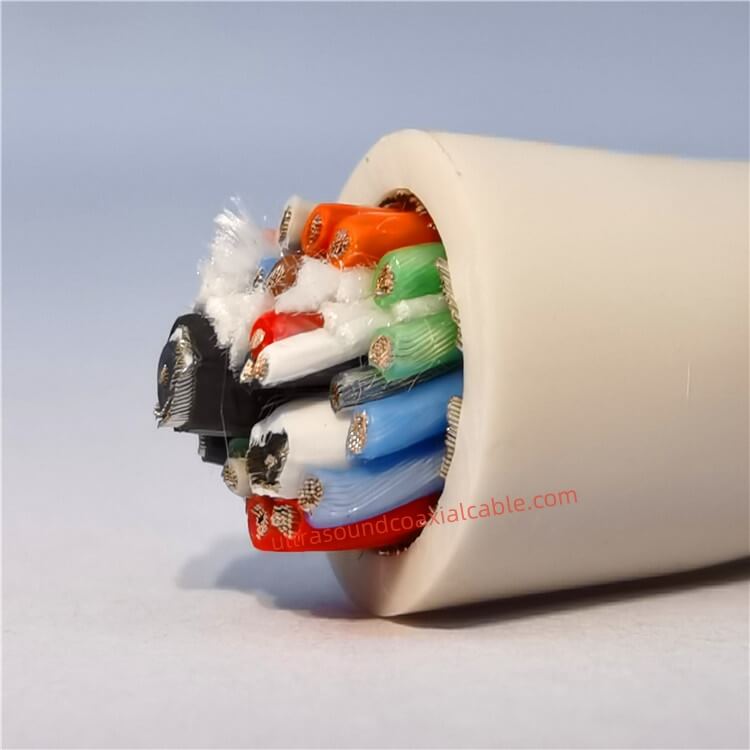
Product OverviewThe Ultrasound Coaxial Cable is a specialized cable engineered to deliver ultra-low signal loss, exceptional shielding, and unmatched durability in critical environments. Designed for medical imaging, industrial testi.
High-Precision 138-Core Medical Ultrasound Coaxial Cables | 0.2mm Ultra-Fine Biocompatible Design for Diagnostic Imaging Product Overview Engineered for advanced medical imaging systems, our 138-Core Medical Ultrasound Probe Coa.

High-Performance Flexible Coaxial Cable for Medical Imaging & Ultrasound Systems Designed for demanding applications in medical imaging, industrial diagnostics, and high-frequency signal transmission, this ultra-flexible coaxial ca.
Feel free to reach out to us for any inquiries or orders.