How to Test the Quality of Ultrasound Coaxial Cables Before Placing a Bulk Order? | High-Quality Ultrasound Coaxial Cable | ultrasound coaxial cable Manufacturer & Factory-FRS

How to Test the Quality of Ultrasound Coaxial Cables Before Placing a Bulk Order?

Placing a bulk order for Ultrasound Coaxial Cables​ is a significant capital commitment for any medical device OEM or service… - Professional Ultrasound Coaxial Cable Solutions

Information

Learn more about, latest news, frequently asked questions

Placing a bulk order for Ultrasound Coaxial Cables​ is a significant capital commitment for any medical device OEM or service provider. A substandard batch can lead to catastrophic field failures, costly recalls, and irreparable damage to your brand’s reputation for diagnostic accuracy. This guide provides a comprehensive framework for pre-purchase quality validation, moving beyond basic continuity checks to deep-dive performance and durability testing that ensures your investment delivers clinical-grade reliability.

The Critical Role of Testing in Medical Imaging Supply Chains

In the high-stakes world of medical imaging, the Ultrasound Coaxial Cable​ is the lifeline between the transducer and the console. It transmits high-frequency RF signals that are converted into diagnostic images. Any degradation in signal integrity—caused by poor shielding, impedance mismatch, or mechanical fatigue—directly translates to image artifacts, reduced penetration depth, or complete system failure. With the global medical coaxial cable market projected to reach $1.66 billion by 2030, driven by the proliferation of high-channel-count probes, the pressure on Ultrasound Coaxial Cable Manufacturer​ partners to deliver zero-defect products has never been higher.

A Three-Pillar Testing Protocol for Ultrasound Coaxial Cables

A robust quality assurance (QA) protocol should evaluate three core dimensions: Electrical Performance, Mechanical Durability, and Material Compliance.

1. Electrical Performance Testing: Ensuring Signal Fidelity

The primary function of the cable is to transmit signals with minimal loss and reflection. Testing must be conducted across the operational frequency range of modern ultrasound systems (typically 1 MHz to 20 MHz and beyond for high-resolution imaging).

  • Characteristic Impedance (Zo): The cable must maintain a stable 50Ω or 75Ω impedance (as specified) along its entire length. Use a Time Domain Reflectometer (TDR) to check for impedance spikes or dips that indicate manufacturing inconsistencies. A variance greater than ±2Ω can cause significant signal reflection.
  • Insertion Loss (Attenuation): Measure the signal power lost as it travels through the cable. For a high-quality medical-grade cable like the FRS UltraFlex series, insertion loss should be exceptionally low (e.g., < 0.5 dB/m at 50 MHz). High loss forces the system to increase transmit power, leading to premature transducer wear.
  • Return Loss (VSWR): This measures how much signal is reflected back to the source due to impedance mismatches. A high return loss (e.g., > 20 dB) is critical for clean images. Test this after mechanical stress tests to ensure connectors and cable joints remain stable.
  • Shielding Effectiveness: Medical environments are electrically noisy. Test the cable’s ability to reject electromagnetic interference (EMI) by measuring signal integrity when the cable is exposed to a known RF source. Effective shielding (>90 dB) is non-negotiable for preventing image noise.

2. Mechanical & Durability Testing: Simulating Clinical Abuse

Ultrasound cables are subjected to extreme physical stress—coiling, uncoiling, twisting, and contact with disinfectants. Mechanical failure is the leading cause of cable replacement.

  • Flex Life (Bend Cycle Test): Subject the cable to a standardized flex test (e.g., IEC 60601-1-11) where it is bent to a specific radius (e.g., 4x cable diameter) for tens of thousands of cycles. Monitor electrical parameters continuously. A quality cable should withstand 50,000+ cycles without a break in continuity or a significant spike in attenuation.
  • Tensile Strength & Crush Resistance: Verify the cable can withstand the pull forces applied during daily use without conductor breakage or insulation deformation. This is particularly important for intracavity probes where cables are thin and delicate.
  • Connector Durability (Mating Cycles): Test the connector (e.g., LEMO, BNC, proprietary) for insertion and withdrawal cycles. The locking mechanism and electrical contacts must remain secure after hundreds of connections.

3. Material & Environmental Compliance

  • Biocompatibility (ISO 10993-5): For cables that may contact patient skin or are used in invasive procedures, ensure the jacket material is non-cytotoxic, non-irritating, and non-sensitizing. Request the manufacturer’s ISO 10993 test reports.
  • Chemical Resistance: The outer jacket must withstand repeated exposure to common hospital disinfectants like isopropyl alcohol, hydrogen peroxide, and quaternary ammonium compounds without cracking, swelling, or losing flexibility.
  • Flame Retardancy (IEC 60332): Cables must be self-extinguishing to meet hospital safety standards.

Industry Standards and Certifications: Your Baseline Checklist

Before even running physical tests, audit the manufacturer’s documentation against these non-negotiable standards:

  • IEC 60601-1: The foundational standard for the electrical safety of medical equipment. The cable assembly must not compromise the system’s leakage current limits or insulation.
  • ISO 13485:2016: This certifies the manufacturer’s Quality Management System (QMS) is designed for medical device production. A manufacturer like FRS​ holding ISO 13485 demonstrates a commitment to traceability and process control.
  • RoHS & REACH: Confirm compliance with restrictions on hazardous substances (Pb, Cd, Hg, etc.).

Common Product Pain Points and the FRS Solution

Many buyers face the dilemma of choosing between flexibility and durability. Standard coaxial cables often use stiff dielectrics that crack under repeated bending, or they use thin shielding that fails to block EMI.

FRS addresses these pain points through engineered solutions:

  • Pain Point: Signal degradation after 10,000 flex cycles.
    • FRS Solution: Proprietary micro-foam dielectric that maintains stable capacitance and impedance even under dynamic stress, extending functional life.
  • Pain Point: Image noise in electrosurgery environments.
    • FRS Solution: Multi-layer shielding (foil + high-density braid) achieving >100 dB shielding effectiveness, ensuring clean signals in the most challenging EMI conditions.
  • Pain Point: Jacket cracking from chemical exposure.
    • FRS Solution: Medical-grade thermoplastic polyurethane (TPU) or specially formulated PVC jackets that remain supple after thousands of wipe-downs.

The Pre-Order Audit: A Practical Checklist for Procurement Managers

When evaluating a potential Ultrasound Coaxial Cable Manufacturer, insist on the following before signing the purchase order:

  1. Request a Sample Batch: Do not rely on a single “golden sample.” Request a small pilot run (50-100 units) from the same production line that will fulfill the bulk order.
  2. Witness a Third-Party Test: If possible, send samples to an accredited lab like UL or TÜV for independent verification of electrical and mechanical specs.
  3. Review the DHR (Device History Record): A reputable manufacturer will provide traceability for the raw materials used in your sample batch.
  4. Perform a “Real-World” Stress Test: Coil and uncoil the cable 100 times, then immediately test insertion loss. A significant change indicates poor construction.

By implementing this multi-layered testing strategy, you mitigate the risk of bulk order failures and secure a supply chain partner capable of supporting the demanding lifecycle of modern ultrasound technology.

Hot Selling Products

Discover our most popular furniture pieces that are loved by customers worldwide.

High-Precision Ultrasound Coaxial Cable for Medical Imaging – Low Noise, Flexible Design, 42AWG

High-Precision Ultrasound Coaxial Cable for Medical Imaging – Low Noise, Flexible Design, 42AWG

Ultra-Flexible 42AWG Medical-Grade Coaxial Cables for High-Precision Ultrasound Imaging Designed for demanding medical imaging applications, our Ultra-Flexible 42AWG Coaxial Cables deliver exceptional signal integrity, noise reduction,.
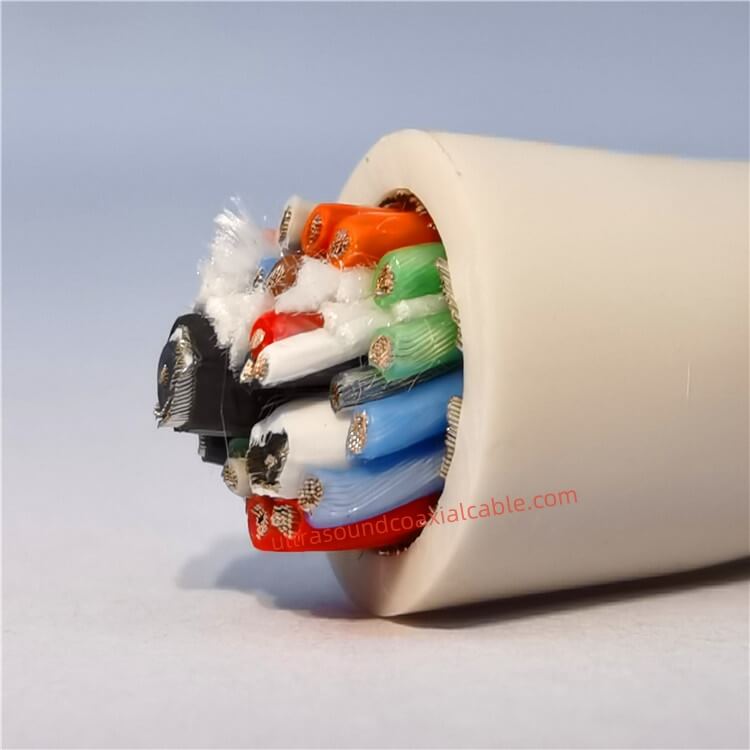
138-Core Medical Ultrasound Probe Coaxial Cable with 0.2mm Diameter – Biocompatible & FDA-Certified

138-Core Medical Ultrasound Probe Coaxial Cable with 0.2mm Diameter – Biocompatible & FDA-Certified

High-Precision 138-Core Medical Ultrasound Coaxial Cables | 0.2mm Ultra-Fine Biocompatible Design for Diagnostic Imaging Product Overview Engineered for advanced medical imaging systems, our 138-Core Medical Ultrasound Probe Coa.
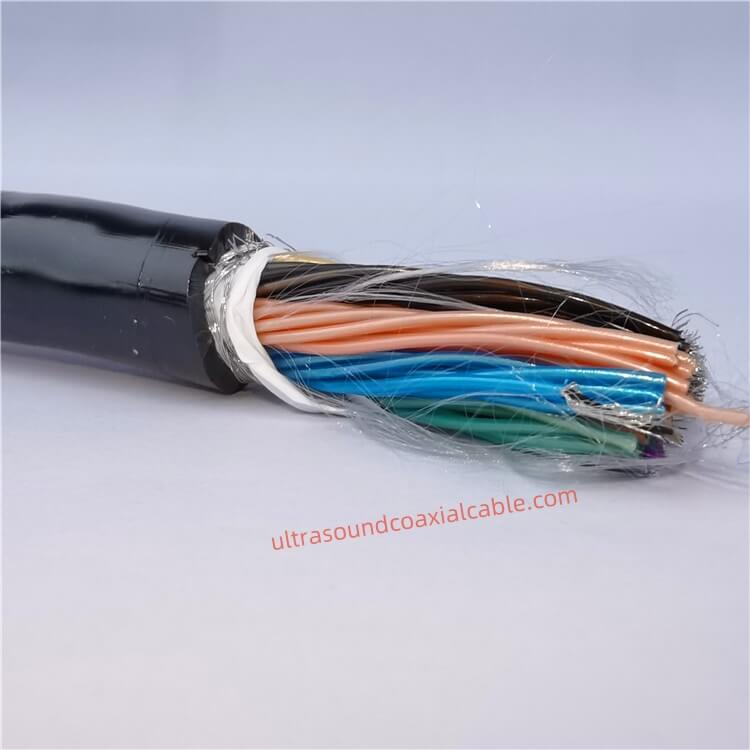
Customizable Ultrasound Coaxial Cable Assembly – 42AWG to 30AWG, 6.6mm OD, 18GHz Bandwidth

Customizable Ultrasound Coaxial Cable Assembly – 42AWG to 30AWG, 6.6mm OD, 18GHz Bandwidth

High-Performance Ultrasound Coaxial Cable Assembly: 42AWG to 30AWG, 6.6mm OD, 18GHz Bandwidth Engineered for precision in medical imaging and industrial applications, this customizable coaxial cable assembly delivers exceptional signal.

Ultra-Flexible Coaxial Cable for Ultrasound Transducers – 44AWG, 0.15dB/m Attenuation at 1GHz

Ultra-Flexible Coaxial Cable for Ultrasound Transducers – 44AWG, 0.15dB/m Attenuation at 1GHz

High-Performance Flexible Coaxial Cable for Medical Imaging & Ultrasound Systems Designed for demanding applications in medical imaging, industrial diagnostics, and high-frequency signal transmission, this ultra-flexible coaxial ca.

Contact Us

Feel free to reach out to us for any inquiries or orders.

Call Us

Have a question? Give us a call!

                   +8618818785005(Whatsapp)

Email Us

Send us an email and we'll get back to you soon.

sales@custom-cable-assemblies.com
       
Home Products Contact