How to determine the correct length of ultrasound coaxial cable needed? | High-Quality Ultrasound Coaxial Cable | ultrasound coaxial cable Manufacturer & Factory-FRS

How to determine the correct length of ultrasound coaxial cable needed?

How to Determine the Correct Length of Ultrasound Coaxial Cable Needed Selecting the optimal length of ultrasound coaxial cable is… - Professional Ultrasound Coaxial Cable Solutions

Information

Learn more about, latest news, frequently asked questions

How to Determine the Correct Length of Ultrasound Coaxial Cable Needed

Selecting the optimal length of ultrasound coaxial cable is critical for maintaining signal integrity, minimizing attenuation, and ensuring reliable performance in medical imaging, industrial testing, or research applications. Below is a comprehensive guide to help you determine the ideal cable length for your specific needs.


1. Measure Signal Transmission Requirements

The length of the ultrasound coaxial cable must align with the frequency range and signal integrity demands of your system. For high-frequency applications (e.g., 10–20 MHz), even minor length deviations can cause signal reflections or attenuation. Use tools like time-domain reflectometry (TDR) to analyze impedance mismatches and calculate the exact cable length required to minimize signal distortion .


2. Calculate Attenuation and Delay

Ultrasound coaxial cables exhibit frequency-dependent attenuation. The formula for attenuation (α) in dB/m is:
[
\alpha = \frac{20 \log_{10}(e)}{2} \sqrt{\frac{\rho v}{2Z_0}}
]
where ( \rho ) = resistivity, ( v ) = signal velocity, and ( Z_0 ) = characteristic impedance. Longer cables increase total attenuation, which may require amplification or shorter cable segments. Additionally, account for propagation delay—a 1-meter cable delays signals by ~1.5–2.5 nanoseconds, impacting time-sensitive measurements .


3. Evaluate Application-Specific Constraints

  • Medical Imaging: For portable ultrasound devices, prioritize lightweight, flexible cables (e.g., 1–3 meters) with low dielectric loss to ensure high-resolution imaging.
  • Industrial Testing: In harsh environments, select shielded coaxial cables (e.g., double-shielded or foil-braid designs) to resist electromagnetic interference (EMI) while maintaining durability.
  • Research Prototypes: Use semi-rigid coaxial cables for precision setups, allowing precise length adjustments without compromising impedance matching .

4. Optimize for Mechanical and Environmental Factors

  • Bending Radius: Ensure the cable’s bending radius exceeds its minimum specification to avoid performance degradation.
  • Temperature Stability: For extreme conditions, opt for cables with low-temperature coefficient materials to minimize length expansion/contraction.
  • Cable Routing: Plan the cable path to avoid sharp bends or stress points, which can introduce phase shifts or physical damage .

5. Validate with Practical Testing

After selecting a candidate length, conduct real-world tests:

  1. Signal Reflection Test: Use a vector network analyzer (VNA) to measure return loss (RL) at both ends. Aim for RL > 15 dB to confirm impedance matching.
  2. Attenuation Compensation: Adjust system gain settings to offset signal loss over the cable length.
  3. Latency Checks: Verify that propagation delays do not interfere with time-gated measurements (e.g., pulse-echo imaging) .

Key Product Features to Look For

When sourcing ultrasound coaxial cables, prioritize:

  • Low Insertion Loss: <0.3 dB/m at 20 MHz.
  • High Shielding Effectiveness: >90 dB to block external noise.
  • Broadband Performance: Supports frequencies up to 50 MHz.
  • Durability: Flexible, halogen-free, and RoHS-compliant materials.

By combining precise measurements, environmental adaptability, and rigorous testing, you can determine the ideal ultrasound coaxial cable length for your application. For specialized requirements, consult manufacturers offering custom-length cables tailored to your operational needs.

Hot Selling Products

Discover our most popular furniture pieces that are loved by customers worldwide.

Ultra-Flexible Coaxial Cable for Ultrasound Transducers – 44AWG, 0.15dB/m Attenuation at 1GHz

Ultra-Flexible Coaxial Cable for Ultrasound Transducers – 44AWG, 0.15dB/m Attenuation at 1GHz

High-Performance Flexible Coaxial Cable for Medical Imaging & Ultrasound Systems Designed for demanding applications in medical imaging, industrial diagnostics, and high-frequency signal transmission, this ultra-flexible coaxial ca.

High-Precision Ultrasound Coaxial Cable for Medical Imaging – Low Noise, Flexible Design, 42AWG

High-Precision Ultrasound Coaxial Cable for Medical Imaging – Low Noise, Flexible Design, 42AWG

Ultra-Flexible 42AWG Medical-Grade Coaxial Cables for High-Precision Ultrasound Imaging Designed for demanding medical imaging applications, our Ultra-Flexible 42AWG Coaxial Cables deliver exceptional signal integrity, noise reduction,.
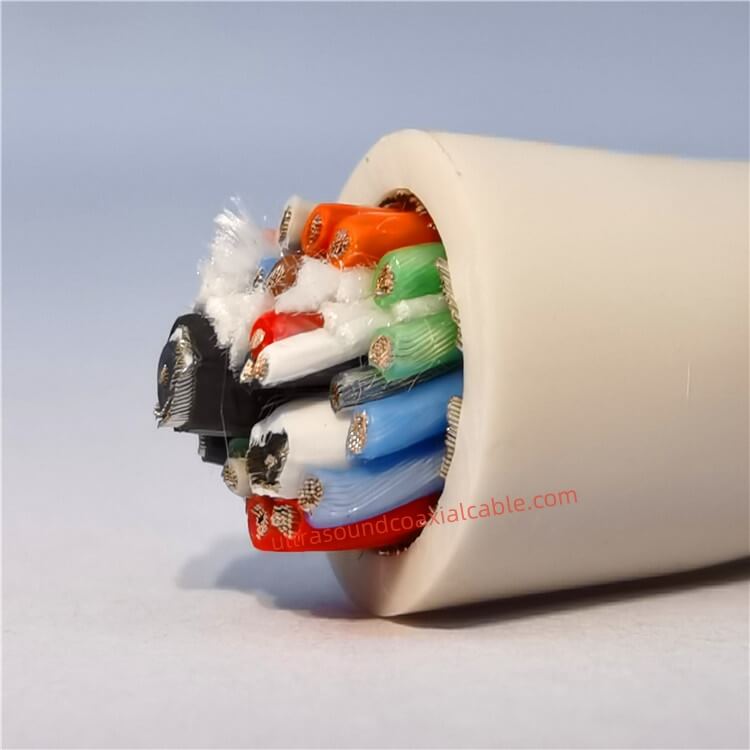
138-Core Medical Ultrasound Probe Coaxial Cable with 0.2mm Diameter – Biocompatible & FDA-Certified

138-Core Medical Ultrasound Probe Coaxial Cable with 0.2mm Diameter – Biocompatible & FDA-Certified

High-Precision 138-Core Medical Ultrasound Coaxial Cables | 0.2mm Ultra-Fine Biocompatible Design for Diagnostic Imaging Product Overview Engineered for advanced medical imaging systems, our 138-Core Medical Ultrasound Probe Coa.
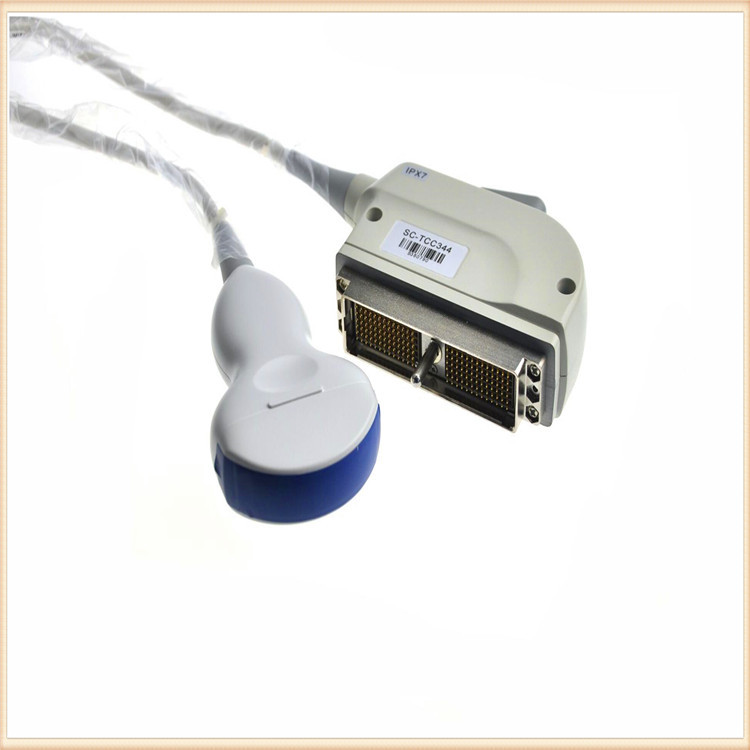
Military-Grade Ultrasound Coaxial Cable – High-Temperature Resistance, 100daN Compression Strength

Military-Grade Ultrasound Coaxial Cable – High-Temperature Resistance, 100daN Compression Strength

High-Performance Military Ultrasound Coaxial Cables: Built for Extreme Conditions Designed to meet the demanding requirements of military, aerospace, and medical applications, our Military-Grade Ultrasound Coaxial Cables deliver except.

Contact Us

Feel free to reach out to us for any inquiries or orders.

Call Us

Have a question? Give us a call!

                   +8618818785005(Whatsapp)

Email Us

Send us an email and we'll get back to you soon.

sales@custom-cable-assemblies.com
       
Home Products Contact