Ultrasound Coaxial Cables: The Critical Link in Non-Destructive Testing The Unsung Hero of Quality Assurance In the world of Non-Destructive… - Professional Ultrasound Coaxial Cable Solutions
Learn more about, latest news, frequently asked questions
Ultrasound Coaxial Cables: The Critical Link in Non-Destructive Testing
In the world of Non-Destructive Testing (NDT), ultrasound coaxial cables serve as the critical transmission pathway that enables precise flaw detection without compromising material integrity. These specialized cables connect ultrasonic transducers to testing instruments, delivering the high-frequency signals that reveal internal defects in materials ranging from aircraft components to pipeline welds. Unlike standard coaxial cables, ultrasound coaxial cables are engineered for minimal signal loss, superior shielding, and exceptional flexibility to withstand the rigors of industrial environments while maintaining signal integrity .
Ultrasound coaxial cables feature a sophisticated multi-layered design that sets them apart from conventional coaxial cables. A typical NDT-grade coaxial cable contains a silver-plated copper alloy inner conductor (often as fine as 38-46 AWG) surrounded by fluoropolymer insulation that provides both durability and excellent electrical properties. This core is protected by multiple shielding layers—usually a combination of spiral shielding (offering 90% coverage) and braid shielding (85% coverage)—that effectively block electromagnetic interference .
The cables are further protected by a robust outer sheath, typically made from PVC or other durable materials designed to withstand industrial environments. This complex construction ensures that the delicate electrical signals traveling between the transducer and instrument remain uncompromised by external factors .
For NDT applications, ultrasound coaxial cables must maintain precise electrical characteristics. They typically feature a nominal impedance of 50 ohms at 10 MHz, with capacitance ratings around 50-110 pF/m depending on the application requirements. Conductor resistance is kept exceptionally low (max. 3.300 Ohm/km at 20°C) to prevent signal degradation over the cable’s length .
The table below outlines key specifications for typical ultrasound coaxial cables used in NDT applications:
| Parameter | Specification | Importance in NDT |
|---|---|---|
| Impedance | 50 ohms @ 10MHz | Matches equipment requirements for optimal signal transfer |
| Conductor Resistance | Max. 3.300 Ohm/km @ 20°C | Minimizes signal loss over distance |
| Capacitance | 50-110 pF/m | Affects signal timing and resolution |
| Shielding Effectiveness | Dual-layer (spiral + braid) | Prevents electromagnetic interference |
| Temperature Rating | Up to 80°C standard | Withstands industrial operating conditions |
In pipeline and pressure vessel manufacturing, ultrasound coaxial cables enable the detection of weld imperfections such as cracks, porosity, and lack of fusion. The cables’ stable signal transmission allows technicians to identify flaws with high resolution, preventing potential failures in critical infrastructure .
The aerospace industry relies on ultrasound coaxial cables for assessing composite materials used in aircraft components and wind turbine blades. The cables facilitate the detection of delaminations and voids within composite layups, ensuring structural integrity in safety-critical applications .
For industrial components like ship hulls, dam structures, and thick castings, ultrasound coaxial cables enable the deep penetration required to locate internal flaws in sections exceeding 50mm. The high-performance shielding maintains signal clarity even at greater material depths .
In industrial plant maintenance, ultrasound coaxial cables connect to transducers that perform thickness gauging on pipes and vessels affected by corrosion. The precise signal transmission allows for accurate remaining thickness measurements, helping prevent leaks and failures in process equipment .
Recent developments have expanded the operational limits of ultrasound coaxial cables in extreme environments. Research demonstrates that specialized transducers with Mn-doped CaBi₄Ti₄O₁₅/Pb(Zr,Ti)O₃ (CBT/PZT) composite films can maintain ultrasonic response at temperatures up to 600°C, enabling continuous monitoring in high-temperature industrial processes .
Similarly, innovations like the TUCSS transducer have been specifically designed for NDT under liquid sodium at approximately 200°C, addressing the challenging conditions found in Sodium Fast Reactors. These specialized coaxial implementations overcome obstacles such as chemical compatibility, irradiation resistance, and acoustic performance under extreme conditions .
When selecting ultrasound coaxial cables for NDT applications, environmental factors must be prioritized. Cables must be chosen based on their temperature resistance, chemical compatibility with operating environments, and flexibility requirements for the application. For instance, cables used in nuclear facilities require additional irradiation resistance, with some specifications calling for withstandability up to 216 kGy of cumulative gamma radiation .
Signal integrity demands careful consideration of electrical characteristics including impedance matching, capacitance, and attenuation. The mechanical properties—particularly flex life and crush resistance—determine longevity in applications requiring frequent movement or positioning in confined spaces. Connector compatibility is equally vital, with common NDT interfaces including Microdot and Lemo connectors that must maintain reliable connections despite vibration and repeated mating cycles .
Reputable manufacturers adhere to stringent quality standards, with certifications such as ISO 9001, ISO 13485, and RoHS compliance indicating production consistency and material safety. For medical NDT applications crossing into diagnostic imaging, biocompatibility standards may also apply to cable materials .
FRS technologies have established industry leadership through continuous innovation in ultrasound coaxial cable design. Our high-temperature series incorporates advanced dielectric materials that maintain signal integrity up to 200°C continuous operation, exceeding standard industrial requirements. The FRS micro-coaxial series features conductors as fine as 46 AWG while maintaining exceptional signal-to-noise ratios for high-resolution imaging applications .
What distinguishes FRS cables is our proprietary multi-layer shielding technology that provides >100 dB EMI rejection—essential for industrial environments with significant electrical noise. Combined with our patented flex-life reinforcement, FRS cables withstand over 300,000 bending cycles without performance degradation, dramatically reducing downtime and replacement costs in high-cycle applications .
A nuclear facility faced challenges performing ultrasonic testing on piping systems located in high-radiation areas. Standard cables deteriorated rapidly, requiring frequent replacement and extended downtime. The implementation of FRS radiation-resistant coaxial cables with specialized polymer jackets enabled continuous operation between maintenance cycles, reducing inspection time by 40% and eliminating cable failures during critical assessments .
An aircraft manufacturer needed higher resolution imaging to detect micron-scale imperfections in composite wing sections. By upgrading to FRS high-frequency coaxial cables with low capacitance characteristics, inspectors achieved 15% better flaw detection capability, particularly for planar defects oriented parallel to the surface. The improved signal quality also reduced false calls, streamlining the manufacturing process .
The evolution of ultrasound coaxial cables continues alongside advancements in NDT methodology. The integration of phased array techniques demands cables with enhanced bandwidth capabilities to support multi-element transducers. Guided wave testing for long-range pipeline inspection requires specialized cables that maintain pulse integrity over extended distances .
Digitalization trends are driving development of integrated digital UT cables with embedded intelligence for real-time performance monitoring. Meanwhile, the growing adoption of acoustic microscopy for nano-level resolution pushes cable technology toward even higher frequency capabilities while maintaining signal fidelity .
As industrial NDT continues to evolve toward higher temperatures, greater precision, and more challenging environments, ultrasound coaxial cables will remain the critical link that enables reliable assessment of structural integrity across essential industries. Through continued innovation in materials science and electrical engineering, these specialized components will support ever-more sophisticated non-destructive evaluation techniques that ensure safety and reliability in critical infrastructure worldwide .
Discover our most popular furniture pieces that are loved by customers worldwide.

High-Performance Flexible Coaxial Cable for Medical Imaging & Ultrasound Systems Designed for demanding applications in medical imaging, industrial diagnostics, and high-frequency signal transmission, this ultra-flexible coaxial ca.
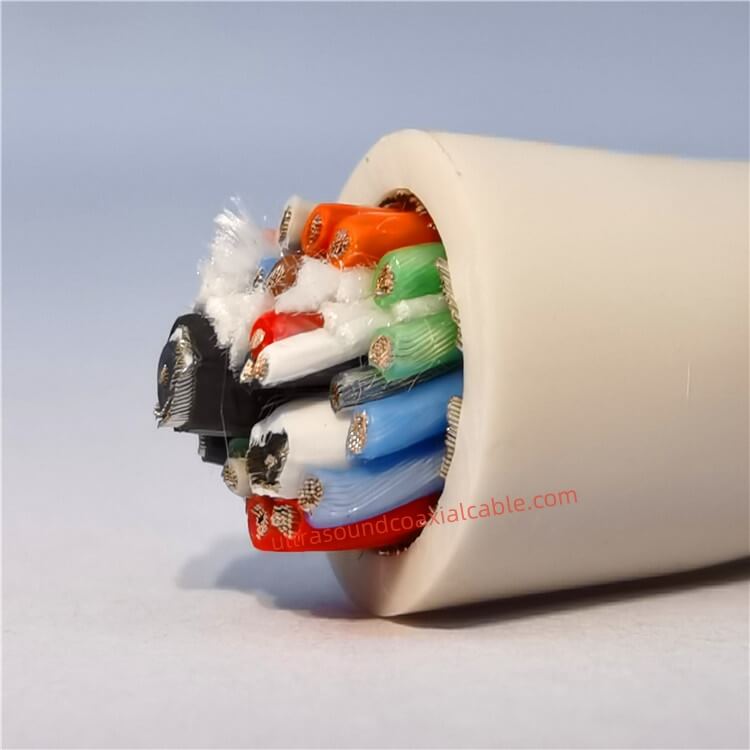
High-Precision 138-Core Medical Ultrasound Coaxial Cables | 0.2mm Ultra-Fine Biocompatible Design for Diagnostic Imaging Product Overview Engineered for advanced medical imaging systems, our 138-Core Medical Ultrasound Probe Coa.
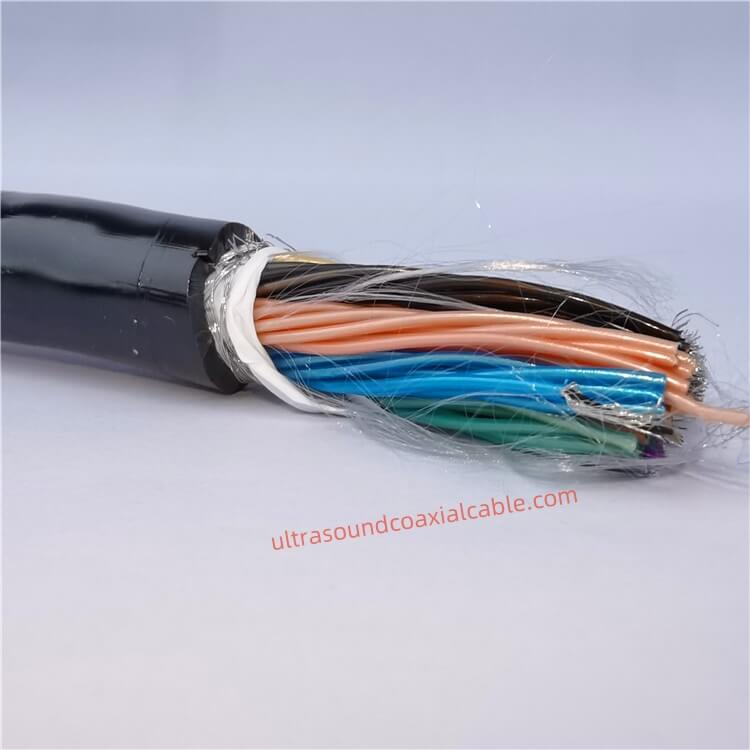
High-Performance Ultrasound Coaxial Cable Assembly: 42AWG to 30AWG, 6.6mm OD, 18GHz Bandwidth Engineered for precision in medical imaging and industrial applications, this customizable coaxial cable assembly delivers exceptional signal.
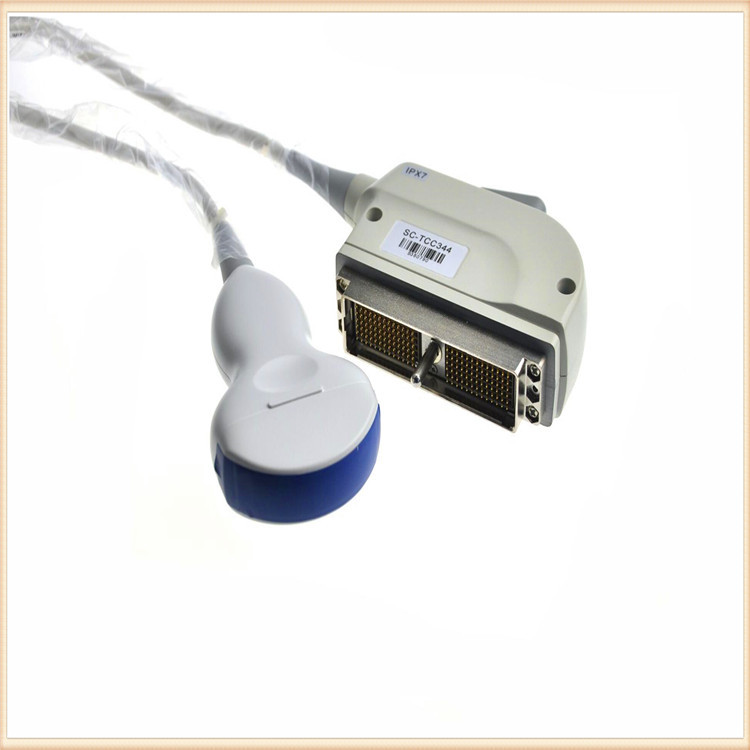
High-Performance Military Ultrasound Coaxial Cables: Built for Extreme Conditions Designed to meet the demanding requirements of military, aerospace, and medical applications, our Military-Grade Ultrasound Coaxial Cables deliver except.
Feel free to reach out to us for any inquiries or orders.