What is the Typical Impedance of a Custom Ultrasound Coaxial Cable? | High-Quality Ultrasound Coaxial Cable | ultrasound coaxial cable Manufacturer & Factory-FRS

What is the Typical Impedance of a Custom Ultrasound Coaxial Cable?

The search for the “typical impedance of a custom ultrasound coaxial cable” is a critical technical inquiry at the heart… - Professional Ultrasound Coaxial Cable Solutions

Information

Learn more about, latest news, frequently asked questions

The search for the “typical impedance of a custom ultrasound coaxial cable” is a critical technical inquiry at the heart of medical imaging system performance. In essence, this question seeks to understand the fundamental electrical characteristic that ensures clear signal transmission between ultrasound transducers and processing units. The definitive answer is 50 Ohms. This standardized impedance is not arbitrary but is the cornerstone for minimizing signal reflections, preserving image fidelity, and ensuring compatibility across complex diagnostic systems. For medical device engineers and procurement specialists, understanding the “why” behind this specification is as crucial as the number itself, as it directly impacts diagnostic accuracy and system reliability.

Deep Dive: The 50-Ohm Standard and Its Imperative Role

In the precise world of medical ultrasound, the coaxial cable acts as the lifeline for high-frequency electrical signals generated by piezoelectric elements in the probe. The choice of 50 Ohms​ as the typical impedance for these custom cables is a result of optimizing for signal integrity, power handling, and historical standardization across RF and microwave industries.

  • Signal Integrity & Minimizing Loss:​ At the frequencies used in ultrasound imaging (typically 1 MHz to 20 MHz and beyond), cables behave like transmission lines. An impedance mismatch between the cable, the transducer, and the system electronics causes signal reflections. These reflections manifest as “ghosting” in the image, reduced contrast resolution, and overall signal degradation. A uniform 50-Ohm characteristic impedance throughout the signal chain ensures maximum power transfer and minimal reflection.
  • Historical & Practical Optimization:​ The 50-Ohm standard emerged as a practical compromise between minimum signal attenuation (loss) and maximum power-handling capacity for coaxial cables with air dielectric. While other impedances like 75 Ohms are standard in video applications for lower loss, 50 Ohms became ubiquitous in RF instrumentation, defense, and medical diagnostics, making it the de facto choice for compatibility with existing system components like connectors and amplifiers.

Data, Standards, and Industry Compliance

Adherence to this impedance is governed by stringent requirements. While specific cable impedance might have a nominal tolerance (e.g., 50 ± 2 Ohms), system designers demand consistency. This is where partnering with a seasoned Ultrasound Coaxial Cable Manufacturer​ becomes non-negotiable.

  • Industry Standards:​ High-quality custom ultrasound cables are designed and tested in accordance with relevant sections of standards such as IEC 60601 for medical electrical equipment safety and various ASTM standards for materials and performance. Consistent impedance is a key parameter verified during production.
  • Market Analysis:​ The drive towards higher-frequency imaging (e.g., for superficial musculoskeletal or vascular imaging) and portable/handheld ultrasound devices places even greater demands on cable performance. Cables must maintain stable 50-Ohm impedance while becoming more flexible, durable, and lightweight. Manufacturers like FRS​ invest in advanced simulation and testing equipment to ensure impedance stability across bend radii and flex cycles, a critical differentiator in a competitive market.

Application Scenarios and Critical Performance Requirements

Custom ultrasound coaxial cables are not one-size-fits-all. Their design varies based on the application:

  1. High-Channel-Count Probes (e.g., 192+ elements):​ Used in premium cart-based systems for cardiology and radiology. Here, micro-miniature coaxial cables are bundled into tight arrays. The primary pain point is crosstalk—signal interference between adjacent channels. FRS’s solution​ involves precise impedance control combined with specialized shielding geometries (often dual or triple-layer shielding) to maintain isolation and preserve each channel’s signal integrity at 50 Ohms.
  2. Ruggedized Probes for Emergency Medicine & Point-of-Care (POCUS):​ These cables face constant flexing, coiling, and potential chemical exposure. The pain point is impedance instability and failure due to mechanical stress.​ A manufacturer must engineer cables with robust yet flexible dielectrics, advanced stranded center conductors, and strain relief to ensure the 50-Ohm characteristic does not degrade over the cable’s lifespan.
  3. Intraoperative and Specialty Probes:​ Cables for laparoscopic or intra-vascular ultrasound require extreme flexibility and a very small outer diameter. The pain point is balancing minimal size with maintaining RF performance.FRS​ addresses this by utilizing high-performance materials that allow for a tiny form factor while rigorously controlling the impedance profile through precision manufacturing.

Product Selling Points of a Trusted Manufacturer

When sourcing from an Ultrasound Coaxial Cable Manufacturer, key selling points extend beyond just stating “50 Ohms.” They include:

  • Impedance Consistency:​ Guaranteed tight tolerance on the 50-Ohm specification across the entire production batch and throughout the cable’s operating life.
  • Low Signal Loss (Attenuation):​ Specially formulated dielectric materials that minimize signal weakening, especially critical for higher frequencies.
  • High Flex Life & Durability:​ Engineered to withstand hundreds of thousands of flex cycles without compromising electrical performance.
  • Precision Micro-Coax Assembly:​ Capability to handle and terminate extremely fine coaxial wires (e.g., 44 AWG) with high reliability, essential for modern high-density probes.
  • Customization and Co-Engineering:​ The ability to work with B2B clients​ to tailor cable diameter, shielding, jacket material (e.g., biocompatible, fluid-resistant), and connector interfaces to integrate seamlessly into their specific probe assembly.

From Pain Points to Engineered Solutions

The common pain points in ultrasound cable performance—image artifact, reduced sensitivity, cable failure, and assembly complexity—often trace back to inconsistencies in core electrical parameters like impedance. As a dedicated manufacturer, FRS​ transforms these challenges into reliable solutions. Our engineering process begins with electromagnetic modeling to predict performance, followed by prototyping and rigorous testing on network analyzers to verify impedance and S-parameters. We understand that for our B2B partners, a cable is not just a component; it is a critical determinant of their end product’s image quality and reliability. Therefore, we emphasize co-development partnerships, providing not just cables but transmission line solutions that are optimized for integration, performance, and longevity.

In conclusion, the 50-Ohm impedance is the vital benchmark for custom ultrasound coaxial cables. Achieving and maintaining this specification under real-world mechanical and environmental stress is what separates a basic cable from a diagnostic-grade component. For medical device OEMs seeking a trusted supplier, the focus must be on a manufacturer’s proven capability to deliver this fundamental performance consistently, backed by the technical expertise to solve application-specific challenges. This commitment to foundational electrical excellence ensures that the final ultrasound system delivers the clear, diagnostic images that clinicians and patients depend on.

Hot Selling Products

Discover our most popular furniture pieces that are loved by customers worldwide.
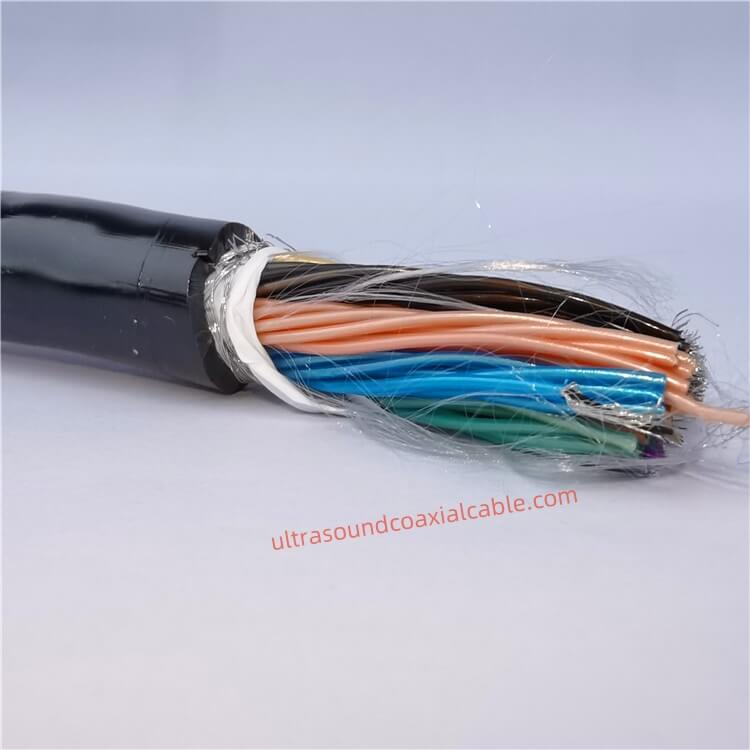
Customizable Ultrasound Coaxial Cable Assembly – 42AWG to 30AWG, 6.6mm OD, 18GHz Bandwidth

Customizable Ultrasound Coaxial Cable Assembly – 42AWG to 30AWG, 6.6mm OD, 18GHz Bandwidth

High-Performance Ultrasound Coaxial Cable Assembly: 42AWG to 30AWG, 6.6mm OD, 18GHz Bandwidth Engineered for precision in medical imaging and industrial applications, this customizable coaxial cable assembly delivers exceptional signal.

High-Precision Ultrasound Coaxial Cable for Medical Imaging – Low Noise, Flexible Design, 42AWG

High-Precision Ultrasound Coaxial Cable for Medical Imaging – Low Noise, Flexible Design, 42AWG

Ultra-Flexible 42AWG Medical-Grade Coaxial Cables for High-Precision Ultrasound Imaging Designed for demanding medical imaging applications, our Ultra-Flexible 42AWG Coaxial Cables deliver exceptional signal integrity, noise reduction,.

Ultra-Flexible Coaxial Cable for Ultrasound Transducers – 44AWG, 0.15dB/m Attenuation at 1GHz

Ultra-Flexible Coaxial Cable for Ultrasound Transducers – 44AWG, 0.15dB/m Attenuation at 1GHz

High-Performance Flexible Coaxial Cable for Medical Imaging & Ultrasound Systems Designed for demanding applications in medical imaging, industrial diagnostics, and high-frequency signal transmission, this ultra-flexible coaxial ca.
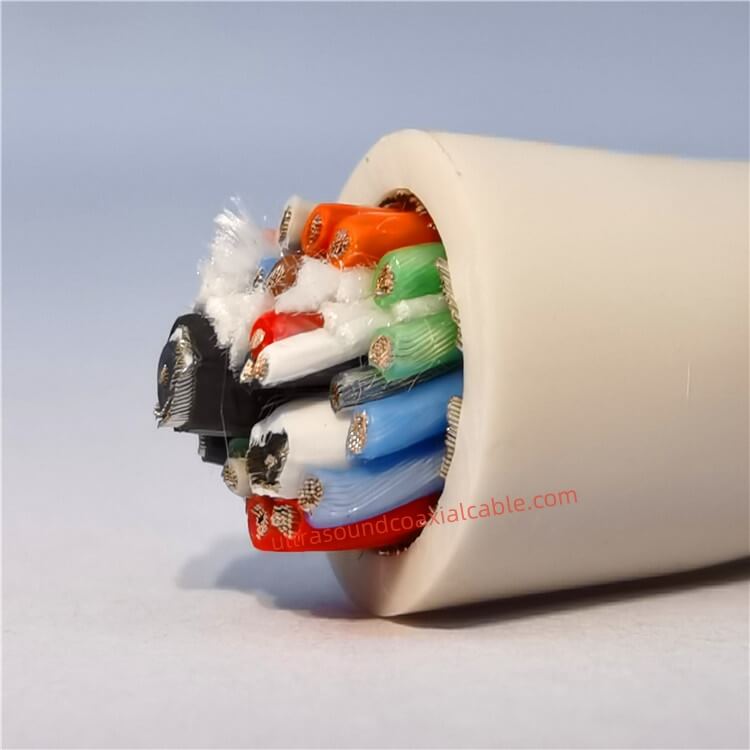
138-Core Medical Ultrasound Probe Coaxial Cable with 0.2mm Diameter – Biocompatible & FDA-Certified

138-Core Medical Ultrasound Probe Coaxial Cable with 0.2mm Diameter – Biocompatible & FDA-Certified

High-Precision 138-Core Medical Ultrasound Coaxial Cables | 0.2mm Ultra-Fine Biocompatible Design for Diagnostic Imaging Product Overview Engineered for advanced medical imaging systems, our 138-Core Medical Ultrasound Probe Coa.

Contact Us

Feel free to reach out to us for any inquiries or orders.

Call Us

Have a question? Give us a call!

                   +8618818785005(Whatsapp)

Email Us

Send us an email and we'll get back to you soon.

sales@custom-cable-assemblies.com
       
Home Products Contact