Ultrasound Coaxial Cables: The Key to Multi-Modality Imaging Compatibility In the rapidly evolving field of medical imaging, compatibility across various… - Professional Ultrasound Coaxial Cable Solutions
Learn more about, latest news, frequently asked questions
In the rapidly evolving field of medical imaging, compatibility across various modalities isn’t just a convenience—it’s a critical requirement for diagnostic accuracy and operational efficiency. At the heart of this compatibility lies a component often overlooked: the ultrasound coaxial cable. These specialized cables serve as the vital link between transducers and imaging systems, determining not just image quality but also the flexibility of medical devices across diverse clinical applications.
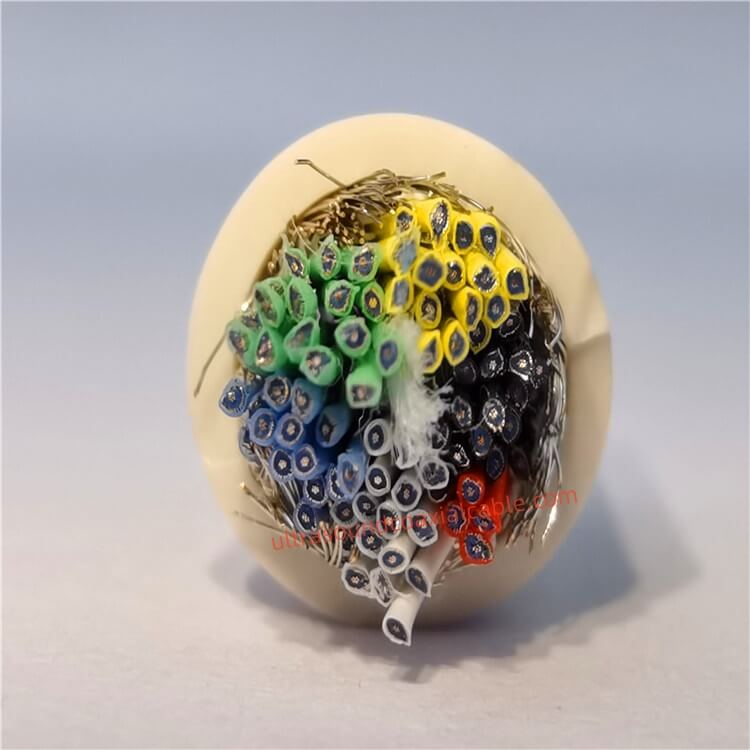
Ultrasound coaxial cables are engineering marvels designed to transmit high-frequency signals with precision while minimizing interference and signal loss. Their sophisticated construction typically includes a silver-plated copper alloy inner conductor, fluoropolymer insulation, multiple shielding layers, and a durable outer sheath—all engineered to maintain signal integrity across various imaging environments .
What makes these cables particularly valuable is their ability to support multiple imaging modalities, from traditional ultrasound to advanced techniques like photoacoustic imaging. This versatility stems from careful design considerations that balance frequency response, impedance matching, and physical durability. For instance, modern ultrasound coaxial cables typically feature a nominal impedance of 50 ohms at 10 MHz, making them suitable for a wide range of medical equipment .
Medical imaging applications operate across a broad frequency spectrum. Diagnostic ultrasound systems typically function between 2-15 MHz, while specialized applications may require higher frequencies. High-performance coaxial cables like those from FRS are engineered with wide bandwidth capabilities (e.g., 61.9% bandwidth at 21.2 MHz center frequency) to accommodate this variety without compromising signal quality .
As medical devices become more compact, coaxial cables must follow suit. Advanced cables now incorporate up to 200 micro-coaxial strands within a single outer jacket measuring just 8.3mm in diameter, with individual conductors as fine as 42-46 AWG . This high-density configuration allows compatibility with various probe types while maintaining the flexibility needed for endoscopic and intravascular applications.
Electromagnetic interference can significantly degrade image quality across modalities. Premium ultrasound coaxial cables address this challenge through sophisticated shielding approaches, combining spiral shields (offering 90% coverage) and braid shields (85% coverage) for comprehensive protection . This dual-shield design ensures clean signal transmission even in environments rich with electronic equipment.
The medical imaging industry accounts for over 60% of global ultrasound coaxial cable production . These cables enable high-resolution imaging across specialties:
FRS coaxial cables are engineered to meet these diverse requirements, with materials selected for both performance and patient safety, including biocompatibility-certified components for applications involving direct patient contact .
Beyond medical applications, ultrasound coaxial cables serve critical functions in industrial settings. The NDT sector has experienced 9% year-on-year growth in equipment sales, driving demand for cables capable of operating in extreme temperatures and harsh environments . These applications require cables with enhanced durability characteristics, such as temperature ratings up to 150°C for pipeline inspections .
Novel imaging technologies continue to create new demands for coaxial cable performance. Photoacoustic endoscopy, for instance, requires unique coaxial designs that enable simultaneous ultrasound transmission and optical beam alignment within miniature probes as small as 1.8mm in diameter . FRS stays at the forefront of these developments, working with research institutions and equipment manufacturers to create cables that support next-generation imaging technologies.
True multi-modality compatibility requires adherence to stringent industry standards. Premium ultrasound coaxial cables like those from FRS comply with:
These certifications ensure that cables not only perform optimally but also integrate seamlessly into regulated healthcare environments worldwide. The implementation of Unique Device Identification (UDI) systems further enhances traceability and quality control throughout the product lifecycle .
Long cable runs can degrade signal quality, particularly in high-frequency applications. FRS addresses this challenge through precision engineering that minimizes attenuation. For example, premium cables maintain conductor resistance below 3,300 Ohm/km at 20°C, preserving signal integrity across extended distances .
Medical cables face numerous stressors, including repeated flexing, sterilization cycles, and mechanical strain. FRS cables incorporate materials like medical-grade silicone or polyurethane insulation that withstand autoclave sterilization at 135°C while maintaining performance . The robust construction ensures longevity even in high-use clinical settings.
While standard cables serve many purposes, specialized applications often require tailored solutions. FRS offers customization options including:
FRS cables incorporate several distinctive features that ensure compatibility across imaging modalities:
Our cables utilize silver-plated copper alloy conductors for optimal signal transmission, combined with fluoropolymer insulation that offers excellent dielectric properties and temperature resistance . These materials are selected based on rigorous testing to ensure they meet the demands of both medical and industrial applications.
FRS maintains manufacturing tolerances as tight as ±0.02mm on critical dimensions , ensuring consistent performance across production batches. This precision manufacturing translates to reliable interoperability with various imaging systems.
As imaging technology evolves toward higher frequencies and greater resolution requirements, FRS cables are engineered with performance headroom to accommodate tomorrow’s systems. Our ongoing R&D focus includes developing cables with higher flexibility (20% improvement over previous generations) and enhanced bandwidth capabilities .
The true measure of coaxial cable compatibility lies in clinical and industrial performance. Independent research has demonstrated that coaxial designs incorporating transparent ultrasound transducers (TUT) can achieve resolution of 91μm at 2mm distance for photoacoustic imaging, while maintaining ultrasound resolution of 110μm at 5.4mm . This level of performance enables diagnostic-quality imaging across modalities using a single cable solution.
In industrial settings, FRS cables have proven reliable in challenging applications such as wind turbine blade inspections, where they must withstand vibration, moisture, and temperature variations while delivering accurate flaw detection data .
At FRS, we view compatibility not as an afterthought but as a fundamental design principle. Our ultrasound coaxial cables are engineered from the ground up to perform reliably across the diverse ecosystem of medical and industrial imaging modalities. Through continuous innovation in materials science, manufacturing processes, and quality control, we ensure that our products don’t just connect equipment—they enable breakthroughs in diagnostic capability and operational efficiency.
Whether your application involves conventional ultrasound systems, advanced photoacoustic endoscopy, or specialized industrial testing, FRS has the coaxial cable solution that will meet your technical requirements while providing the reliability and durability demanded by professionals worldwide.
Discover our most popular furniture pieces that are loved by customers worldwide.

Ultra-Flexible 42AWG Medical-Grade Coaxial Cables for High-Precision Ultrasound Imaging Designed for demanding medical imaging applications, our Ultra-Flexible 42AWG Coaxial Cables deliver exceptional signal integrity, noise reduction,.

High-Performance Flexible Coaxial Cable for Medical Imaging & Ultrasound Systems Designed for demanding applications in medical imaging, industrial diagnostics, and high-frequency signal transmission, this ultra-flexible coaxial ca.
Product OverviewThe Ultrasound Coaxial Cable is a specialized cable engineered to deliver ultra-low signal loss, exceptional shielding, and unmatched durability in critical environments. Designed for medical imaging, industrial testi.
High-Performance Military Ultrasound Coaxial Cables: Built for Extreme Conditions Designed to meet the demanding requirements of military, aerospace, and medical applications, our Military-Grade Ultrasound Coaxial Cables deliver except.
Feel free to reach out to us for any inquiries or orders.