How to Choose the Right Shielding for Medical Ultrasound Coaxial Cables? | High-Quality Ultrasound Coaxial Cable | ultrasound coaxial cable Manufacturer & Factory-FRS

How to Choose the Right Shielding for Medical Ultrasound Coaxial Cables?

In the high-stakes world of medical diagnostics, the clarity of an ultrasound image can be the difference between early detection… - Professional Ultrasound Coaxial Cable Solutions

Information

Learn more about, latest news, frequently asked questions

In the high-stakes world of medical diagnostics, the clarity of an ultrasound image can be the difference between early detection and a missed diagnosis. While much attention is paid to the transducer and the console, the Ultrasound Coaxial Cable​ is the critical lifeline that carries the signal between them. The choice of shielding within this cable is not merely a technical specification; it is a direct determinant of diagnostic accuracy. This guide delves into the critical factors for selecting the optimal shielding configuration, balancing the need for superior Electromagnetic Interference (EMI) protection with the practical demands of clinical flexibility and durability.

The Critical Role of Shielding in Medical Ultrasound

Medical ultrasound systems operate by transmitting high-frequency (typically 1-40 MHz) electrical pulses to the transducer and receiving the resulting echoes. These signals are extremely low in amplitude and highly susceptible to external noise. The primary function of the shielding in an Ultrasound Coaxial Cable​ is to act as a Faraday cage, preventing external EMI from corrupting the signal and ensuring that the internal signal does not radiate out and interfere with other sensitive medical equipment.

Key Performance Metrics Influenced by Shielding:

  • Signal-to-Noise Ratio (SNR):​ Poor shielding allows noise to enter, reducing SNR and resulting in grainy, low-contrast images.
  • Crosstalk:​ In multi-core probe cables, inadequate shielding between individual coaxial lines can cause signals to “leak” into adjacent channels, creating artifacts in the image.
  • Compliance:​ Medical devices must comply with stringent standards like IEC 60601, which often mandate specific levels of EMI immunity that are directly dependent on cable shielding effectiveness.

Common Shielding Types: A Comparative Analysis

Choosing the right shield involves a trade-off between coverage, flexibility, and cost. Here’s a breakdown of the most common configurations used in medical applications:

1. Single Braid Shield

  • Construction:​ A single layer of woven or spiraled metallic wires (typically tinned copper).
  • Performance:​ Offers basic EMI protection with coverage typically around 70-95%. It provides good flexibility and is relatively easy to terminate.
  • Best For:​ General-purpose, low-frequency applications or cost-sensitive projects where the operating environment has minimal EMI.
  • Limitation:​ Susceptible to “picket fencing” (gaps in coverage) and can suffer from increased attenuation if the braid loosens during flexing.

2. Foil Shield (or Tape Shield)

  • Construction:​ A thin layer of aluminum or copper laminated to a polyester or polypropylene carrier film.
  • Performance:​ Provides 100% coverage against high-frequency interference. It is lightweight and has a small overall diameter.
  • Best For:​ High-frequency signals (GHz range) where complete coverage is critical.
  • Limitation:​ Very poor flexibility and durability. The foil can tear or crease when bent repeatedly, breaking the electrical continuity. Not suitable for dynamic flexing applications like handheld probes.

3. Foil + Braid Combination Shield (Dual Shield)

  • Construction:​ A combination of an inner foil layer and an outer braid layer.
  • Performance:​ This is the industry standard for most medical ultrasound probes. The foil provides 100% coverage for high-frequency noise, while the braid adds mechanical strength, low-frequency protection, and improved flexibility.
  • Best For:Most medical ultrasound probe cables.​ It balances excellent EMI performance with the durability needed for clinical use.
  • Limitation:​ Slightly stiffer and more expensive than single-braid designs.

4. Quad-Shield

  • Construction:​ Typically consists of two foil layers and two braid layers, or multiple alternating layers.
  • Performance:​ Offers the highest level of EMI/RFI protection, often exceeding 100dB of shielding effectiveness. It is extremely robust against external noise.
  • Best For:​ Environments with extreme EMI, such as operating rooms with multiple high-power devices, or for cables that run near power lines.
  • Limitation:​ Significantly increases cable stiffness and diameter, making it unsuitable for highly flexible probe applications. It is also the most expensive option.

Data-Driven Selection: Matching Shield to Application

Application ScenarioRecommended Shield TypeKey Rationale
Handheld Ultrasound Probes​ (Cardiology, Radiology)Foil + Braid (Dual Shield)Optimal balance. Foil handles high-frequency image noise; braid provides flex-life for daily use.
Intracavity Probes​ (TEE, Endoscopic)High-Density Single Braid or Micro-Coax with specialized shieldingExtreme flexibility is paramount. High-coverage braids are used to maintain signal integrity in tight bends.
Long Cable Runs​ (>3 meters)Foil + Braid or Quad-ShieldLonger cables act as larger antennas for noise. Enhanced shielding is needed to prevent signal degradation over distance.
High-Frequency Probes​ (>15MHz for superficial imaging)Foil-centric designsAt very high frequencies, skin effect makes 100% foil coverage essential to prevent signal loss.

Industry Standards and Compliance

When sourcing from an Ultrasound Coaxial Cable Manufacturer, compliance with medical standards is non-negotiable. The shielding choice must support compliance with:

  • IEC 60601-1:​ General requirements for basic safety and essential performance of medical electrical equipment. This includes clauses on EMI immunity.
  • IEC 60601-2-37:​ Particular requirements for the basic safety and essential performance of ultrasonic medical diagnostic and monitoring equipment.
  • ISO 13485:​ Quality management systems for medical devices.

Manufacturers like FRS​ design their cables to not only meet but exceed these standards, ensuring that the shielding architecture is validated for medical use.

The FRS Advantage: Engineering Beyond the Standard

At FRS, we understand that a one-size-fits-all approach does not work for medical imaging. While the Foil + Braid​ combination is a robust starting point, our engineering team focuses on advanced techniques to overcome the inherent limitations of standard shields:

  • Advanced Materials:​ We utilize high-purity, oxygen-free copper for our braids to minimize resistance and improve high-frequency performance.
  • Bonded Constructions:​ Our cables often feature bonded foil layers that prevent the “zippering” effect during flexing, ensuring the shield remains intact even after thousands of bend cycles.
  • Custom Configurations:​ For challenging applications, we engineer custom solutions, such as applying additional serve or spiral shields over individual conductors in multi-core cables to eliminate crosstalk.

Conclusion

Selecting the right shielding for your medical Ultrasound Coaxial Cable​ is a critical decision that impacts image quality, patient safety, and product longevity. While Foil + Braid​ remains the gold standard for most probe applications, the specific demands of your device—whether it’s extreme flexibility, ultra-high frequency, or operation in a noisy environment—should guide your final choice. Partnering with a manufacturer that has deep expertise in medical-grade materials and shielding physics, like FRS, ensures that your cable is not just a component, but a reliable conduit for life-saving diagnostics.

Hot Selling Products

Discover our most popular furniture pieces that are loved by customers worldwide.
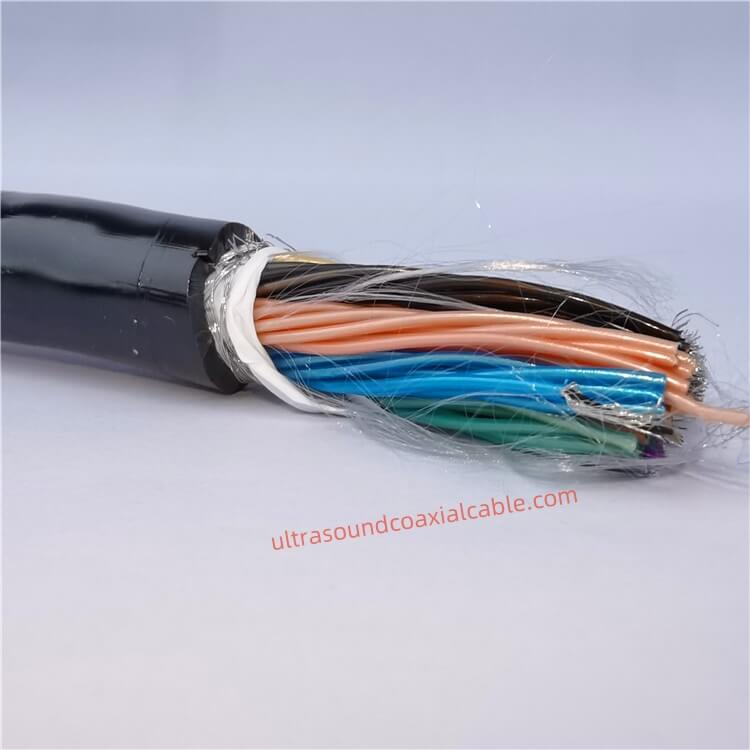
Customizable Ultrasound Coaxial Cable Assembly – 42AWG to 30AWG, 6.6mm OD, 18GHz Bandwidth

Customizable Ultrasound Coaxial Cable Assembly – 42AWG to 30AWG, 6.6mm OD, 18GHz Bandwidth

High-Performance Ultrasound Coaxial Cable Assembly: 42AWG to 30AWG, 6.6mm OD, 18GHz Bandwidth Engineered for precision in medical imaging and industrial applications, this customizable coaxial cable assembly delivers exceptional signal.
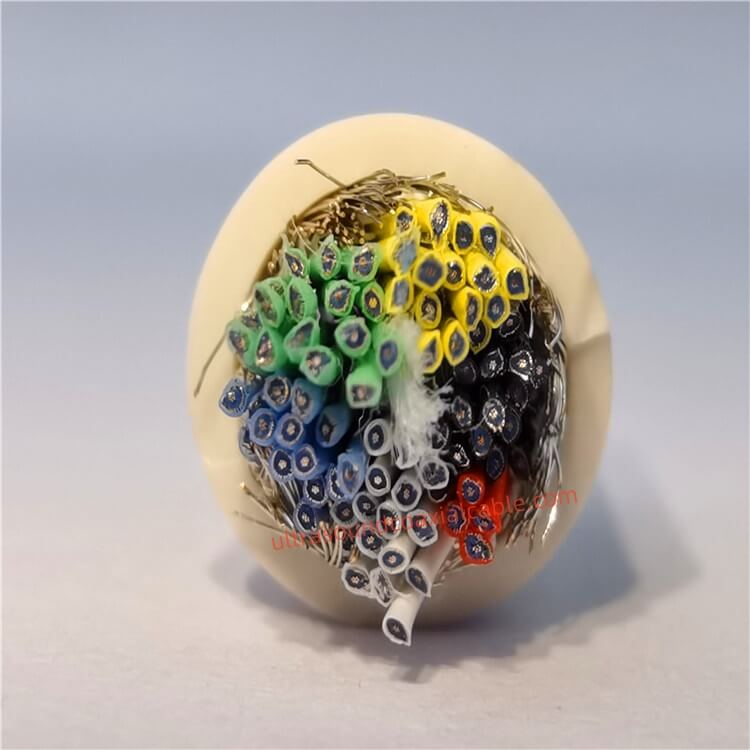
Ultrasound Coaxial Cable|High-Performance Signal Transmission for Precision Applications

Ultrasound Coaxial Cable|High-Performance Signal Transmission for Precision Applications

‌‌Product Overview‌The ‌Ultrasound Coaxial Cable‌ is a specialized cable engineered to deliver ultra-low signal loss, exceptional shielding, and unmatched durability in critical environments. Designed for medical imaging, industrial testi.
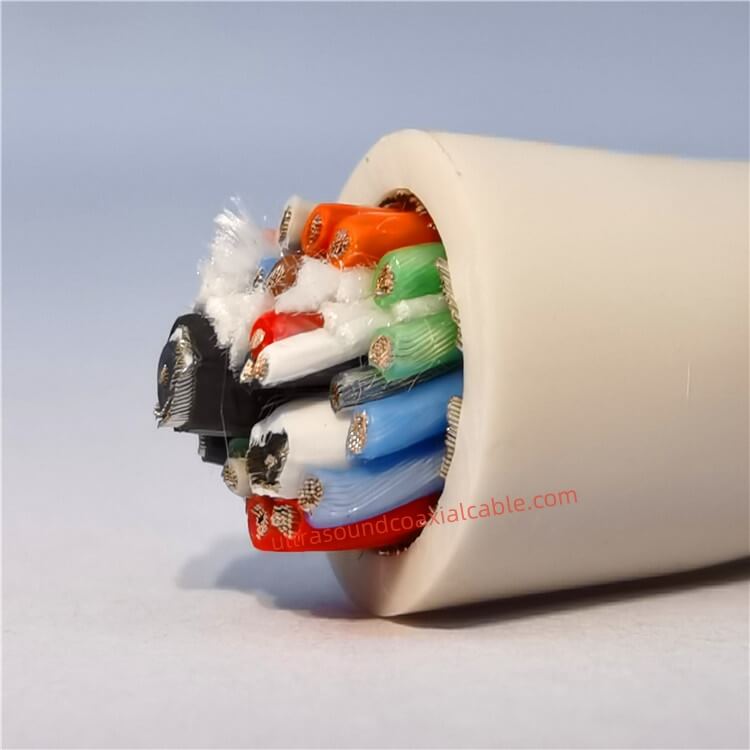
138-Core Medical Ultrasound Probe Coaxial Cable with 0.2mm Diameter – Biocompatible & FDA-Certified

138-Core Medical Ultrasound Probe Coaxial Cable with 0.2mm Diameter – Biocompatible & FDA-Certified

High-Precision 138-Core Medical Ultrasound Coaxial Cables | 0.2mm Ultra-Fine Biocompatible Design for Diagnostic Imaging Product Overview Engineered for advanced medical imaging systems, our 138-Core Medical Ultrasound Probe Coa.
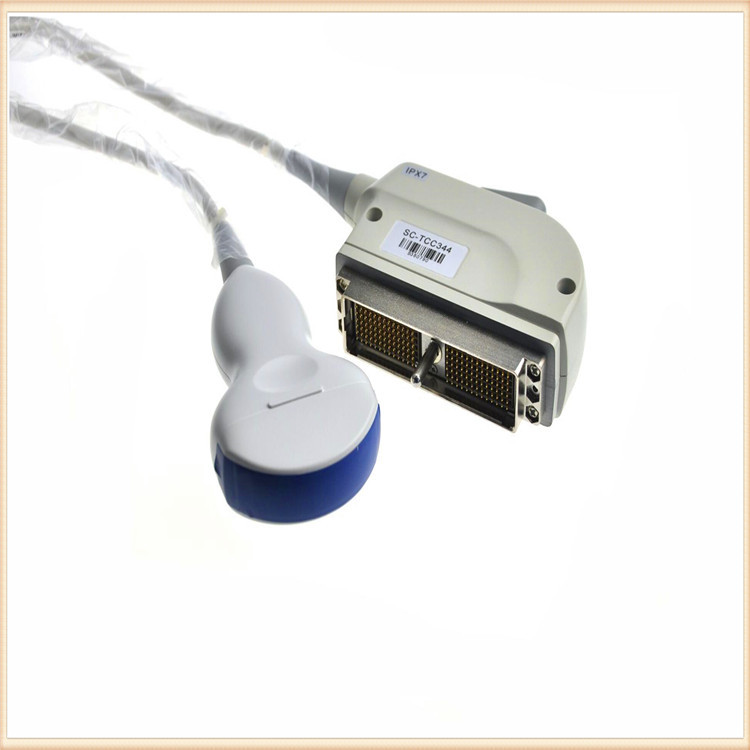
Military-Grade Ultrasound Coaxial Cable – High-Temperature Resistance, 100daN Compression Strength

Military-Grade Ultrasound Coaxial Cable – High-Temperature Resistance, 100daN Compression Strength

High-Performance Military Ultrasound Coaxial Cables: Built for Extreme Conditions Designed to meet the demanding requirements of military, aerospace, and medical applications, our Military-Grade Ultrasound Coaxial Cables deliver except.

Contact Us

Feel free to reach out to us for any inquiries or orders.

Call Us

Have a question? Give us a call!

                   +8618818785005(Whatsapp)

Email Us

Send us an email and we'll get back to you soon.

sales@custom-cable-assemblies.com
       
Home Products Contact